The Myth That Refused to Die
Ted Gioia's confession carries unexpected weight: a man who spent his youth dodging cowboy stories returns to them decades later and discovers something his generation lost. The arc of the western genre, he argues, maps the rise and collapse of American moral certainty—and its partial resurrection in unexpected forms.
The Faith That Built the Frontier
Gioia traces the western's golden age to a simple premise audiences no longer possess. Moral authority was the genre's foundation, not gunfights or cattle drives. Heroes wore white hats; villains wore black. The distinction required no explanation.
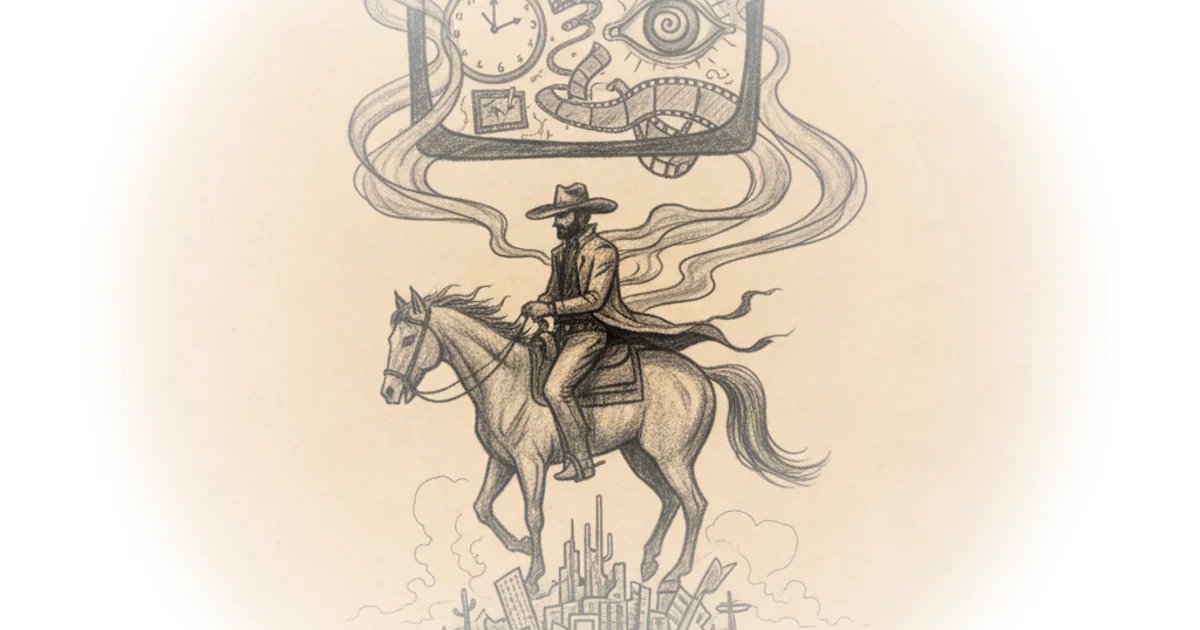
Ted Gioia writes, "The real foundation of the western genre was moral authority. And Hollywood never let you forget it—that's why heroes wore white hats and villains dressed in black."
This clarity allowed Gary Cooper to stand alone in High Noon, James Stewart to face Liberty Valance, and John Wayne to battle desperadoes in Rio Bravo without the audience questioning their legitimacy. The sheriff, the marshal, the gunslinger for hire—these figures commanded trust that contemporary viewers simply do not grant to authority figures anymore.
Ted Gioia writes, "Do any of us have that kind of faith in any authority figure nowadays? I doubt it. But I wish we could."
The Gunsmoke era—twenty-one seasons of frontier justice—ended not because audiences tired of the setting, but because they tired of the certainty. When Bonanza rode off after fourteen seasons, it marked more than a scheduling change. It marked the end of a worldview.
When the Hats Turned Gray
The erosion began before Vietnam. Gioia notes Humphrey Bogart's The Treasure of the Sierra Madre (1948) introduced antihero relativism. John Wayne himself played against character in Red River (1948) and The Searchers (1956), revealing moral blindspots and savagery that horrified audiences. Clint Eastwood's mid-1960s films pushed this ambivalence further.
Ted Gioia writes, "Just consider the unsettling film The Good, the Bad and the Ugly—which came out around the time the western genre died. Despite the movie's title, it's hard to identify any character in this film as good—instead they merely differ in their degrees of badness and ugliness."
The genre didn't just fade—it surrendered to nihilism. The Wild Bunch, Once Upon a Time in the West, and similar films offered no heroes, only pathways into darkness. Gioia connects this to the national trauma of Vietnam, Watergate, assassinations, riots—the complacent righteousness of the Eisenhower years evaporated.
"So long John Wayne. Hello Friedrich Nietzsche."
Ted Gioia writes, "The moral sureness of the Eisenhower years, along with the complacent righteousness of so much of the public started to erode. At first it happened slowly, and then rapidly. The classic western could not survive this."
The Comeback That Came From Space
Audiences craving heroism found it—not in westerns, but in Star Wars. George Lucas translated western formulas to outer space, restoring moral certainty. Han Solo became Harrison Ford as the new John Wayne. Luke Skywalker delivered clearly defined heroes and villains, shootouts, and old-fashioned romance with Carrie Fisher.
Ted Gioia writes, "By translating the western formulas to outer space and a distant future, virtue became plausible again."
The intellectual parallel arrived between The Empire Strikes Back and The Return of the Jedi: Alasdair MacIntyre's After Virtue, which attempted to resuscitate virtuous behavior as a serious endeavor. Other books followed, legitimizing an alternative worldview where moral authority survived. This made Lonesome Dove winning the Pulitzer Prize possible—Larry McMurtry's romanticism briefly revived the older generation's faith.
But Cormac McCarthy's Blood Meridian (1985) offered the counterweight: perhaps the darkest, most nihilistic western novel ever written. Gioia admits admiring the writing but expresses relief it never became a film. He worries about replacing the American mythos with "a tawdry tale of sadism and evil unrestrained."
The Battle Lines Remain Drawn
Modern filmmakers straddle both agendas. Michael Cimino's Heaven's Gate (1980) surprised critics by returning to 1950s romance and heroism despite Cimino's reputation from The Deer Hunter. His allies abandoned him because he delivered populism instead of postmodernism.
The Coen brothers work both sides: No Country for Old Men (2007) as brilliant nihilistic western, True Grit (2010) restoring faith in the Wild West. Taylor Sheridan's Yellowstone balances Kevin Costner as both dysfunctional and idealistic—flawed yet sympathetic.
Ted Gioia writes, "Do we trust our gunslingers and authority figures? Or do we fear them? And allow me to point out the obvious—this is not just a question about cowboy movies. It's a question about our society as a whole."
The western provides archetypes for grasping trade-offs: freedom versus social order, independence versus authority, toughness versus benevolence. Gioia suggests the genre may return to its legitimate place as foundational myth—an American Iliad and Odyssey combined.
Ted Gioia writes, "We need myths and stories. And, for better or worse, this is the one we've inherited. Let's not abandon, but make the most of it."
Critics might note that Gioia's nostalgia for moral certainty overlooks why that certainty proved dangerous—white-hat heroes often enforced unjust order, and the frontier justice he celebrates excluded indigenous peoples, Mexican Americans, and women from its moral framework. Others might argue that Star Wars didn't restore virtue but commodified it into franchise entertainment, where moral clarity serves box office more than ethical reflection. A third objection: celebrating Lonesome Dove while fearing Blood Meridian privileges comfort over truth—the West was brutal, and sanitizing it preserves myth at the cost of history.
Bottom Line
Gioia's binge-watching journey reveals the western as America's moral barometer—rising with certainty, collapsing with doubt, and now straddling both. The genre's survival depends not on reviving white-hat simplicity but on wrestling honestly with the trade-offs it exposes. We inherit the myth; we must decide whether to weaponize it or learn from it.