In a cultural moment where the recent release of millions of documents regarding Jeffrey Epstein has reignited public outrage, Bari Weiss offers a startlingly specific lens: the enduring, and often twisted, relationship between American pop culture and Vladimir Nabokov's Lolita. Rather than simply cataloging the grim details of the files, Weiss, through an interview with scholar Shilo Brooks, argues that the novel's true horror lies not in its subject matter, but in our collective failure to understand it. The piece suggests that the very mechanism that makes the book a masterpiece—its seductive, first-person narration by a predator—is the same mechanism that allowed a convicted sex offender to weaponize it as erotica, and that allowed a culture to glamorize the victim while erasing the abuser.
The Architecture of Complicity
Weiss frames the conversation around a chilling discovery in the newly released House Committee on Oversight and Government Reform files: references to Lolita are ubiquitous in Epstein's world, from his bedside table to the walls of his private island. The article posits that Epstein's obsession was not a coincidence but a symptom of a broader cultural misunderstanding. As Brooks explains in the interview, the novel's genius is its ability to make the reader complicit. "Part of the genius of Nabokov as a writer is that you do come to sympathize with Humbert Humbert in a bizarre way," Brooks notes, highlighting the discomfort of seeing the world through the eyes of a "homicidal pedophile rapist."
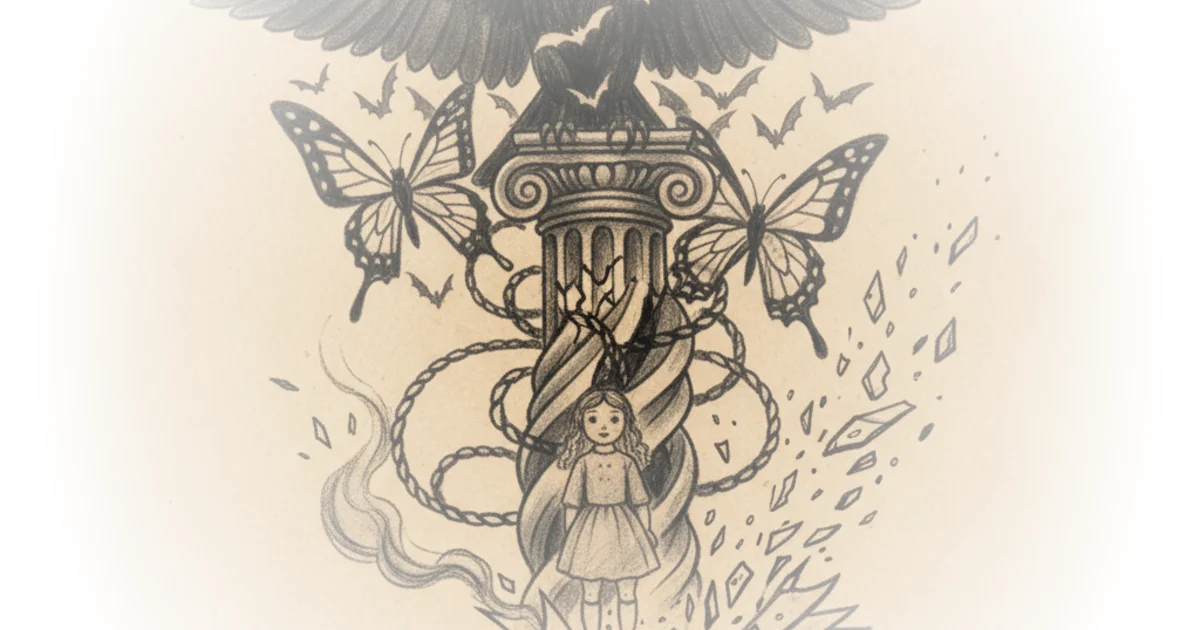
This framing is crucial because it shifts the blame from the text itself to the reader's vulnerability. The article suggests that Nabokov's intent was never to normalize abuse, but to expose the seductive power of a charismatic monster. "Nabokov is interested in exploring, like any great artist, the full range of human psychic possibility in all of its goodness and all of its evil," Brooks argues. The commentary here is sharp: it forces the audience to confront why a story about the kidnapping and serial rape of a twelve-year-old girl has become a staple of high culture. The argument holds weight because it refuses to let the reader off the hook for their own fascination.
"He's a narcissist. He's a murderer. He's a rapist. He's a pedophile. He manipulates everyone around him to get access to this 12-year-old child. And still, I think a lot of people read him as a compelling character."
Critics might argue that focusing on the reader's psychological complicity risks absolving the author of any responsibility for the text's misinterpretation. However, Weiss and Brooks counter this by citing Nabokov's own rejection of the "moral police" role, quoting the author's declaration: "I do not give a damn for public morals in America or elsewhere." The piece uses this to illustrate a dangerous gap: the artist's detachment versus the audience's moral obligation. When the artist refuses to guide the moral compass, the reader must navigate the abyss alone—and many, like Epstein, have chosen the wrong path.
The Erasure of the Predator
The most damning section of the coverage addresses how pop culture has systematically stripped Lolita of its context, turning a cautionary tale into a brand. Weiss details how the name "Lolita" has been detached from Humbert Humbert, becoming a shorthand for youthful sexuality rather than a symbol of victimization. "It seems to me that there's a glamorization of the girl because the girl is somehow tempting and tantalizing to the man," Brooks observes, pointing out that this narrative "requires us to forget who Humbert Humbert is."
This erasure is not merely an academic error; it has real-world consequences. The article draws a direct line from the 1962 Stanley Kubrick film, which Brooks claims "fundamentally misunderstood the novel" by treating it as a dark comedy, to modern music videos and fashion trends that fetishize the character. "The contemporary kind of glamorization, fetishization of Lolita, attempts to imitate her, to hold her up on a pedestal, are misplaced because they overlook the fact that she's only possible because a man abused her," Brooks states. The commentary here is vital: it exposes how the cultural conversation has inverted the story's moral universe, celebrating the victim while ignoring the predator.
The piece also touches on the historical context of the House Committee's investigation, noting that photos released by the committee show young women with quotes from the book written on their bodies—a grotesque ritual that mirrors the novel's themes but strips them of their tragic weight. This detail underscores the article's central thesis: when we treat Lolita as a romance or a style guide, we are actively participating in the erasure of the crime it depicts.
"This is not funny, and it's not something for music videos, it's not a branding opportunity. This is really serious. And I think those people probably just see the name. Maybe they've never read the novel."
The Mirror of Evil
Ultimately, Weiss and Brooks argue that the novel's enduring power lies in its ability to force a confrontation with the darkest parts of the human psyche. The article suggests that the reason Lolita remains a masterpiece is not because it provides answers, but because it demands that we ask ourselves difficult questions. "Through getting to know him, we come to know ourselves," Brooks asserts. "What are our limits? What are the things that disgust us? What do we think love is? Is this excusable to us?"
The coverage posits that the novel is a mirror, reflecting our own capacity for moral blindness. "We're obsessed with moral violation, whether it's sexual violation, whether it's murder," Brooks says, linking the fascination with Lolita to the broader true-crime genre. The article suggests that this obsession is a way of living vicariously through lives we would otherwise forbid ourselves to lead. Yet, the piece warns that this fascination must be tempered with a clear understanding of the reality: "People like Humbert exist in our society. Simply. They always will."
The argument concludes with a call to re-examine the text, not to glorify it, but to understand the pathology it reveals. "The problem is those people who would glorify this rather than be troubled by it, I think, need to reexamine the text," Brooks concludes. This is the article's strongest point: it challenges the reader to move beyond the superficial allure of the story and confront the ugly truth it exposes.
Bottom Line
Bari Weiss's commentary succeeds in reframing the Lolita discourse from a debate about censorship to an analysis of cultural complicity, effectively using the Epstein files to highlight how art can be twisted when divorced from its moral context. The piece's greatest strength is its refusal to let the reader off the hook, forcing a confrontation with the uncomfortable reality that our fascination with predators is often a reflection of our own vulnerabilities. However, the argument occasionally leans too heavily on the assumption that the artist's intent is the only valid metric for interpretation, potentially underestimating the agency of the reader in creating meaning. The takeaway is clear: Lolita is not a romance, but a warning, and ignoring its true nature is a failure of moral imagination.