This piece from Faithful Politics delivers a stinging internal critique that transcends typical partisan bickering, arguing that the Democratic Party's greatest failure was not a lack of policy, but a systemic, deliberate suppression of truth regarding the President's fitness for office. It is notable for its willingness to label the White House inner circle a "Politburo" and to suggest that the administration's cover-up of cognitive decline was a direct catalyst for the election's outcome, framing the event not as a political loss but as a moral collapse of the fourth estate and the party itself.
The Architecture of Silence
Faithful Politics reports that the new book, Original Sin, does not merely recount dysfunction but exposes a coordinated effort to "silence dissent" and "prop up a candidate who was no longer fit for the job." The piece argues that this insulation created a feedback loop where reality was distorted to protect the narrative, a dynamic that mirrors the very authoritarian behaviors often criticized in the opposition. The editors note that the authors, Jake Tapper and Alex Thompson, built their account on interviews with approximately two hundred insiders, many of whom remained anonymous out of fear of retribution.
"The Biden team did a full-court press to stop any apostates."
This metaphor of religious heresy suggests that questioning the President's health was treated as a betrayal of faith rather than a legitimate governance concern. The commentary highlights how this approach alienated even loyal Democrats, such as Congressman Dean Phillips, who faced "machine-style politics" for attempting a primary challenge. While critics might argue that primary challenges are inherently divisive and that the party had a duty to present a unified front, the piece contends that the cost of that unity was the erosion of democratic accountability. The argument gains weight when it points out that the White House Counsel's Office actively objected to Special Counsel Robert Hur's report, specifically the passages describing the President as an "elderly man with a poor memory," seeking to scrub those facts before they reached the public.
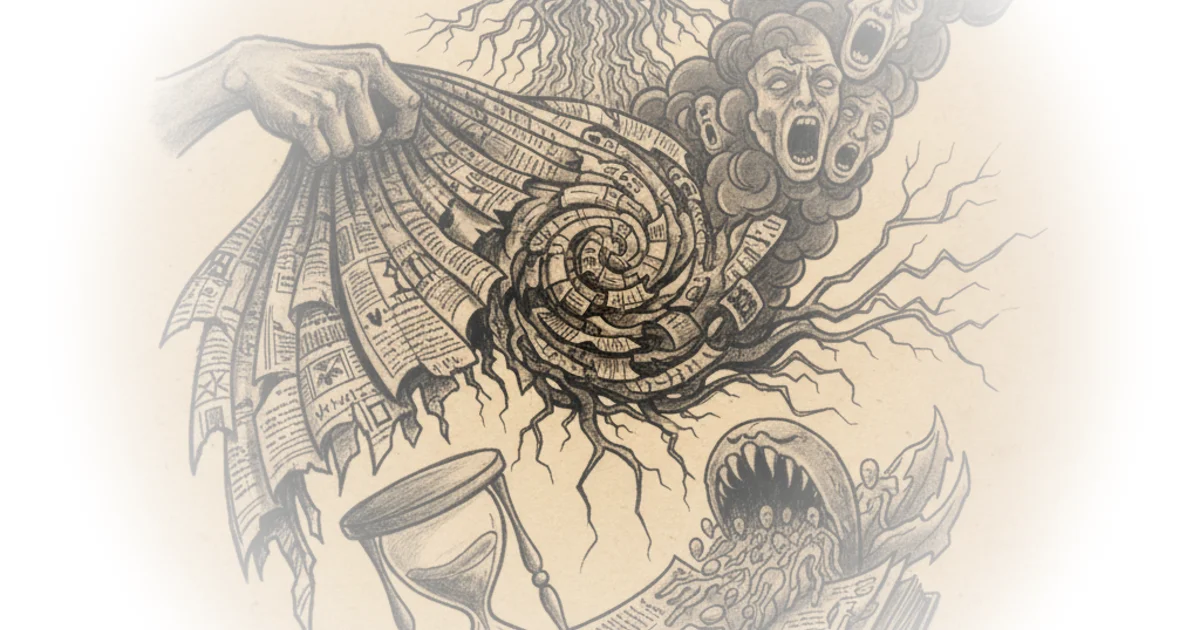
The Family Dynamic and the Pattern of Secrecy
The coverage delves deeply into the personal history of the Biden family to contextualize the current crisis, drawing a parallel to the secrecy surrounding Vice President Biden's son, Beau, during his battle with glioblastoma. Faithful Politics notes that in 2013, despite the severity of the diagnosis, the family and the Vice President's team decided to tell a local reporter that Beau had a "clean bill of health." This historical precedent is used to argue that the current administration's behavior is not an anomaly but a continuation of a family pattern where "secrecy, image management, and a belief that the ends justify the means" take precedence over transparency.
"It wore on the president's soul. He lived in fear that he would lose a third child."
The piece suggests that this fear drove the administration to prioritize the President's emotional state over the public's right to know, a decision the editors characterize as a "betrayal" of the democratic mandate. The commentary also scrutinizes the role of First Lady Jill Biden, describing her as a calculated strategist who managed the President's public appearances and even consulted on national security matters. While the article acknowledges the personal tragedy of the family's losses, it insists that the "spousal programming" and the control of the narrative were political maneuvers designed to maintain power at any cost. This framing challenges the traditional view of the First Lady as a supportive figure, reframing her actions as central to the "Politburo's" gatekeeping.
The Irony of the "Big Lie"
The most potent section of the commentary contrasts the administration's rhetoric with its actions, specifically highlighting the President's 2021 inaugural address. Faithful Politics reminds readers that Biden stood on the Capitol steps and declared, "Our democracy is built on truth, not lies," just weeks after the January 6th insurrection. The piece argues that the subsequent cover-up of the President's condition has ironically sown the seeds for a new "Big Lie," one that undermines the moral authority needed to combat misinformation.
"You don't defeat the country's most shameless liar by stacking your own campaign on lies."
This observation strikes at the heart of the piece's thesis: that the Democratic Party cannot reclaim the moral high ground by surrendering its own integrity. The editors point out the staggering audacity of inserting the line "just tell the American people the truth" into a pardon for the President's son, a move that the article views as a final, cynical layer of the deception. The commentary suggests that the timing of the recent announcement of the President's prostate cancer diagnosis feels "orchestrated" rather than organic, further eroding trust. A counterargument worth considering is that the administration may have been navigating complex medical and legal constraints that are not fully visible to the public, but the piece maintains that the sheer volume of suppressed information makes such defenses untenable.
"If the Democratic Party truly wants to offer a contrast to Trump, it can't blur the line between accountability and complicity."
This line serves as the piece's moral anchor, urging the party to confront its own role in the erosion of public trust. The editors draw a historical parallel to the Woodrow Wilson administration, noting how the President's own health issues were concealed from the public during World War I, leading to a crisis of leadership that nearly destabilized the nation. Just as the 25th Amendment was eventually drafted to address such scenarios, the piece implies that the current situation highlights the urgent need for institutional mechanisms to handle executive incapacity, rather than relying on a family's discretion.
Bottom Line
The strongest element of this argument is its unflinching focus on the mechanism of the cover-up, moving beyond speculation to detail how dissent was actively crushed within the highest levels of government. Its biggest vulnerability lies in its reliance on anonymous sources who may have their own political grievances, yet the sheer volume of corroborating details regarding the suppression of the Hur report and the primary challenges lends the narrative significant weight. The reader should watch for how the Democratic Party responds to this internal reckoning, as the piece suggests that without a genuine admission of fault, the party risks losing its claim to be the defender of truth and democracy.