In a digital landscape saturated with hot takes, Mona Mona's October 10, 2025 roundup offers a rare, structural critique of how we process reality itself. Rather than simply aggregating links, the piece forces a confrontation with the tension between algorithmic curation and the messy, human need for philosophical grounding. Mona Mona writes, "I'm not sure I'm into the categories, it creates… problems," a candid admission that reveals the friction between organizing thought and the fluid nature of ideas. This hesitation is not a weakness; it is the piece's most honest moment, suggesting that the very act of categorizing complex social issues might be the first step in misunderstanding them.
The Architecture of Thought
The editorial experiment here is bold: attempting to impose order on a chaotic stream of consciousness without losing the thread of the argument. Mona Mona frames the dilemma of modern curation by asking whether to narrow the focus or embrace the chaos. "If I narrowed the focus, it would include fewer political commentary and fewer personal essays, even when those have a philosophical bent," they note. This is a crucial distinction. By refusing to silo the personal from the political, the author argues that philosophy is not an abstract exercise but a lived experience. The inclusion of a "sibling spat" alongside high-level theory on "Moral Agency without Consciousness" suggests that the mechanisms of ethics operate in the kitchen as much as in the academy.
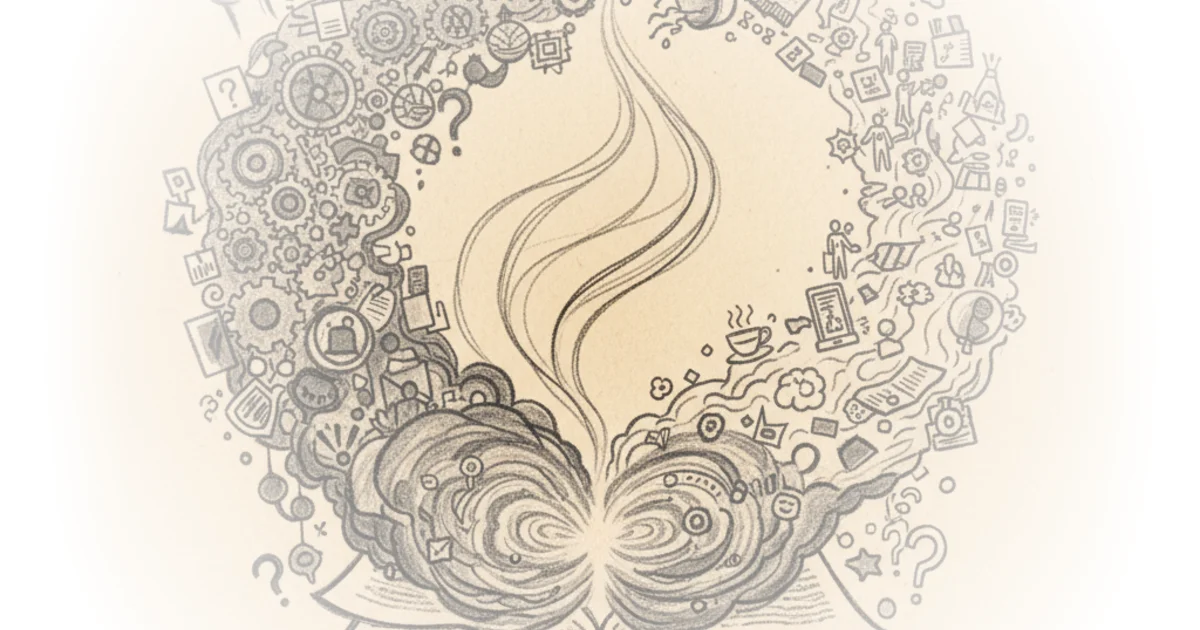
Critics might argue that this lack of discipline dilutes the rigor of the discourse, turning a serious journal into a blogroll. However, the selection of pieces like Jen Semler's work on the Canadian Journal of Philosophy alongside a discussion on "writing like AI" suggests a deliberate strategy. The author posits that the boundary between human and machine, between the intimate and the systemic, is where the most urgent questions of our time reside. Mona Mona writes, "In living life thoughtfully, we are always already practicing philosophy," grounding the entire roundup in the idea that philosophy is a verb, not a noun.
The boundary between human and machine, between the intimate and the systemic, is where the most urgent questions of our time reside.
The Weight of the Political
The roundup shifts sharply when addressing the heavy machinery of global conflict and institutional power. Here, the tone becomes less experimental and more urgent. The coverage of Rachel Shabi's work on Gaza is particularly striking, moving beyond standard political analysis to the "political economy of genocide." Mona Mona highlights the difficulty of maintaining solidarity in the face of such atrocities, noting the author's focus on "fighting antisemitism, and how to build loving solidarity within our social movements." This framing is vital; it refuses to let the conversation stagnate in binary oppositions, instead seeking a path through the "political economy" of hatred.
The piece also tackles the erosion of civic trust with a piece titled "The Dissolution of Civic Infrastructure." Mona Mona paraphrases the argument that "individual freedom cannot sustain complex societies," a sobering reminder that liberty without structure leads to fragmentation. This is followed by a direct critique of the executive branch's recent maneuvers regarding higher education. The author notes that "the administration would act differently if it were confident," reframing the aggressive policy moves not as strength, but as a symptom of institutional insecurity. This is a powerful analytical pivot, shifting the focus from the personality of the actors to the fragility of the systems they lead.
A counterargument worth considering is whether focusing on the "weakness" of the administration lets the specific policies off the hook. If the actions are driven by weakness, does that make them less harmful to the students and institutions affected? The roundup seems to suggest the opposite: that the instability of the leadership makes the consequences more unpredictable and dangerous.
The Human Cost of Abstraction
Perhaps the most poignant section of the roundup is its engagement with grief, labor, and the human condition. Mona Mona includes a piece on "On The Death of Loved Ones," which draws on "Chinese wisdom on the true process of grief," reminding readers that philosophy must ultimately serve the living and the dying. The inclusion of Kathi Weeks' work on labor, asking "Must Work Suck So Much?", challenges the reader to question the very structure of modern existence. Mona Mona writes, "The knowable is bad enough," in reference to the social problems posed by artificial intelligence, stripping away the sci-fi hype to reveal the immediate, tangible suffering caused by current systems.
The roundup also touches on the "neuroscience of dehumanization," asking "how we train ourselves to be unkind." This is not just a theoretical inquiry; it is a diagnostic of a society in crisis. By placing a personal letter from a mother on her deathbed next to an analysis of the "political economy of genocide," the author creates a jarring but necessary juxtaposition. The private grief of one family is inextricably linked to the public violence of the state.
We are not just observers of history; we are the architects of the dehumanization that makes violence possible.
Bottom Line
Mona Mona's roundup succeeds because it refuses to let the reader hide behind categories, forcing a direct engagement with the messy intersection of personal grief, political violence, and technological anxiety. Its greatest strength is the refusal to separate the "personal" from the "political," revealing how deeply our intimate lives are shaped by the structural failures of the state. The piece's vulnerability lies in its breadth; without a stronger narrative thread connecting the disparate topics, some readers may struggle to find a cohesive argument beyond the sheer weight of the curation. However, for a busy audience seeking to understand the world as it is, not as we wish it to be, this unvarnished collection is an essential compass.