This piece from The Pillar uncovers a financial cliff that could reshape the religious landscape of Germany, far beyond the usual debates over doctrine or culture. It reveals how a surging political party is targeting the very economic engine that keeps the Catholic and Protestant churches running, turning a theological dispute into a potential bankruptcy crisis for entire dioceses.
The Financial Flashpoint
The article zeroes in on Saxony-Anhalt, a historically significant yet economically fragile state in former East Germany. The Pillar reports that the Alternative for Germany party, often described by commentators as far-right, is projected to win the most seats in the upcoming September 6 election, polling at 42% compared to the center-right Christian Democratic Union's 24%. The stakes are existential because the party's manifesto explicitly targets the church tax system and state subsidies.
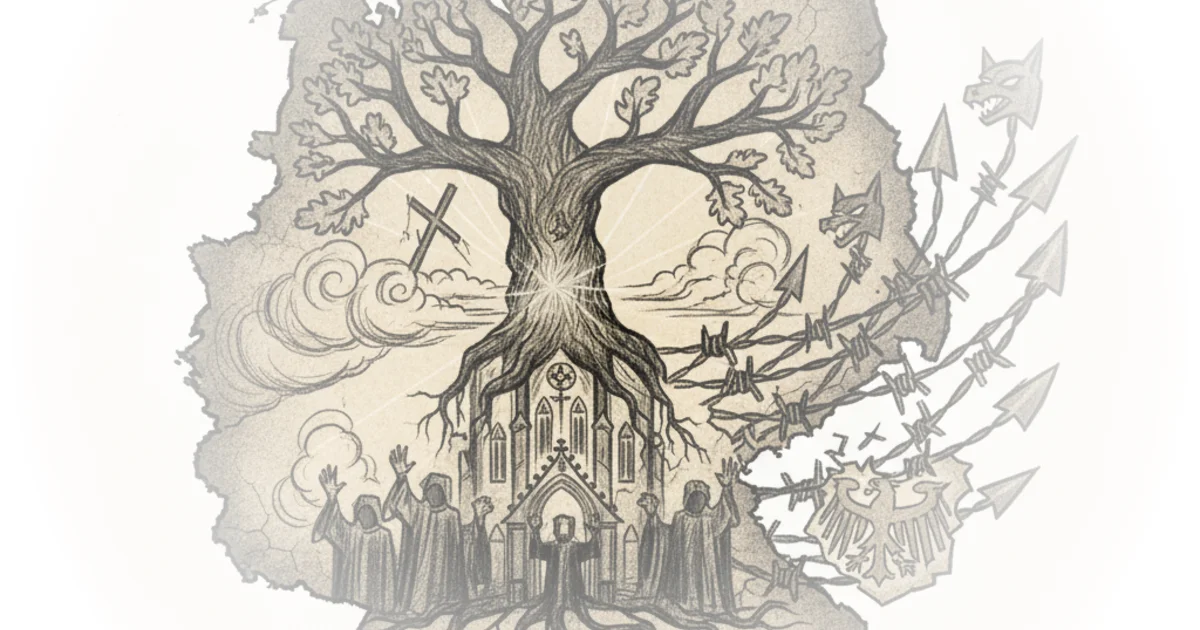
The piece argues that the AfD's strategy is not merely anti-religious but specifically anti-institutional, aiming to dismantle the funding of large, established churches while promoting smaller, more radicalized sects. The manifesto states: "Our desire to abolish the privileges of churches that levy church taxes does not mean that we reject the Christian faith — on the contrary. It is precisely because we recognize the importance of Christianity that we are targeting churches that levy church taxes, because the large churches are damaging the faith." This rhetorical pivot is crucial; it frames the attack as a purification of the faith rather than an assault on it, a nuance that makes the political threat more insidious.
The economic reality for the local church is stark. Bishop Gerhard Feige of the Diocese of Magdeburg notes that the diocese is already "economically fragile," relying on subsidies from wealthier western regions that are scheduled to expire. The Pillar highlights that if the AfD's proposals were enacted, the diocese would lose 83% of its revenue overnight. Feige warns that the impact would be "dramatic," stating, "We don't have large reserves... Should this happen, we would no longer be able to operate parishes, educational centers, and social services in the same way."
"If a new state government stops paying state subsidies and church tax revenue also dries up, we would be bankrupt in less than a year."
This projection from Karsten Wolkenhauer, head of the Protestant Church of Anhalt, underscores the immediacy of the threat. The article effectively uses these financial figures to move the conflict from abstract ideology to concrete survival. Critics might argue that constitutional safeguards would prevent such a sudden financial strangulation, but the church leaders counter that legal battles take years—time they simply do not have. As Feige bluntly puts it, "Facts are being created, and we could litigate for years, but the money would be gone."
The Strategy of Exclusion
In response to this threat, the German Church has adopted a strategy of total non-engagement with the AfD, a move that carries its own risks. The Pillar notes that Bishop Feige has declared it impossible to have direct contact with the party, saying, "We will try to engage in dialogue with the public, including with people who might vote for them. But we will not have any direct contact with representatives of this party in Saxony-Anhalt." This stance was reinforced at the recent Catholic Day, where the party was officially excluded from the event despite the presence of over 250 other organizations.
The piece suggests this refusal to negotiate may leave the Church with little leverage if the AfD wins. While the "firewall" (Brandmauer) policy of other parties currently prevents the AfD from forming a government coalition, the article warns that a state-level breakthrough is possible. The historical context is vital here; Saxony-Anhalt has been a fertile ground for the AfD since its founding, having seen the party come in second place in both the 2016 and 2021 state elections. The current surge suggests the "firewall" is under unprecedented pressure.
The article also highlights a fascinating disconnect between the German bishops and the Vatican. While the German Church maintains a united front against the AfD, the Vatican appears more open to dialogue. The Pillar reports that an AfD representative recently met with Pope Leo XIV, claiming the party "fights for the family and Christian values," a sentiment the Pope allegedly acknowledged. This divergence raises questions about whether the German Church's hardline stance is aligned with broader Catholic strategy or if it is a localized reaction to a unique political threat.
The Limits of Moral Authority
Ultimately, the piece questions whether the bishops' moral authority is enough to sway voters in a region where economic anxiety and secularization have already taken hold. A recent poll cited in the article shows that despite the bishops' 2024 declaration against the party, 26% of Catholics still intend to vote for the AfD. The Pillar observes that this implies the declaration "may have dented Catholic support for the AfD, but by no means destroyed it."
The article concludes by noting that the AfD has identified the Church's "weak spot": money. The irony is palpable; an institution often perceived as wealthy is actually vulnerable to a single policy change. The Pillar warns that "the absence of dialogue almost guarantees further escalation," suggesting that the Church's current strategy of silence may be a losing bet. As the elections approach, the question is not just who will win, but whether the Church can survive the financial shock of a party that views its funding as a privilege to be revoked.
Bottom Line
The strongest element of this coverage is its shift from cultural commentary to financial forensic analysis, revealing that the AfD's most potent weapon against the Church is not rhetoric but the budget. The piece's biggest vulnerability lies in its reliance on the assumption that the "firewall" will hold; if the AfD crosses the threshold to form a government, the legal and constitutional arguments may prove too slow to prevent the collapse of local dioceses. Readers should watch the September 6 election results closely, as a victory for the AfD in Saxony-Anhalt could trigger a chain reaction across Germany's religious institutions.