In an era obsessed with branding and self-aggrandizement, Yale University offers a startlingly humble premise: the concept of "genius" is less a biological fact and more a necessary human fiction. This opening lesson from the Yale Courses series doesn't just define exceptional talent; it dissects why we desperately need to invent it, arguing that our obsession with the "genius" label is a coping mechanism for a chaotic world.
The Observer's Paradox
Yale University frames the entire inquiry through the lens of the non-genius observer. The instructor, Craig Wright, admits he is not a genius himself, a confession that becomes the course's greatest strength. "Geniuses are too busy being geniuses to take time to think about how or why they do it," the text notes. This reframing is crucial; it suggests that true insight into exceptionalism comes from the outside looking in, not from the inside looking out. By positioning the teacher as a "plotter" rather than a prodigy, the course immediately lowers the barrier to entry, inviting the listener to analyze rather than idolize.
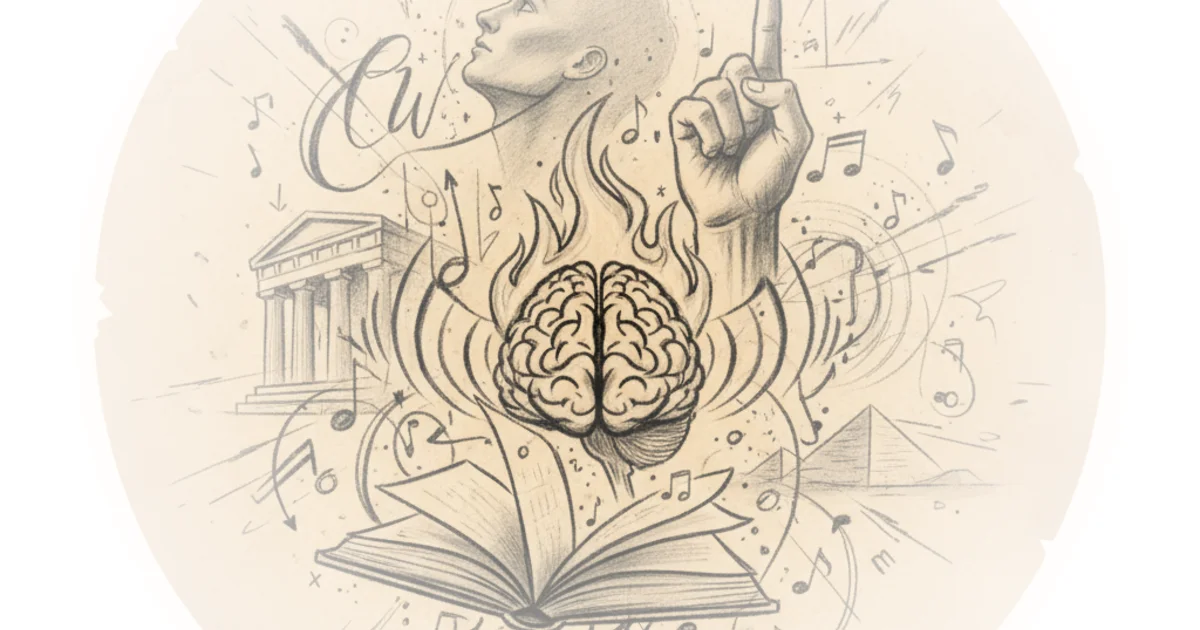
The argument pivots on the idea that we use the word "genius" to simplify the impossibly complex. Yale University writes, "calling someone a genius is surely a simplification but it helps us understand things quickly and in a simple manageable way." The course illustrates this by deconstructing the myth of Thomas Edison inventing the light bulb in isolation, noting that "many people laid the groundwork that led to the light bulb." This is a sharp critique of the "narrative fallacy"—our tendency to collapse centuries of incremental progress into a single, heroic moment. It forces the listener to question the historical shortcuts we take daily.
We choose to identify these exceptional and exceptionally helpful figures by a simple term genius. We need to believe that geniuses are out there so as they give us hope.
The Psychology of the Savior
Beyond simplification, the course argues that the genius myth serves a vital psychological function: hope. Yale University posits that "believing in genius allows us to believe that things will get better." In times of crisis, from pandemics to energy shortages, we crave a "rescuing genius" to save us. The text cites figures like Alexander Fleming with penicillin and modern scientists Jennifer Doudna and Emmanuelle Charpentier with mRNA technology as examples of these secular deities.
However, the commentary here is nuanced. The course acknowledges that these figures are often initially rejected. "Geniuses start out as troublemakers disruptors usually because they cause extra work," the text explains. We only embrace them once their disruption has borne fruit. This dynamic is perfectly captured in the Apple "Think Different" commercial, which the course analyzes at length. Yale University highlights the commercial's message: "the people who are crazy enough to think they can change the world are the ones who do." This reframes the "genius" not as a person with perfect answers, but as a person willing to break the rules.
Critics might note that this focus on individual saviors risks obscuring the collective, systemic efforts required for major breakthroughs. While the course acknowledges the groundwork laid by others, the cultural appetite for the "lone genius" often overshadows the collaborative reality of science and art. Yet, the course wisely sidesteps a full debunking, choosing instead to explore the utility of the myth.
The Hall of Fame Game
The most provocative segment of the lesson is the "Hall of Fame" exercise, which reveals the subjectivity of the genius label. Yale University demonstrates that rankings shift entirely based on the observer's identity. If you value politics and human rights, Gandhi and Martin Luther King Jr. rise to the top. If you value music and math, Mozart and Einstein take precedence. "Genius is not an absolute value," the course concludes. "Genius is relative to time place and culture."
This section dismantles the idea of a universal standard for excellence. The course argues that "each among us can define genius and will define genius according to his or her experiences in life." This is a powerful reminder that our definitions of greatness are deeply personal and culturally contingent. It challenges the listener to examine their own biases: who do you call a genius, and why?
Genius is not an absolute value. Genius is relative to time, place, and culture.
Bottom Line
Yale University's strongest move is transforming the concept of genius from a static trait into a dynamic social contract, one we construct to make sense of progress and to maintain hope. The argument's vulnerability lies in its potential to let structural inequalities off the hook by framing success as merely a matter of "exceptional individuals" rather than systemic support. Nevertheless, the course succeeds in making the listener question the very labels they use to navigate the world, proving that the most useful questions are often the ones that have no single answer.