Andrew Henry doesn't just decode a biblical riddle; he resurrects a political ghost that terrified the ancient world. While many treat the number 666 as a purely mystical cipher, Henry argues it was a direct, urgent reference to a very specific, very real rumor: that the mad Emperor Nero never actually died and was plotting his return. This isn't abstract theology; it's a historical thriller about how a failed suicide and a charismatic imposter became the blueprint for the ultimate end-times villain.
The Man Behind the Number
The core of Henry's argument rests on the intersection of ancient numerology and immediate political trauma. He explains that in the first century, letters served as numbers, allowing names to be calculated. "Take the name Nero Caesar, write it the way you would have transliterated it into Hebrew letters, then add up the numerical value of each letter, and you get... exactly 666," Henry writes. This isn't a stretch; it's a mathematical fact of the era's linguistic code.
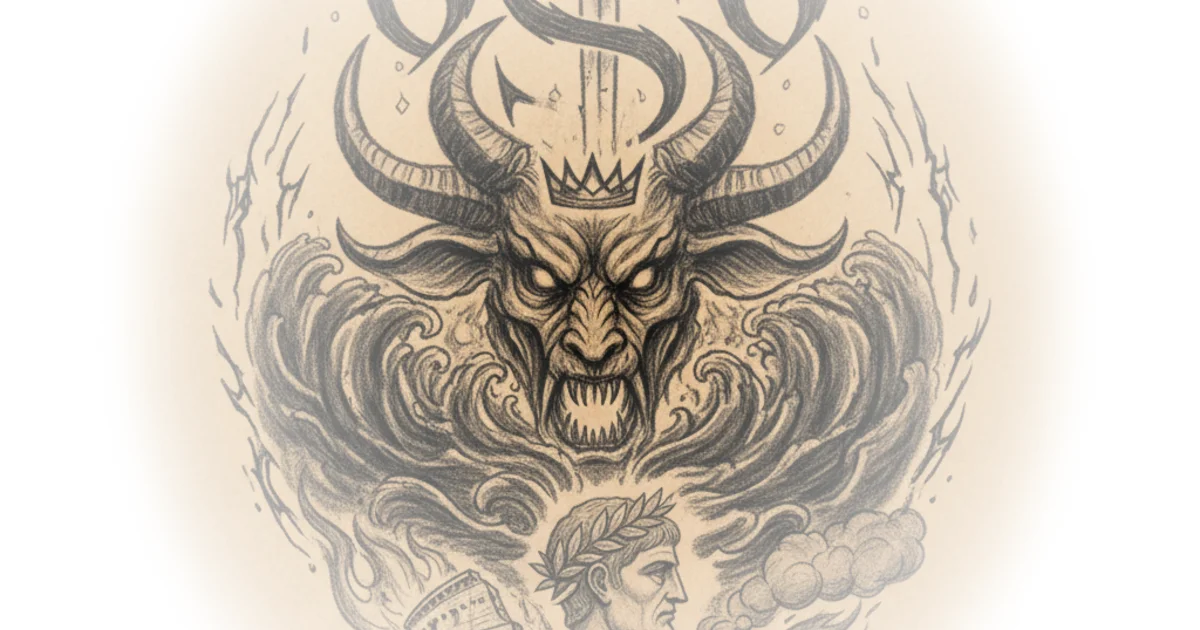
Henry effectively grounds this in the brutal reality of Nero's reign. He notes that according to the Roman historian Tacitus, Nero was the first ruler to persecute Christians, blaming them for the Great Fire of Rome and subjecting them to "brutal executions." If you were writing an apocalypse in that world, Henry argues, Nero was the only logical choice for the embodiment of cosmic evil. The genius of the piece is how it connects the dots between the math and the memory. The author suggests that the book of Revelation wasn't predicting a distant future but was reacting to a very recent past that felt like it was looping back.
"Revelation's focus on Nero as an end times villain could be tapping into a real political myth already circulating throughout the Roman world."
Critics might note that identifying the beast solely with Nero ignores the complex, evolving nature of apocalyptic literature, which often layers multiple historical figures into a single symbol. However, Henry's focus on the immediate context of the late first century makes the Nero connection the most compelling, rather than the most exhaustive.
The Ghost in the Machine
The most fascinating part of Henry's coverage is his exploration of the "Nero Redivivus" myth—the idea that Nero faked his death and would return. Henry points out the logistical gap that fueled the rumor: "Hardly anyone actually saw the body. No grand funeral, just a quiet burial outside of Rome." This lack of a public spectacle created a vacuum that imagination rushed to fill.
Henry details how this wasn't just idle gossip; it manifested in real-world chaos. He describes the appearance of "pseudoneros," or fake Neros, who exploited the public's nostalgia and fear. The first imposter, appearing just a year after Nero's death, was a singer and harpist who looked the part. "Tacitus says he gathered a sizable following of deserters from the Roman army in the eastern Mediterranean and sailed around arming slaves, looting merchants," Henry reports. This wasn't a metaphor; it was an armed insurgency fueled by the belief that the tyrant was back.
The author highlights the strange duality of Nero's legacy. While the Senate hated him, the common people, especially in the Greek East, adored him. "The great name of Nero attracted many who pined for revolution and hated the existing state of things," Henry quotes Tacitus. This context is crucial: the beast of Revelation wasn't just a monster; he was a populist hero to some and a demon to others, a nuance that modern readers often miss.
"When a figure becomes symbolic, their death doesn't end their story. It opens the door for rumors and he'll be back legends."
Henry draws a sharp parallel to modern conspiracy movements, noting that the psychological mechanism remains unchanged. Whether it's JFK Jr. or Nero, the refusal to accept the finality of death serves a specific political and emotional function. This comparison elevates the piece from a history lesson to a commentary on human nature.
Decoding the Beast
Finally, Henry connects the historical rumors directly to the text of Revelation, specifically chapters 13 and 17. He explains how the beast with a "mortal wound" that was "healed" mirrors the rumor of Nero's suicide and subsequent return. "The beast that you saw was and is not and is about to ascend from the bottomless pit," Henry writes, noting that this three-part formula parodies the divine description of God while simultaneously describing the Nero myth: he was emperor, he is not (dead), and he is to come.
The author also tackles the confusion around the number 616, found in some ancient manuscripts. Henry clarifies that this variation arises from dropping the final 'N' from the Latinized spelling of Nero, proving that early scribes were actively trying to match the number to the name they knew. "Some manuscripts of Revelation say the number is 616 instead of 666, which is what you get when you drop the final N from the name," he explains. This detail serves as forensic evidence that the original audience understood the code immediately.
The piece concludes by acknowledging the difficulty in pinning down the exact sequence of emperors in Revelation 17, where the text mentions seven kings. Henry admits that "scholars have offered a few possible schemes, but no single lineup works clearly." Yet, this ambiguity doesn't weaken the argument; it reinforces the idea that the text was a fluid response to a chaotic time, where the specific identity of the "eighth king" mattered less than the terrifying certainty of his return.
Bottom Line
Andrew Henry's strongest asset is his ability to strip away the mysticism of Revelation to reveal the raw, political panic underneath. The argument is most persuasive when he treats the "beast" not as a supernatural entity, but as a reflection of a very real, very sticky rumor that terrified the early church. The only vulnerability lies in the assumption that all early Christians interpreted the text this way, but as a historical reconstruction of the author's likely intent, it is a masterclass in context. Watch for how this lens changes your reading of the apocalypse: it's less about the future and more about the past refusing to die.