Michael Huemer delivers a provocative critique of a growing intellectual trend: the attempt to reshape empirical facts based on moral or political preferences. He argues that this approach, which he terms 'legislating reality,' is not only logically flawed but strategically counterproductive, a point he illustrates by dissecting the intense backlash against philosopher Nathan Cofnas in Belgium. For busy readers navigating a polarized information landscape, this piece offers a sharp reminder that truth claims must stand or fall on evidence, not on their potential to cause social discomfort.
The Fallacy of Moral Fact-Making
Huemer identifies a specific cognitive error where practical aims dictate what is considered true. He writes, "Legislating reality is a favorite thought pattern on the left. This is the error of using practical aims, including moral or political goals, to determine what the descriptive facts are, or what one may say the descriptive facts are." The author distinguishes this from legitimate censorship of dangerous information, such as bomb-making plans, noting instead that the issue arises when people argue, "Claim x could be used to justify bad behavior; therefore, ~ x." This distinction is crucial because it isolates the argument from safety concerns and places it squarely in the realm of epistemology. The author's framing is effective because it forces the reader to confront the absurdity of denying a fact simply because it is inconvenient.
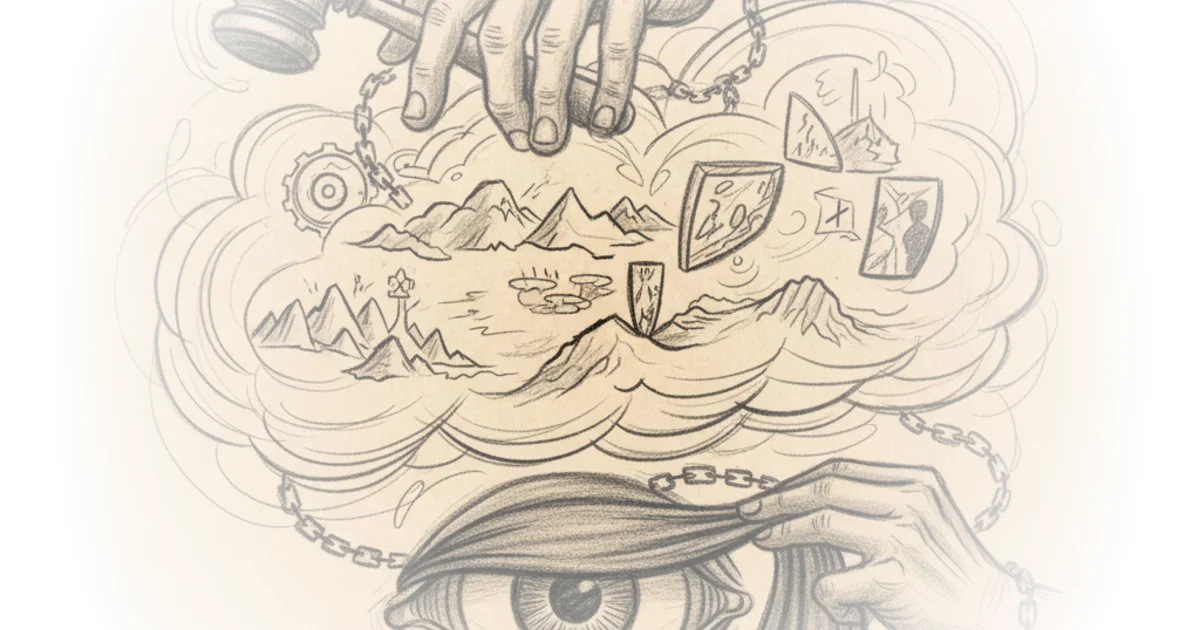
Critics might argue that in a society with deep historical wounds, the immediate social cost of certain facts outweighs the abstract value of truth. Huemer, however, insists that the potential for misuse does not alter the underlying reality. He writes, "Reality doesn't care about our values. Nor does it care about our political values. We cannot count on nature to conspire to produce the most politically convenient patterns of facts." This assertion is the backbone of the piece, challenging the notion that truth is malleable to fit a moral narrative.
The Cofnas Case and the Threat of Censorship
The author grounds his theory in the recent controversy surrounding Nathan Cofnas's appointment at Ghent University, where demands were made for his firing and even criminal prosecution under Belgian anti-racism laws. Huemer notes that a Belgian judge argued that "packaging a discourse as 'scientific', 'philosophical', or 'critical' does not prevent it from being punishable when it objectively incites discrimination or propagates ideas of racial superiority." Huemer pushes back, suggesting that the real issue is not the science of hereditarianism—the idea that genetic differences contribute to group variations in traits—but the moral assumptions used to interpret it. He breaks down the logical steps a racist might take, pointing out that the leap from genetic data to discriminatory policy relies on arbitrary moral premises, not the data itself.
If the recognition of some fact would lead people to adopt bad policies, that will not stop nature from throwing that fact at us.
The author argues that suppressing Cofnas is a strategic error because it assumes the threat of racism is imminent in modern liberal democracies. He writes, "The very reason why the campaign to suppress him might work is why the threat that it responds to is bogus—because elite culture in modern liberal democracies is utterly against Jim Crow and other anti-black discrimination." This observation highlights a paradox: the very ability to suppress a view suggests that the opposing view holds the power, not the suppressed one. Huemer suggests that the real danger lies in the suppression itself, which can backfire by making the suppressed ideas seem more attractive to those who feel silenced.
The Danger of Guilt-by-Association
Perhaps the most striking part of Huemer's analysis is his rejection of guilt-by-association arguments. He acknowledges that hereditarianism sounds like "stuff that the Nazis said," but he warns against letting historical villains dictate current scientific discourse. He poses a hypothetical: "What if an evil person starts trumpeting some actual fact, F, which he falsely uses as a reason for undertaking some awful policy? Do we then have to start denying F?" To illustrate this, he draws a parallel to the Unabomber, Ted Kaczynski, who argued that industrial society harms the environment and human freedom. Huemer writes, "Suppose a serial killer says that industrial society is harming the environment... Do we now have to put a taboo on anyone's arguing that industrial society harms the environment, etc.?" He notes that we do not ban environmental critiques just because a terrorist used them, yet we often apply this double standard to race and intelligence.
This historical reference adds depth by showing that the error of conflating a fact with its worst possible user is a recurring pattern in intellectual history. Huemer argues that the correct response to bad arguments is to dismantle the flawed premises, not to ban the underlying facts. He writes, "If you have a dumb argument for a bad conclusion, usually you should focus on attacking the least plausible premises of the argument." In the case of racial discrimination, he identifies the premise that people should be judged by group averages rather than individual merit as the core error, not the genetic data itself.
Bottom Line
Huemer's strongest contribution is his insistence that moral outrage cannot substitute for logical rigor, a point that resonates deeply in an era where facts are increasingly treated as optional. His biggest vulnerability, however, is his assumption that the public can easily separate scientific data from its potential misuse without significant social friction. As readers consider the implications, the key takeaway is that protecting truth requires the courage to engage with uncomfortable facts rather than the comfort of silencing them.
The very reason why the campaign to suppress him might work is why the threat that it responds to is bogus—because elite culture in modern liberal democracies is utterly against Jim Crow and other anti-black discrimination.