Paul Cooper doesn't just recount history; he resurrects a lost world by weaving the sensory details of Marco Polo's 13th-century journey with the dry, hard facts of modern archaeology. This piece stands out because it refuses to treat the collapse of the Bagan Empire as a simple footnote, instead framing it as a complex interplay of geography, mythology, and environmental fragility that feels startlingly relevant to our own climate-changed present.
The Explorer's Lens
Cooper anchors the narrative in the vivid, almost hallucinatory account of Marco Polo, using the Venetian traveler not as a protagonist, but as a witness to a civilization already in decline. He writes, "after the Journey of 15 days that has been mentioned you reach the city of miyan which is large magnificent and the capital of the Kingdom." By starting with Polo's observation of a city where "more than 4 000 golden temples sent their spiers Lancing up into the afternoon air," Cooper immediately establishes a visual grandeur that contrasts sharply with the reality Polo found: a place where "homes were abandoned and temples had fallen into disuse and disrepair."
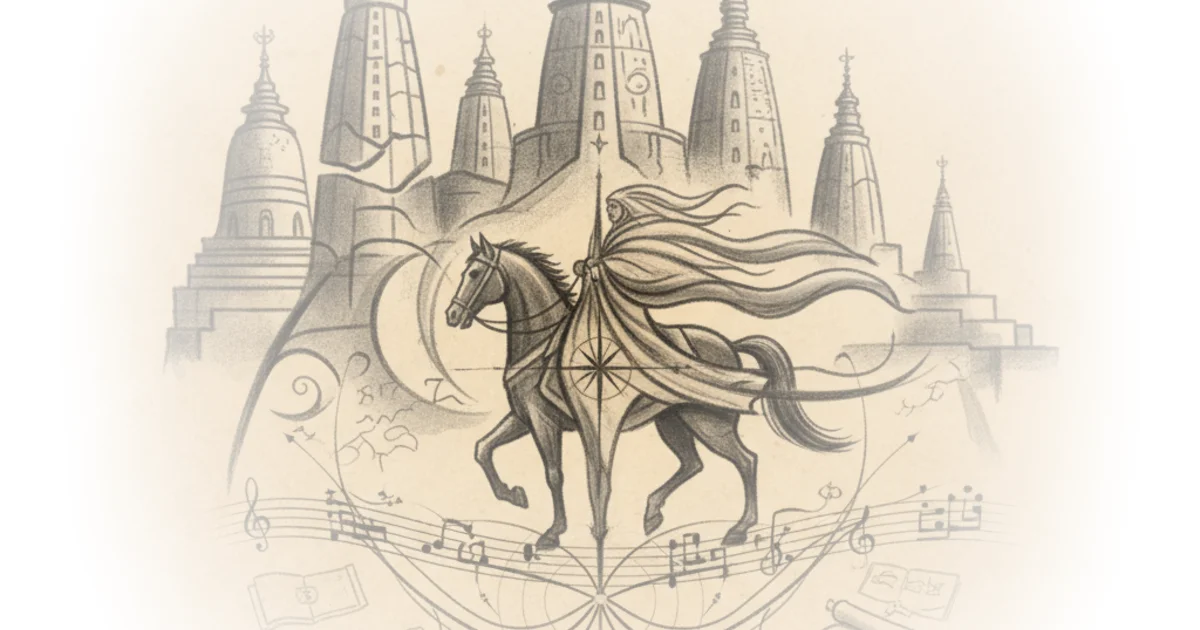
This framing is effective because it bypasses dry chronology to hit the reader with the emotional weight of a fallen empire. Cooper notes that while the city had "fallen on Hard Times" with "signs of War hungry and displaced people on the streets," the physical remnants of its power remained. The author's choice to focus on the specific details of the royal tombs—describing towers "entirely of marble ten Paces in height" and bells of gold and silver that "sounded when put in motion by the wind"—serves to humanize the scale of the loss. It transforms abstract historical decline into a tangible, auditory experience.
Critics might argue that relying on Polo's account, which was filtered through a prison cell and a ghostwriter, risks romanticizing the narrative. However, Cooper mitigates this by acknowledging the collaboration with Rusticello de Pisa and the "surprisingly High degree of accuracy" scholars attribute to the text, grounding the storytelling in historical credibility.
"I want to ask what did they have in common what led to their fall and what did it feel like to be a person alive at the time who witnessed the end of their world."
The Geography of Power
The commentary shifts to the physical stage of this drama: the Irrawaddy River. Cooper argues that the river was not merely a water source but the conceptual backbone of the nation, stating, "the people in Burma would rarely talk about the country in terms of North and South but rather used the words Anya and akie upstream and downstream." This linguistic detail is a masterstroke, illustrating how deeply the environment shaped the culture's worldview.
He details how the geography dictated survival, noting that the "dry zone" receives little rain, yet the mountains "soak up much of the moisture" which then flows down the river, ensuring that "so long as you stay close to the river the dry zone is actually never short of water." This sets up the central tension of the episode: a civilization built on a delicate hydrological balance. Cooper explains that the teak trees, with their "exceptional water resistance," allowed for massive constructions like the Ubein Bridge, which has lasted for nearly 200 years, proving that the people were masters of their environment—until they weren't.
The author also tackles the nomenclature of the region with nuance, explaining that while the British used "Burma," the 1989 military dictatorship changed it to "Myanmar," creating a "complicated history" where the name itself is a political battleground. By choosing to use both names interchangeably, Cooper respects the local context while acknowledging the colonial and post-colonial layers of identity.
The Myth and the Stone
Perhaps the most compelling section is Cooper's dissection of the historical record itself. He exposes the "Chronicles of Burma" as "instruments of official propaganda" that are "full of exaggeration poetic license and mythology," yet he argues they remain vital. He writes, "in all their Fantastical presentation these Chronicles can combine with official inscriptions to preserve relatively accurate dates and events."
This is a sophisticated take on historiography. Cooper describes the "Glass Palace Chronicle," commissioned in 1829, as an attempt to "purify" conflicting records by "adopting the truth in the light of reason." He highlights the absurdity of the source material, noting that it includes "truly ludicrous exaggerations about the size of armies" and appearances of "ogres ghosts ghouls demons and magicians." Yet, he insists that beneath the folklore lies the "traditional memory of the people."
A counterargument worth considering is whether relying on such mythologized texts obscures the actual socio-economic causes of the empire's fall. However, Cooper's approach suggests that for the people of Bagan, the myth was the reality, and understanding their collapse requires understanding their worldview, not just their tax records.
Bottom Line
Paul Cooper's analysis succeeds by treating the Bagan Empire not as a static ruin but as a living, breathing entity that rose and fell with the rhythms of the Irrawaddy. The strongest element is his ability to blend the sensory richness of Polo's travelogue with the rigorous skepticism of modern archaeology. The biggest vulnerability lies in the inherent uncertainty of the sources, but Cooper navigates this by being transparent about the blend of fact and folklore. For the busy listener, this is a masterclass in how to find the human pulse within the stone of history.