In a world saturated with digital distractions, Fred Mills makes a startling claim: the most impactful career path for the next generation isn't in the metaverse, but in the physical act of building our world. This piece, framed as a live event transcript, bypasses dry industry statistics to argue that construction is the only sector capable of solving the dual crises of rapid urbanization and climate change, yet it remains dangerously invisible to the very talent needed to fix it.
The Invisible Engine
Mills opens by reframing the construction sector not as a trade, but as the silent architect of human existence. He writes, "The incredible people in this room shape our world... you guys work in a phenomenal industry that shapes the lives of every child, every elderly person in every corner of this planet." This is a bold rhetorical move, elevating the conversation from job descriptions to societal stewardship. The argument lands because it shifts the focus from the grit of the job site to the grandeur of the outcome.
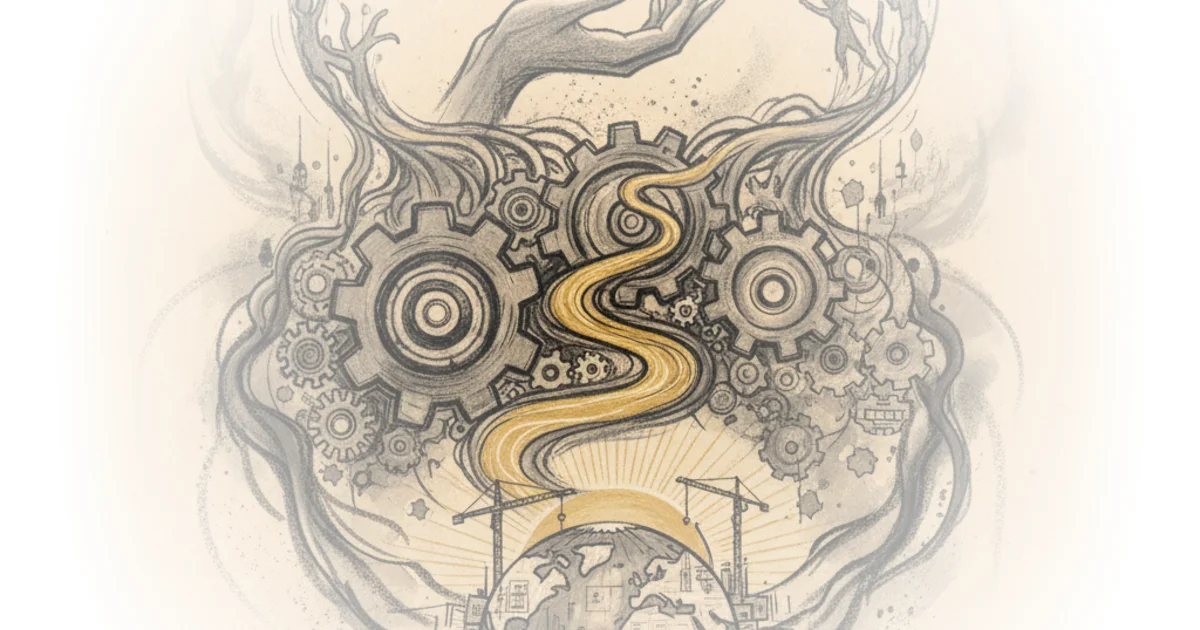
However, Mills identifies a critical disconnect: the industry's best work is trapped in trade magazines that few read. He argues, "We do what we do at the B1M to show the whole world how incredible this industry is... to take this industries best and most compelling stories out from trade shows and trade magazines that people have to opt into and instead place them on platforms that billions of people check every day." The strategy here is clear—democratize the narrative. By moving the conversation to mass-market video platforms, the goal is to change the perception of construction from a fallback career to a premier choice for innovators.
My mission in life is a very simple one: I love construction and I want the whole world to love it too.
Critics might note that romanticizing the industry without addressing the harsh realities of labor conditions, safety risks, or the physical toll of the work could lead to a mismatch between expectation and reality for new recruits. Yet, Mills counters this by emphasizing the intellectual and technological evolution of the field.
Beyond the Hard Hat
The commentary shifts to the technological renaissance within the sector, featuring James Chambers of Blue Beam, a construction software firm. The narrative moves away from the stereotype of manual labor to a high-tech environment. Chambers notes that modern tools are not just about efficiency, but about "putting the right information in the hands of the right people at the right time." This reframing is essential; it suggests that the industry is now a hub for data science and engineering precision, not just physical exertion.
Mills and Chambers illustrate this with a specific anecdote about automation saving hours of tedious work. "I learned that there were a couple of project assistants that were spending eight to 12 hours splitting apart PDFs... we walked through it and got it done in 25 minutes," Chambers recalls. This story serves as tangible proof that the industry is shedding its analog past. The implication is that the barrier to entry is no longer a lack of technology, but a lack of awareness.
The piece argues that the industry is uniquely positioned to tackle global challenges because of its longevity and scope. "Almost every other job role is enabled by construction and while those job roles may be impactful in their own right, the work of the building industry lasts for generations and touches more of the population than any other." This is the core of the recruitment pitch: permanence in a transient world. For a generation anxious about climate change and housing shortages, the ability to leave a physical legacy is a powerful motivator.
The Climate Imperative
The most urgent part of the argument connects construction directly to the climate crisis. The text notes that "our buildings now account for 40% of all greenhouse gas emissions," yet simultaneously positions the sector as the solution. "Construction has the ability to overcome these challenges and make a positive difference," Mills asserts. This duality is the industry's greatest challenge and its greatest opportunity.
The commentary highlights a generational shift, suggesting that young people are actively seeking this impact. "A new wave of young people around the world are now choosing to build their careers in construction... to take charge of some great projects not just being working on it but actually taking charge of it." The narrative suggests that the industry is finally aligning with the values of a socially conscious workforce. The argument is that the industry is no longer just about building walls; it's about building a sustainable future.
This is a sector that doesn't shout about itself that isn't good at celebrating what it does.
A counterargument worth considering is that while the industry has the potential to solve these problems, the pace of regulatory change and the adoption of green technologies often lag behind the urgency of the climate crisis. The piece is optimistic about the people solving the problem, but less detailed on the policy hurdles they face.
Bottom Line
Fred Mills' argument is a compelling call to action that successfully rebrands construction as a high-tech, mission-driven career path essential for planetary survival. Its strongest asset is the emotional resonance of connecting individual careers to global infrastructure, though it risks oversimplifying the systemic barriers to green construction. The reader should watch for how this new wave of talent translates into actual policy shifts and sustainable building practices in the coming decade.