Kings and Generals reframes the Pacific War not as a sudden explosion of aggression, but as the inevitable collision of two imperial trajectories that began decades before the first shot was fired. While many narratives focus on the tactical brilliance of 1941, this piece argues that the United States' own expansionist doctrine and inconsistent diplomacy laid the groundwork for a conflict it was ill-prepared to fight. For the busy strategist, the value here lies in understanding how commercial interests and naval treaties inadvertently forged the very enemy they sought to contain.
The Evolution of American Imperialism
The authors begin by dismantling the myth of American isolationism, tracing a clear line from Manifest Destiny to overseas expansion. "One of the primary objectives of the united states has been to secure america's commercial interests in the world without hesitation to use force to preserve its trade," Kings and Generals writes. This is a crucial distinction; the piece suggests that American interventionism was rarely ideological in the abstract, but always tethered to the bottom line. The argument gains traction when it details how the doctrine of Manifest Destiny evolved from westward continental expansion to the acquisition of Pacific island groups to secure trade routes in the Far East.
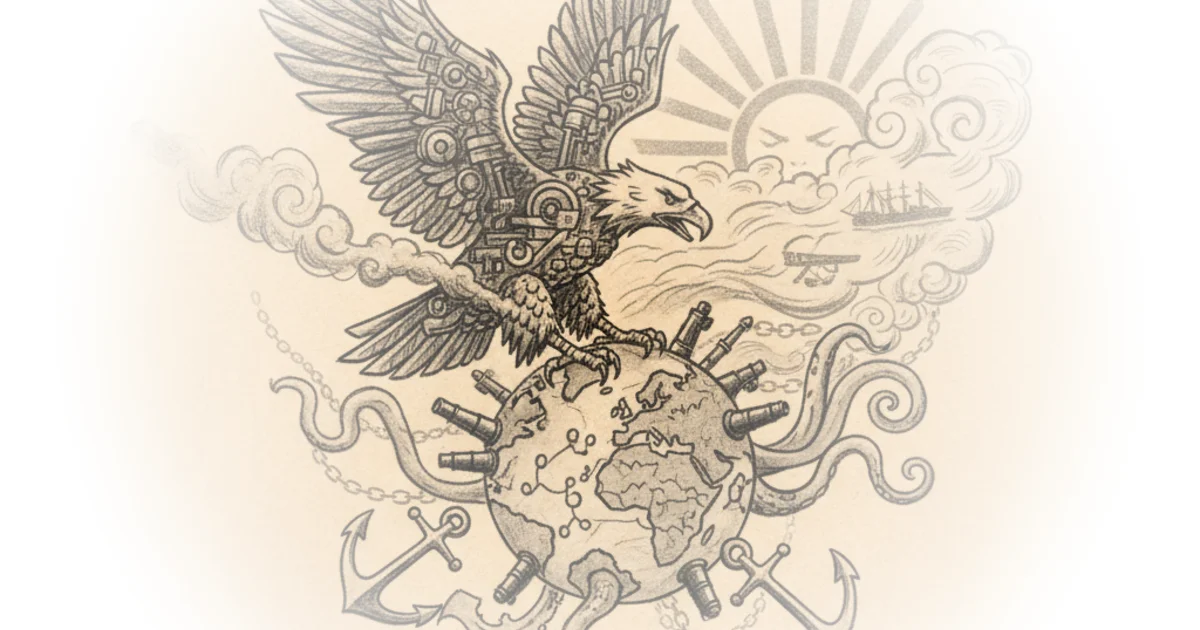
The commentary highlights the pragmatic, if cynical, nature of early U.S. foreign policy. The authors note that the U.S. initially "opted to cede the initiative to the europeans with the objective of securing the little presence they had in the region while at the same time helping important states like japan or china to modernize and thus become a counterweight to european encroachment." This strategic balancing act is often overlooked in favor of moralizing narratives about American benevolence. However, the authors correctly identify the fragility of this approach: as Japan modernized, it ceased to be a useful counterweight and became a rival. The transition from ally to adversary was not a betrayal of trust, but a logical outcome of competing imperial ambitions.
"Commercial interests in the far east also helped to fuel this extension of the manifest destiny with the u.s participating in the forced establishment of trade in china japan and korea via the unequal treaties."
The Diplomatic Trap of the 1920s
The narrative shifts to the post-World War I era, where the authors critique the inconsistency of American diplomacy. They argue that while President Woodrow Wilson championed self-determination, his administration's actions in the Pacific were contradictory. "It was during this time that american japanese relations reached a point of no return as the u.s condemned the 21 demands presented by the japanese to china," Kings and Generals notes. The authors point out that the rejection of Japan's racial equality proposal at Versailles was a pivotal moment that fueled anti-American sentiment. This framing is effective because it moves beyond the simple narrative of Japanese aggression to include the diplomatic humiliations that radicalized the Japanese state.
The piece then dissects the Washington Naval Treaty of 1922, presenting it as a double-edged sword. "The treaty itself signed in 1922 established a 553 ratio in battleship tonnage for the us britain and japan as well as a non-fortification clause in the pacific," the authors explain. On the surface, this secured American superiority. However, Kings and Generals argues that the non-fortification clause "would render war plan orange completely ineffective as the non-fortification clause left the us at a severe disadvantage in the pacific." This is a sophisticated analysis of how a diplomatic victory created a military vulnerability. By agreeing not to fortify their Pacific possessions, the U.S. removed the very buffer zones their war plans relied upon.
Critics might note that the authors understate the domestic political constraints on the U.S. government; the public's desire for disarmament after the Great War was a powerful force that no administration could easily ignore. Nevertheless, the strategic critique holds: the treaty solved a short-term budget problem while creating a long-term existential threat.
The Failure of Containment and the Rise of War Plans
As the Great Depression took hold, the authors describe a paralysis in American foreign policy that allowed Japan to consolidate power in Manchuria. "Overwhelmed by the financial crisis at home the hoover administration wanted no problem with japan so they allowed the japanese to get away with it without enacting economic sanctions against them," Kings and Generals writes. This period of inaction is presented as a critical failure of the Open Door policy. The authors argue that the U.S. focus on domestic recovery came at the expense of its strategic position, leaving the Asiatic Squadron with "aged vessels from the great war."
The commentary then pivots to the eventual recovery of the U.S. Navy under the Vinson Acts, which used naval buildup as a jobs program. "By 1942 the american navy had been successfully built back up to the london treaty limits which gave a little more confidence for warplane orange but still japan held considerable superiority in the pacific," the authors state. This leads to the development of the "Royal Road" strategy, a plan anticipating a sustained campaign of island hopping. The authors conclude that this strategy was born of necessity, as the U.S. realized it could not win a quick war in the Pacific. The narrative effectively connects the economic policies of the New Deal to the military realities of the coming war, showing how domestic recovery programs inadvertently funded the war machine.
"The treaty was thus a great success securing american superiority against the ign and managing to soothe japanese aggression against china for the remainder of the decade yet in the long term the treaty would render war plan orange completely ineffective."
Bottom Line
Kings and Generals offers a compelling structural analysis of the Pacific War, successfully arguing that the conflict was the result of decades of competing imperial ambitions and flawed diplomatic compromises rather than a sudden shift in Japanese aggression. The piece's greatest strength is its detailed examination of how the Washington Naval Treaty, intended to prevent war, actually created the conditions that made the U.S. defense of its Pacific possessions untenable. However, the narrative occasionally glosses over the intense domestic political pressures that constrained American leaders, presenting a somewhat deterministic view of history where policy choices were the only variables. The reader should watch for how these strategic missteps influenced the specific tactical decisions made in the early days of the war, a topic the series promises to explore next.