Fred Mills doesn't just recount the history of an amusement park; he exposes the terrifying gamble that turned a debt-ridden studio into a global empire. The most striking claim isn't that Disney built a park, but that he essentially bet his life insurance and personal fortune on a concept that engineers deemed impossible to finish on time. This is not a nostalgic trip down memory lane, but a masterclass in high-stakes project management where the margin for error was zero.
The Architecture of Illusion
Mills argues that the genius of Disneyland lay not in its rides, but in its radical rethinking of visitor flow and psychological immersion. He writes, "Disney wanted to create something new, a place with rides and attractions, but more than that, a place that would really tell a story." This reframing is crucial; it shifts the focus from entertainment to narrative architecture. The author details how Disney rejected the chaotic, multi-entrance model of traditional fairs in favor of a single, curated entry point.
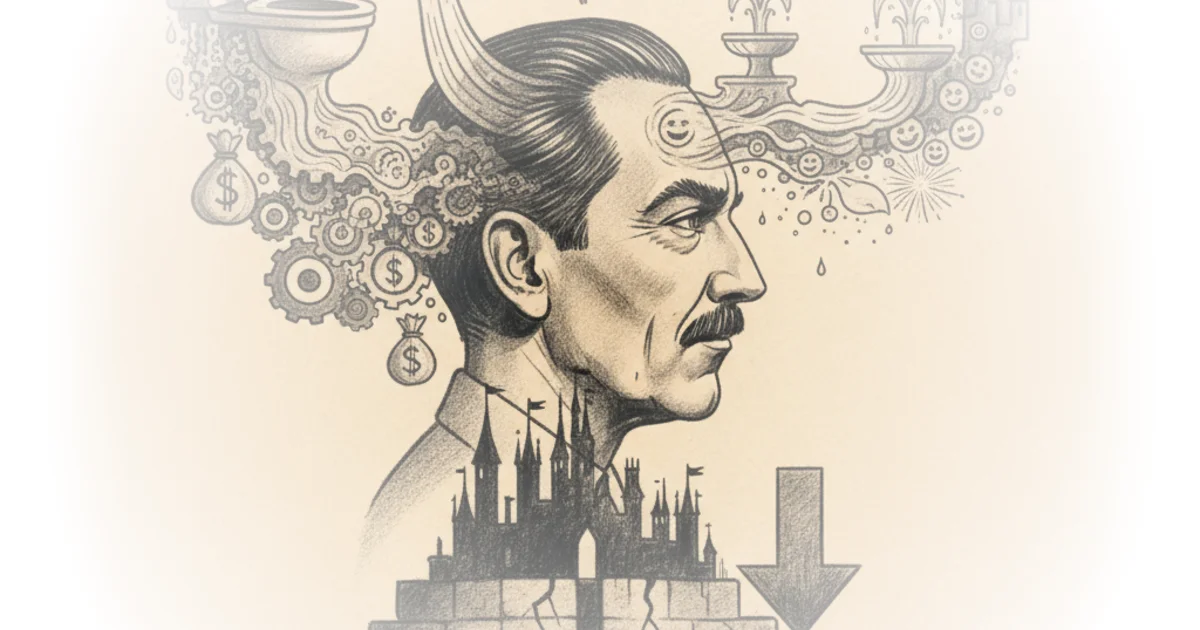
The strategy was to control the guest experience from the very first step. "By restricting access to the park in this way, Disney was able to create a tightly curated experience from the moment guests stepped foot in his park," Mills notes. This move transformed the park from a collection of attractions into a cohesive world. The author highlights the use of "weenies"—visual magnets like the castle—to guide movement, a technique that remains standard in modern urban design.
"Disneyland, however, would have just one. By restricting access to the park in this way, Disney was able to create a tightly curated experience from the moment guests stepped foot in his park."
The commentary here is sharp: Disney understood that confusion kills immersion. By forcing a linear path through a "stage curtain" tunnel, he ensured that the outside world was physically and mentally left behind. Critics might argue that this level of control feels restrictive or paternalistic, but Mills makes a compelling case that it was necessary to maintain the "idyllic world of innocence" Disney envisioned.
The Engineering of Improvisation
The narrative takes a dramatic turn when Mills details the sheer financial peril Disney faced. The author writes, "He even put his personal fortune on the line, selling properties and cashing in his life insurance to raise funds." This detail elevates the story from a business case study to a personal drama. The stakes were not just corporate; they were existential.
Mills illustrates how Disney bridged the gap between artistic vision and practical construction by creating a new role: the "imagineer." He notes that Disney turned to set designers and artists, including rivals from 20th Century Fox, to build something that had no precedent. The process was fluid and often chaotic. "During the design phase, engineers had taken the model apart for cleaning, only to quickly reassemble it when Walt Disney came to visit. In the rush, they put the palace back on the wrong way round. Disney noticed the mistake, but actually preferred the way it looked and had the castle built as the model stood."
This anecdote perfectly captures the improvisational spirit of the project. It wasn't about rigid adherence to a plan, but about seizing opportunities for magic. The author also highlights the pragmatic, almost ruthless, efficiency of the construction team. "Handrails around planted areas were scrapped. Walnut trees felled from the site's original farm were kept, cut off at the trunk, and then replanted upside down to resemble mangrove swamps." This willingness to cut corners on non-essentials to save the core experience is a lesson in prioritization that resonates with any project leader.
"The whole thing was a total disaster. The park was swamped with people after thousands of counterfeit tickets were sold. Just as Joe Fowl had predicted, many of the rides weren't finished, and most of those that were ended up breaking down."
Mills does not shy away from the opening day catastrophe. He details the gas leaks, the broken rides, and the infamous decision to install toilets instead of drinking fountains. Yet, the author's point is that the disaster didn't matter because the illusion held. "Just as his first cartoons had done nearly 30 years earlier, Disneyland had captured the public imagination." The argument is that the magic of the concept was so strong it could withstand the failure of the execution.
The Magic of Forced Perspective
One of the most fascinating sections of the piece is the explanation of "forced perspective." Mills explains how Disney used optical illusions to make buildings appear taller and grander than they actually were. "By decreasing the height of a building the higher it gets, our eyes are tricked into thinking they're further away, and we assume they're taller than they are." This is a brilliant application of Hollywood set design to physical infrastructure.
The author notes that this technique was applied to the Sleeping Beauty Castle, making a 23-meter structure appear much more imposing. "Because there are no consistent stories, our brain has less of a reference for how tall it should be, making the castle seem bigger." This insight reveals that the park's success was built on manipulating human perception. The author also mentions the invention of "Go Away Green," a specific paint color designed to make utility boxes and trash cans invisible to the guest. This level of detail underscores the obsessive nature of Disney's vision.
"Disneyland didn't just revive his studio. It rewrote the playbook for how we design experiences, cities, and even entire worlds."
Mills concludes by connecting the park's legacy to broader design principles. The argument is that Disneyland was a prototype for modern experiential design, influencing everything from retail spaces to urban planning. The author suggests that the "rough edges of opening day are long forgotten," leaving behind a blueprint that is still relevant today.
Bottom Line
Fred Mills delivers a compelling narrative that frames Disneyland not as a theme park, but as a triumph of narrative engineering over logistical chaos. The piece's greatest strength is its ability to humanize the high-stakes financial gamble while detailing the technical innovations that made it work. However, the argument slightly glosses over the labor conditions and the intense pressure placed on the workers who built this illusion, focusing almost exclusively on the visionaries. Ultimately, the piece succeeds in showing that the most enduring structures are those built on a foundation of story, not just steel and concrete.