In an era where privacy advocates are increasingly indistinguishable from the salespeople they critique, The Hated One presents a startling case study in the cost of integrity. This isn't just a story about a rejected sponsorship; it is a chilling account of how quickly a privacy giant went from eager collaborator to silent ghost the moment the creator refused to monetize their trust. The evidence here—leaked correspondence showing a stark pivot from flattery to silence—offers a rare, unvarnished look at the transactional nature of modern digital ethics.
The Dilemma of Independence
The Hated One begins by establishing a high-stakes personal context: a full-time content creator earning barely $500 a month from ad revenue, struggling against an algorithm that penalizes anti-consumerist messaging. The financial pressure is immense, making the offer from Proton, the company behind Proton Mail and a host of other privacy tools, particularly seductive. The author writes, "The offer from Proton was hard to resist... If I could get a 100 people per year to use my link, it wouldn't be life-changing, but it would certainly ease the pain."
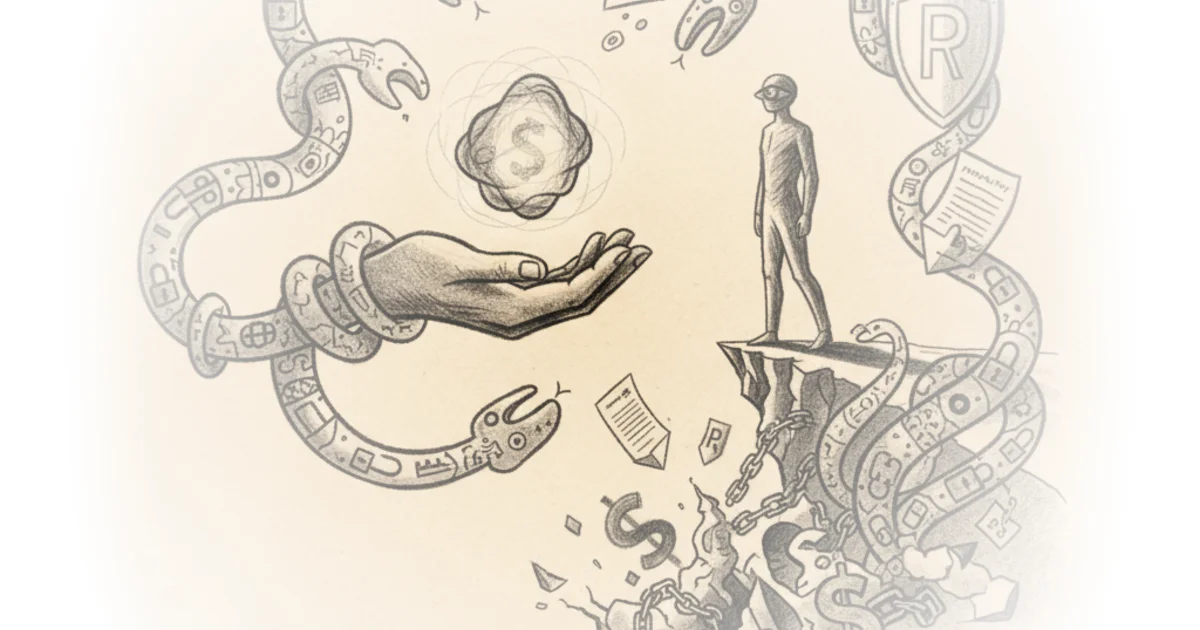
Yet, the author recognizes the trap. The core argument rests on the idea that financial incentives inevitably warp editorial judgment, turning a reviewer into a salesman. As The Hated One puts it, "How could anyone ever trust my privacy recommendations that are based on hundreds of hours of research into the best available sources?" This self-interrogation is the piece's emotional anchor. It highlights a systemic issue where the only way to maintain unbiased critique is to remain financially precarious. A counterargument worth considering is that affiliate links, if disclosed transparently, can coexist with honest reviews; however, the author's fear is that the incentive to generate clicks will subtly shift the narrative toward uncritical praise, regardless of disclosure.
Moded interest is the biggest bias in media, politics, and academia. And we know this is a problem.
The Ghosting of Ethics
The narrative takes a sharp turn when the author declines the money but proposes an alternative: a long-form interview with Proton's founder, Andy Yen. This was a compromise that respected both the creator's principles and the company's desire for engagement. The Hated One notes that Proton had initially agreed to this, stating they were "not conditioning this on me accepting the offer." But the moment the money was refused, the communication ceased entirely.
The author describes the silence with palpable frustration: "Proton hasn't responded to my emails ever since... I reached out to Proton about this interview multiple times to different email addresses and I got no response from any of them." This silence is the most damning piece of evidence in the piece. It suggests that for some corporations, engagement is only valuable when it is transactional. Critics might argue that Proton simply had a change in internal priorities or that the author's public airing of the emails was a breach of trust, but the timing—immediate cessation after the decline—strongly implies a punitive response to the rejection of the financial deal.
The Existential Threat to Independent Media
The piece culminates in a stark ultimatum directed at the audience. The Hated One lays bare the precarious reality of independent journalism in the age of platform censorship and corporate sponsorship. "I'm reducing myself into an e-hore begging for money from my audience because I don't want to myself out to sponsors that would conflict with my videos," the author admits, a raw confession that underscores the unsustainable nature of their current path.
The argument extends beyond personal finance to the health of public discourse. The Hated One argues that when creators are funded by sponsors, the result is a homogenized landscape of "technoptimist, probillionaire, proc corporate propagandist" content. The author writes, "The result is that when the vast majority of media and creators are funded by sponsors, all you get is sponsor aligned content that drowns down criticism and negative views." This is a powerful indictment of the current media ecosystem, where the absence of critical voices is not an accident but a feature of the funding model.
Bottom Line
The Hated One's account is a compelling, if painful, testament to the high cost of maintaining ethical boundaries in the creator economy. Its greatest strength lies in the concrete evidence of the company's silence, which validates the author's fears about the conditional nature of corporate goodwill. However, the piece's vulnerability is its reliance on a binary choice—sell out or starve—that may not account for the potential of hybrid models or the long-term viability of a channel that refuses to scale through sponsorship. Readers should watch to see if this public exposure forces Proton to reconsider its engagement strategy or if the silence proves to be the new normal for independent critics.