Human beings are the only creatures on Earth that regularly choose to destroy themselves on purpose. It's one of the strangest paradoxes of our existence: we're survival-oriented animals, yet we consistently make decisions that harm us. Stephen West explores why through two philosophical lenses—that of Fyodor Dostoevsky's personal experience with gambling and Georges Bataille's hidden economics of self-destruction.
The Paradox of Self-Destruction
In nature, self-destructive behavior is exceedingly rare. Elephants in captivity sometimes exhibit it; certain bees die when they sting. But for humans, it's a defining characteristic. People routinely choose to destroy small pieces of themselves—through addiction, compulsive gambling, or destructive habits—not because they want to die, but simply to feel better for a moment.
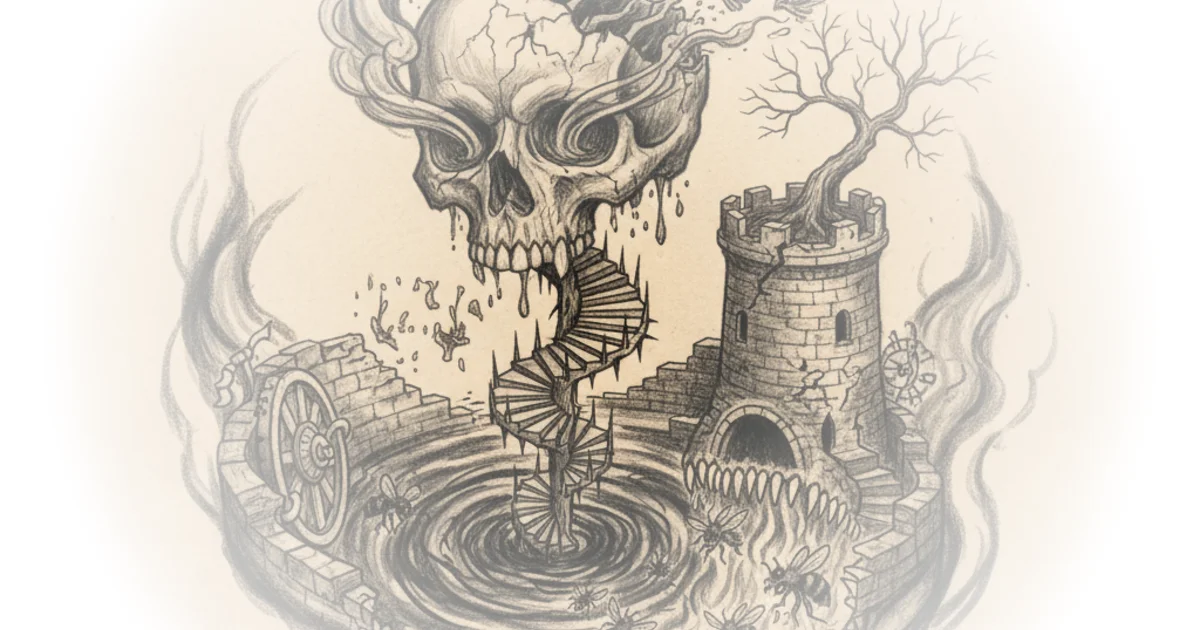
The question is: why? Two thinkers from the 19th century offer compelling answers.
Dostoevsky's Gambler
Fyodor Dostoevsky spent much of his life battling various forms of self-destruction. He smoked heavily, drank, and struggled with epilepsy. But nothing consumed him quite like gambling. Between 1863 and 1865, he played roulette obsessively, accumulating so much debt that collectors threatened to take him to court.
To escape this situation, he signed a notoriously predatory publishing contract: deliver a manuscript by November 1st, 1866, or the publisher would acquire rights to everything he'd ever written for nine years. With only three weeks left and nothing written, he hired a stenographer named Anna, who transcribed his words at breakneck speed. On October 31st—hours before the deadline—he submitted what became one of the most legendary all-nighters in literary history.
"He chooses to defy his own fate one more time."
The book that emerged was The Gambler, and it contains something invaluable: Dostoevsky's firsthand understanding of why people do self-destructive things while knowing they shouldn't. Modern commentators often frame this as addiction, but the language simply didn't exist then. What remains is a raw exploration of how someone discovers their own destruction—and can't stop pursuing it.
The Psychology of Descent
The novel follows Alexe, a tutor for a retired military officer buried in debt. He loves Paulina, the general's stepdaughter, and when she dares him to gamble on her behalf at the casino, he experiences something unexpected.
First comes nausea—the physical revulsion of losing money, the urge to flee. Then comes euphoria—the rush, the numbness, the feeling he's been chasing ever since.
He rationalizes it obsessively. The superstitions emerge: lost because he wasn't wearing his lucky pants; lost because the dealer used their right hand instead of left. He describes the bodily sensations in detail—heart pounding, hands shaking, knees trembling, sweating—knowing that betting these amounts could ruin him if he loses.
But he keeps playing.
The key scene arrives when he's won a substantial sum. He should walk away. Instead, he chooses to defy fate one more time. "One more spin," he says—and this moment becomes the philosophical heart of the entire work.
The Nihilist's Casino
When the general's mother unexpectedly arrives—contrary to rumors, she's healthy and strong—she immediately gambles herself. In less than three days, she burns through her entire life savings. No inheritance remains. No future security. Just immediate regret after the rush disappears.
By the novel's end, Alexe has abandoned everything meaningful: no love, no responsibility, no deep moral engagement. He's given up his entire life for gambling. In a telling final scene, when offered a chance to rejoin the living, he responds that maybe tomorrow—but for now, just one more spin.
"Just one more game of roulette, one more spin."
This represents what Dostoevsky saw as another manifestation of nihilism: once cosmic meaning is rejected, self-destruction becomes possible. The casino becomes a perfect setting because within it, no values exist. Everything reduces to determinism—a spinning wheel—and denial of responsibilities to the network of people we're part of.
Bataille's Hidden Economics
While Dostoevsky dramatized the psychology of self-destruction through gambling, Georges Bataille offered an alternative framework: hidden economics that explain why we chase destructive behavior at all.
His philosophy complements Dostoevsky by revealing what drives us toward ruin—not just in gambling, but in any self-destructive pattern—through underlying economic forces most people never recognize.
Bottom Line
This piece excels at dramatizing complex psychology through narrative. Dostoevsky's personal desperation became one of literature's most penetrating studies of addiction and nihilism—the man literally wrote himself out of debt while being consumed by the very thing he'd later depict. The argument's vulnerability lies in its scope: linking gambling to broader nihilism is compelling, but readers may want more direct connection between Bataille's economics and Dostoevsky's psychology than this piece provides. The strongest moment remains Alexe's final "one more spin"—a perfect crystallization of why we never stop.