This piece arrives at a moment when global headlines scream of volatility, yet Zichen Wang offers a startlingly calm diagnosis: the most significant shift in China-U.S. relations isn't a new treaty or a trade deal, but a subtle evolution in vocabulary. By dissecting the "constructive relationship of strategic stability" agreed upon during a recent high-stakes presidential visit to Beijing, Wang argues that both sides have finally found a language to acknowledge competition without surrendering to confrontation. For busy leaders tracking geopolitical risk, this analysis cuts through the noise of military posturing to reveal the actual guardrails being built in real-time.
The Architecture of "Strategic Stability"
Wang begins by contextualizing the recent summit not as a diplomatic victory lap, but as a necessary intervention following months of chaotic escalation. He notes that after the United States and Israel launched airstrikes on Iran and blockaded the Strait of Hormuz earlier this year, global markets teetered on the edge of collapse. In this context, the visit was "full of twists and turns," yet it proceeded with a solemnity that surprised many observers. Wang highlights the symbolic weight of Vice President Han Zheng welcoming the American president at the airport—a protocol usually reserved for high-ranking state leaders—and the choice to meet at the Temple of Heaven, a site symbolizing "the unity of heaven and humanity."
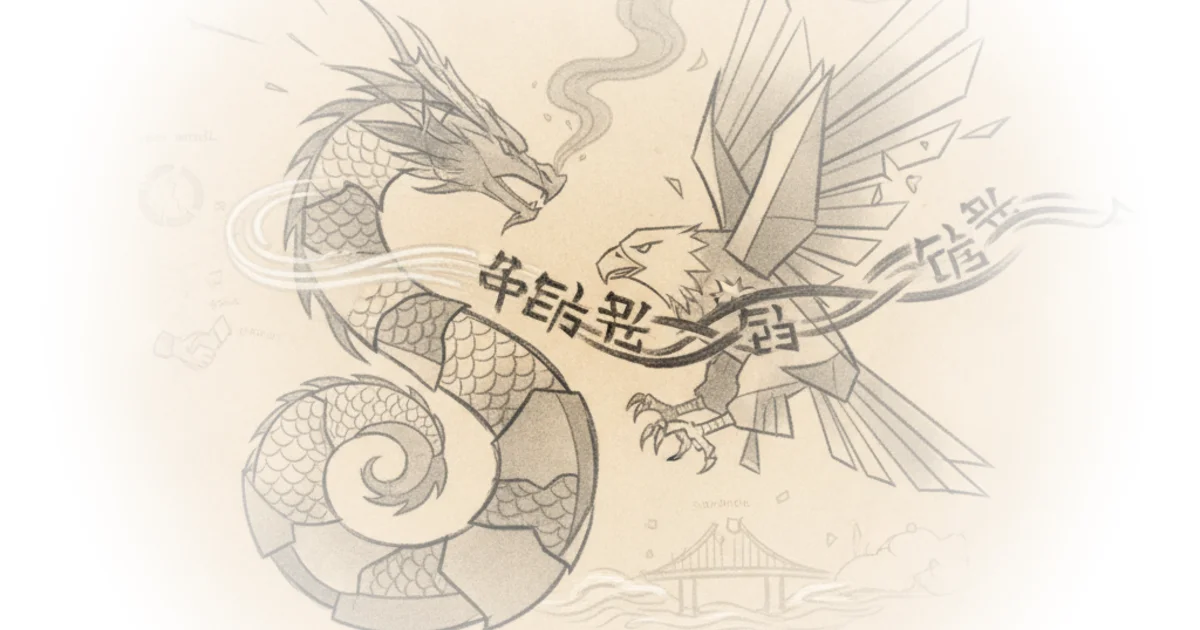
The core of Wang's argument rests on how this diplomatic theater translated into a new operational framework. He writes that the two presidents agreed to define their relationship as "a constructive China-U.S. relationship of strategic stability," giving direction to ties for years to come. This is not merely semantic gymnastics; Wang insists, "This is not an empty formula. It has concrete content." The framework breaks down into four pillars: positive stability (cooperation as the mainstay), healthy stability (competition within limits), constant stability (manageable differences), and lasting stability (peace on core issues).
"Competition exists, explicitly or implicitly, in sports, business, politics, and many other fields. Americans, by temperament, are willing to embrace competition."
Wang's analysis here is particularly sharp because it reframes the word "competition" from a threat into a neutral mechanism of engagement. He observes that while Beijing was historically reluctant to use this term, they now accept that the U.S. views long-term rivalry in technology and manufacturing as inevitable. The crucial distinction Wang draws is that acknowledging competition does not necessitate antagonism. As he puts it, "Once the outcome becomes clear, competition can then turn into cooperation." This reframing suggests a move away from the zero-sum thinking that has dominated the last decade of relations.
However, critics might note that relying on "healthy stability" assumes both sides share a definition of what constitutes "proper limits," a threshold that has historically been the first casualty of trade wars and sanctions. Wang acknowledges the U.S. tendency to use long-arm jurisdiction but suggests the new language is designed specifically to curb such excesses.
The Silence on Taiwan and the "Parallel" Future
Perhaps the most provocative element of Wang's commentary is his reading of the summit's silence regarding immediate crisis points. He points out that in previous decades, the Taiwan question would have dominated every headline. Instead, it was placed last in the official formulation of "lasting stability." Wang argues this ordering is deliberate: "In Chinese culture, being placed last does not necessarily mean being least important. On the contrary, it may mean being the most crucial point."
This placement signals a shift from reactive crisis management to proactive consensus building. Wang explains that the new language rejects the old narrative of inevitable decline or dominance. He cautions against the phrase "the East is rising and the West is declining," noting that while it captured a specific moment of Chinese resilience, it was never intended as a permanent verdict. Instead, the administration's current stance is more nuanced: "China's national rejuvenation and America's effort to 'make America great again' can proceed in parallel, reinforce each other, and benefit the world."
This vision of parallel progress stands in stark contrast to the "G2" or "grand bargain" speculation that preceded the summit. Wang dismisses the idea of a sphere-of-influence deal as outdated, arguing that the reality is far more complex. He draws on the historical memory of the 1970s and the "Group of Two" concept to show how easily such grand visions can collapse under the weight of specific disputes. The new approach, he suggests, is less about carving up the globe and more about managing the friction points that actually exist.
"The Taiwan question is the most important issue in China-U.S. relations... Lasting stability where peace is expectable means that China and the United States need to reach a strategic consensus on the Taiwan question."
Wang's interpretation of the banquet details further supports his thesis of a reset. He describes how the American leader, known for abstaining from alcohol, took a "small sip of wine" in Beijing—a gesture Wang calls a "natural expression of friendly body language" that signaled reciprocal goodwill. While some might view such anecdotes as superficial, Wang uses them to illustrate a broader point: the diplomatic protocol was executed with a level of care designed to lower temperatures before tackling hard policy issues.
The Human Cost and the Limits of Diplomacy
While Wang's focus is on high-level strategy, the backdrop of recent military actions demands a sober reminder. The summit occurred against the grim reality of airstrikes in Iran that eliminated top leadership and caused prolonged volatility in energy markets. While Wang notes these events as reasons for the visit's postponement, the human cost of such conflicts cannot be ignored. The "strategic stability" being negotiated is not an abstract concept; it is a desperate attempt to prevent further escalation that would inevitably lead to civilian suffering in regions like the Middle East and Eastern Europe.
Wang acknowledges that differences over global geopolitical issues, such as the Russia-Ukraine conflict and Iran, remain sharp. He argues for "controllable and institutionalised negotiation" precisely because hiding these differences is no longer an option. The argument holds weight: if the world cannot agree on a framework to manage these conflicts, the risk of miscalculation grows exponentially.
"China has already announced that President Xi has accepted President Trump's invitation and will pay a state visit to the United States in late September... For China-U.S. relations this year, then, describing them as 'leaving much room for imagination' would be both optimistic and forward-looking."
This optimism is tempered by Wang's realistic assessment of the road ahead. He notes that the U.S. is standing at the "threshold of a new historical cycle" bound to be restless. The "room for imagination" he cites is not a guarantee of peace, but an acknowledgment that the old scripts no longer work and new ones are being written in real-time.
Bottom Line
Zichen Wang's analysis succeeds by shifting the focus from personality-driven drama to structural vocabulary, revealing how Beijing and Washington are quietly constructing a new operating system for their rivalry. The strongest part of his argument is the redefinition of "competition" as a manageable, non-lethal state of affairs rather than a prelude to war. However, the piece's biggest vulnerability lies in its reliance on the assumption that both sides will honor these newly drawn boundaries when domestic political pressures rise. Readers should watch closely for whether the upcoming state visit to Washington can translate this "strategic stability" from diplomatic rhetoric into concrete policy guardrails before the next geopolitical flashpoint ignites.