This piece cuts through the diplomatic noise to reveal a profound contradiction at the heart of Beijing's strategy: while the Chinese government officially rejects the idea of a two-power world, its own leading scholars are quietly calculating how to exploit it. Sinification reports that despite the administration's public dismissal of the 'G2' concept, the policy elite is treating the term not as a trap, but as a signal of a new, transactional reality where Washington is finally forced to 'look across' rather than 'look down' at Beijing.
The Official Rejection vs. The Scholarly Reality
The article opens by highlighting the stark disconnect between state rhetoric and intellectual debate. When the executive branch revived the 'G2' label following the October 2025 summit, the immediate response from the Ministry of Foreign Affairs was a textbook rebuke. A spokesperson reiterated China's commitment to 'independent foreign policy, multipolarity and the Global South,' a stance that aligns with the rejection made in 2009 under the Obama administration. The piece argues that this isn't just diplomatic posturing; it is a strategic necessity. As former official Zhou Li warns, accepting a 'bipolar structure' would 'abandon the principle of sovereign equality' and risk alienating the very partners in the Global South that Beijing relies on for legitimacy.
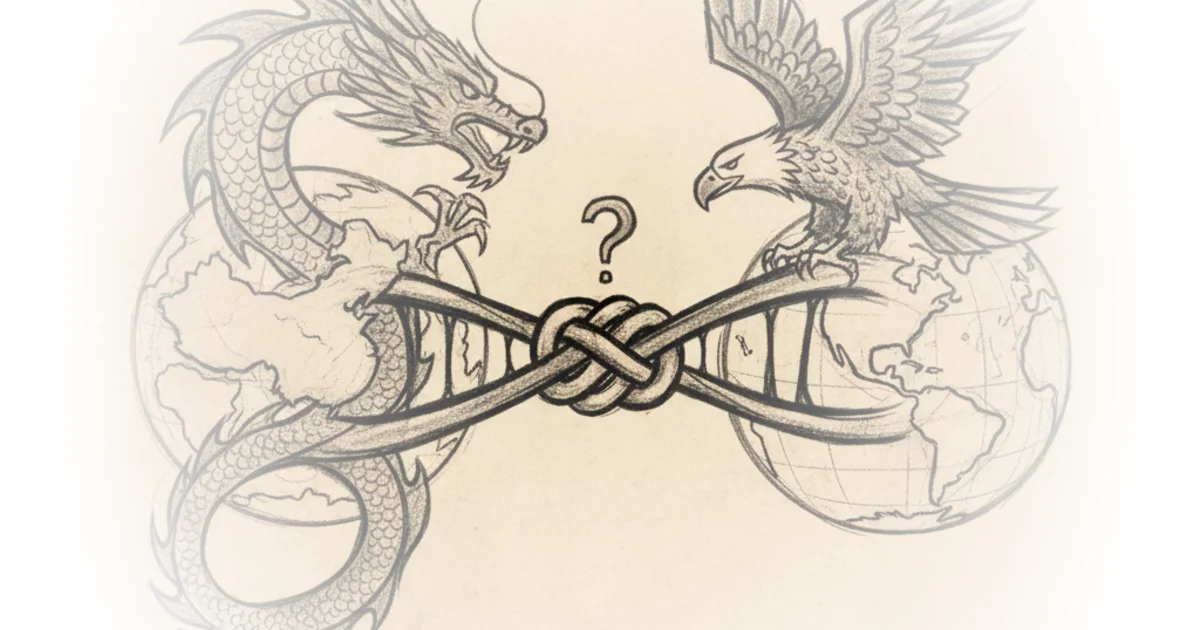
Zhou Li, quoted in the piece, states bluntly: 'After Trump took office for a second term in 2025, certain scholars within China have likewise proposed that the principal axis of international relations going forward will be a US-China 'bipolar structure,' with everything else constituting 'vast middle ground'; some have plainly endorsed 'G2' and called for China's foreign policy to be reshaped accordingly.'
This warning is significant because it reveals the internal friction within China's foreign policy establishment. The official line demands a world of 'multiple centres of power,' yet the material reality of the 2020s suggests a narrowing gap between the two superpowers. Critics might note that Zhou's argument, while politically safe, ignores the economic and military data showing that no other nation is currently capable of challenging US or Chinese dominance. The tension here is palpable: the state wants the benefits of peer recognition without the costs of a duopoly.
'China needs to use Trump's revival of 'G2' to build a major-power coordination and cooperation mechanism centred on 'China-US Plus.' The current trend of world multipolarity continues to advance.'
Recoding the Duopoly: From Governance to Coordination
Where the state draws a hard line, scholars are finding creative loopholes. The most compelling analysis in the piece comes from Xia Liping, who proposes a semantic and strategic workaround. Instead of 'co-governance,' which implies sharing the throne, Xia suggests 'coordination.' This subtle shift allows Beijing to engage with Washington on critical issues without formally accepting a hierarchy that excludes the rest of the world. Xia goes further, suggesting a 'China-US Plus' format—embedding US-China talks within broader regional groupings like ASEAN or the African Union. This approach would allow China to use the G2 dynamic to constrain Washington's unilateralism while reinforcing Beijing's 'One China' principle.
The piece notes that Xia views Trump's transactional style as an opening to 'weaponise' this coordination. By framing the relationship as a series of bargains rather than a grand ideological struggle, China can lock in US compliance on Taiwan and push back against Japanese militarism. The argument is pragmatic: if the US is willing to treat China as a peer, Beijing should leverage that status to extract concessions, even if the official label remains taboo.
However, this strategy relies on the assumption that the US will remain consistent in its transactional approach. As the article points out, this window of opportunity is fragile. Jia Qingguo, another scholar cited, warns that Trump's 'value-light' China policy is 'unpopular but largely unchallenged within the Republican Party,' yet it remains vulnerable to 'hawks inside the administration, Congress, bureaucratic momentum and allies.' If the US political landscape shifts back toward a more ideological confrontation, Xia's 'China-US Plus' mechanism could collapse instantly.
The Structural Inevitability of Bipolarity
Perhaps the most sobering insight comes from Yan Xuetong and Zheng Yongnian, who argue that the 'G2' label is merely catching up to a reality that already exists. They contend that the world has effectively moved into a bipolar structure, regardless of what Beijing calls it. Yan Xuetong, quoted in the piece, observes: 'China and the US are already considered superpowers by the world; Trump has proposed 'G2', and Hegseth has said this is a new era of superpower confrontation. So the international community increasingly regards China and the US as superpowers, and other countries as not.'
This structural diagnosis leads to a bold, if controversial, proposal from Zheng Yongnian. He suggests that China could 'welcome' a continued US presence in the Western Pacific once sovereignty issues like Taiwan are resolved. This idea flips the traditional narrative of US containment on its head. Zheng argues that 'power politics' has returned, and that China's sovereignty claims need not be incompatible with US geopolitical space. He even suggests that post-reunification, China could sign long-term contracts allowing US warships to dock at sovereign Chinese ports.
This perspective is striking because it treats the US presence not as an occupation to be expelled, but as a stabilizing factor that can be managed. It reflects a level of confidence that China has moved beyond the need for symbolic victories and is now focused on practical governance. Yet, this view is not without its risks. By accepting a US role in the region, China might inadvertently legitimize the very military alliances it claims to oppose. Furthermore, the domestic political cost of 'welcoming' US warships could be immense, potentially alienating the nationalist base that demands a complete end to foreign interference.
Bottom Line
The strongest part of this coverage is its ability to expose the gap between China's ideological commitment to multipolarity and the pragmatic reality of a bipolar world. The piece effectively demonstrates that while the state rejects the 'G2' label, its own intellectuals are actively designing the architecture of a two-power system. The biggest vulnerability in the scholars' arguments, however, is their reliance on the stability of a transactional US presidency; if Washington pivots back to containment, the delicate 'coordination' frameworks they propose could vanish overnight. Readers should watch closely for how Beijing navigates the next phase of US-China relations, particularly regarding Taiwan, as this remains the central axis around which any grand bargain would turn.