In an era drowning in algorithmic noise, Mona Mona offers a rare lifeline: a curation that treats philosophy not as academic obscurity, but as an urgent toolkit for navigating a fractured reality. This roundup does not merely list links; it constructs a narrative arc from the dehumanizing logic of artificial intelligence to the ancient, grounding practices of Aztec thought, challenging the busy professional to reclaim their cognitive sovereignty.
The Crisis of Attention and Memory
Mona Mona frames the current technological landscape not as a neutral tool, but as an active assault on human cognition. The author argues that the sheer volume of data is actively eroding our capacity for deep thought. "Having access to information at all times is not good for your soul. No wonder we all feel so hopeless rn. Too much input, not enough clarity," Mona Mona writes, channeling the sentiment of the week's most clicked piece. This observation lands with particular force because it shifts the blame from individual discipline to structural overload.
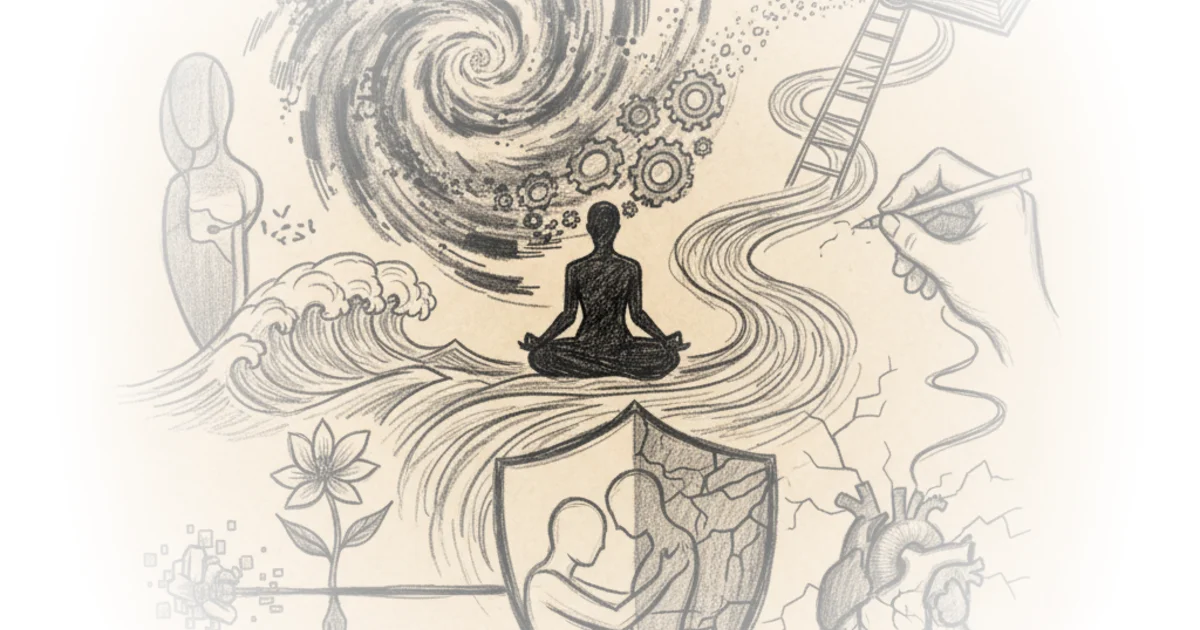
The commentary weaves through Bernard Stiegler's work to suggest that our externalized memory—our phones, our clouds—is creating a form of collective stupidity. As Mona Mona puts it, "Where Is My Mind? Bernard Stiegler and the Fight for Our Memory" explores how technics are reshaping human nature itself. The argument here is that we are outsourcing our very ability to think, a dangerous trend that the executive branch and private sector alike accelerate by prioritizing speed over substance. Critics might note that this view risks romanticizing a past where information was scarce, yet the distinction between access and understanding remains a vital, often overlooked, philosophical boundary.
Too much input, not enough clarity. The modern soul is not starving for data; it is suffocating by it.
The Ethics of Machines and the Soul
The roundup takes a hard stance on the cultural appropriation of human creativity by algorithms. Mona Mona highlights the piece "Reject AI 'Art': Resist the ceding of your soul," which frames the adoption of generative models not as efficiency, but as a moral surrender. The author suggests that when we allow machines to generate our stories, we are essentially "ceding of your soul" to a system that cannot understand the weight of human experience. This is not a Luddite rant, but a defense of the human capacity for meaning-making.
The coverage connects this to the broader economic machinery, noting in "Fossil AI—Finance Capital's New Utility Frontier" that private equity and regulators are gambling on "plausibly exaggerated data center forecasts." Mona Mona points out that this is not just an environmental issue, but a philosophical one: we are building a civilization on a foundation of "long-lived fossil assets" to power machines that mimic human thought. The argument is effective because it ties the abstract horror of dehumanization to the concrete reality of energy consumption and financial speculation.
Reclaiming Human Connection and Value
Amidst the technological dread, Mona Mona offers a counter-narrative rooted in love, community, and the re-evaluation of our economic structures. The curation of Irving Singer's lecture on love as "a way of valuing someone" rather than an emotion provides a crucial pivot. "What if love isn't an emotion or a matter of union, but a way of valuing someone?" Mona Mona asks, inviting the reader to see relationships as active, ethical choices. This reframing is essential for a society increasingly defined by transactional interactions.
Similarly, the inclusion of "Rebuilding the Productive Middle Class: A Nonpartisan Blueprint" suggests that economic policy must be grounded in a philosophy of human dignity. The author notes that populism cannot be understood merely as "Fast-thinking, Ignorance, and Irrationality," but requires a deeper look at how institutions fail to provide opportunity. This is a sophisticated move that avoids the easy trap of blaming the populace for their own disenfranchisement.
Critics might argue that the roundup spans too many disparate topics, from Aztec philosophy to Christmas lights, risking a lack of focus. However, the underlying thread is clear: a search for stability in a world that feels increasingly unmoored. Whether discussing the "dark side of manifestation" or the "social question in the Twenty-First Century," the goal is to find a way to live meaningfully.
Love is not a feeling that happens to you; it is a way of valuing someone that you choose to practice.
Bottom Line
Mona Mona's curation succeeds by refusing to treat philosophy as an abstract exercise, instead presenting it as the only viable defense against the dehumanizing forces of modern capitalism and artificial intelligence. The strongest element is the seamless integration of ancient wisdom with contemporary technological critique, though the breadth of topics demands a high level of engagement from the reader. The biggest vulnerability lies in the potential for analysis paralysis; the sheer volume of urgent problems presented requires a reader who is ready to act, not just reflect. Watch for how the themes of memory and value evolve as the year closes, as these will likely define the next phase of public discourse.