Liz Franczak argues that conspiracy theories represent our collective attempt to make sense of a media landscape where trustworthy information has become nearly impossible to find. She draws on philosopher Lan's reading of Freud's joke about a man who brags about his relationship with a wealthy employer at a party, only to humiliate himself in the process. The joke works because it captures how the millionaire was replacing older social forms during the turn of the century. Similarly, conspiracy theories function as displaced, deformed narratives trying to grapple with something we can't yet make sense of.
The moon landing makes for a perfect case study. The entire project was integrated with its television presentation, functioning as a massive propaganda push about human achievement while actually being a show of force against the Soviets. The astronauts were handpicked with this in mind, and their families were carefully managed and packaged for public consumption. The historical record shows it was literally scripted by men working in a high-rise on Madison Avenue—a TV production that was indistinguishable from the moon landing itself.
"The moon landing is materially bound with the television production of it."
This framing helps us understand why contemporary conspiracy theories have surged. Everyone is online, and everyone is extremely online in ways that are genuinely difficult to make sense of.
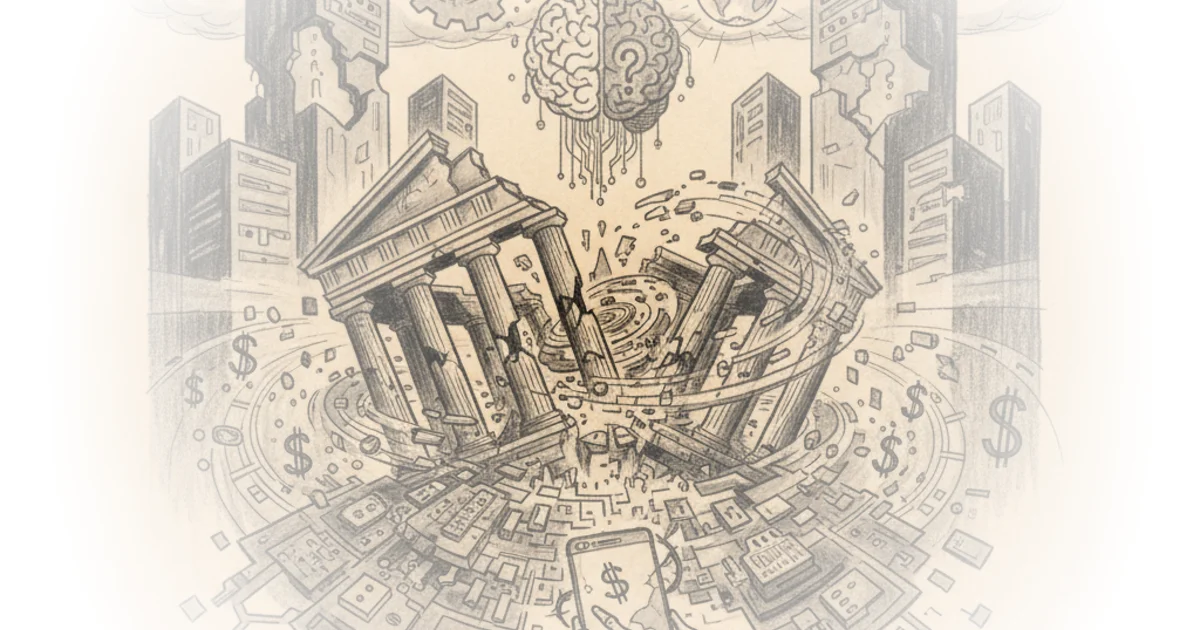
The Tech Sector Has Rewritten Every Market It Touches
Tech is no longer a standalone industry like it was during the Obama era, when it represented a contained ecosystem of venture capital and startup culture. Instead, tech has become an input for every other sector—coordinating logistics from state functions to private businesses to everything else. The influence isn't about AI or crypto or cloud services individually; it's how all these pieces fit together.
When people discuss the tech sector now, they're really discussing people who decided to rewrite the laws and regulations of every other economic sector. If you could build a lean competitive platform, you could simply rewrite and instantiate a new set of laws in that platform's code. Tech generally is just capital rewriting the rules of every market they want to participate in—extending into agriculture, transportation, housing, and everything else.
This explains why there's such little real opposition left culturally. The old paradigm of counterculture oppositionality—being punk, being against the status quo—is entirely outmoded now. There are different genres of identity to be part of, but no particular incarnation of counterculture because nothing is hegemonic anymore. Everyone is just siloed into their own niche online.
Why Reshoring Manufacturing Is a Fantasy
There seems to be genuine conflict between nationalist constituencies in the Trump administration and the tech sector, though it remains unclear how much is theater versus real disagreement. The deeper contradictions within American political landscape involve ideas about reshoring, which Franzak sees as a fantasy—a productive one that gets votes, but ultimately a fantasy.
The global system is so hardwired in so many ways that you cannot rebuild a Chinese supply chain in Ohio for vibes alone. We don't build anything anymore in the traditional sense—what we build now is profitable, like data centers and whatever serves as a sink for trillions of dollars in capital expenditures. That's not factories or housing; it's just what makes economic sense in America right now.
This connects to accelerationism—a term that keeps coming back despite seeming completely bastardized. The non-ideological definition involves the belief that technology will inevitably reshape society regardless of political structures, and we should embrace rather than resist that transformation. But Franzak notes it was supposedly done by 2015, yet here we are ten years later still trying to define what it means.
Counterpoints
Critics might argue that conspiracy theories as a way of grappling with media environments underestimates how much people genuinely believe these narratives—not everyone is using them strategically. Additionally, framing tech as simply rewriting market laws oversimplifies the genuine innovation and efficiency gains some platforms have delivered. The nationalist reshoring fantasy also ignores legitimate concerns about supply chain security and strategic manufacturing that go beyond electoral politics.
Bottom Line
This piece's strongest contribution is reframing conspiracy theories from irrational fringe phenomena to sensible attempts at narrative coherence in an insane media environment—a genuinely useful lens for understanding why information disorder has become so pervasive. The most significant vulnerability is the argument's sweeping scope—connecting Freud, moon landing conspiracies, tech sector dominance, and reshoring fantasies into one framework risks diluting each individual claim. The next development to watch is whether accelerationism gets redefined by the next political cycle or whether it truly has been buried for good.