This piece arrives at a pivotal moment, not merely as an academic exercise, but as a declaration of intellectual sovereignty from Beijing. Zichen Wang introduces us to Ren Xiao, a leading scholar who argues that the global conversation on international relations has been held hostage by a Western monopoly that no longer fits a multipolar world. The urgency here is palpable: the Chinese state is actively funding a theoretical revolution to replace the "three isms" of the West with a system rooted in ancient Chinese philosophy and modern diplomatic practice. For a busy reader, the takeaway is stark—the rules of the game are being rewritten, and the West may not even notice until the board is flipped.
The Inequality of Theory
Wang frames Ren Xiao's central thesis around a simple but radical equation: International Relations Theory does not equal Western International Relations Theory. "For several centuries, Western countries have occupied powerful positions in world politics... Western academia has consequently also enjoyed a dominant position in intellectual life," Ren writes. This dominance, he argues, has created a blind spot where Western frameworks are mistaken for universal truths.
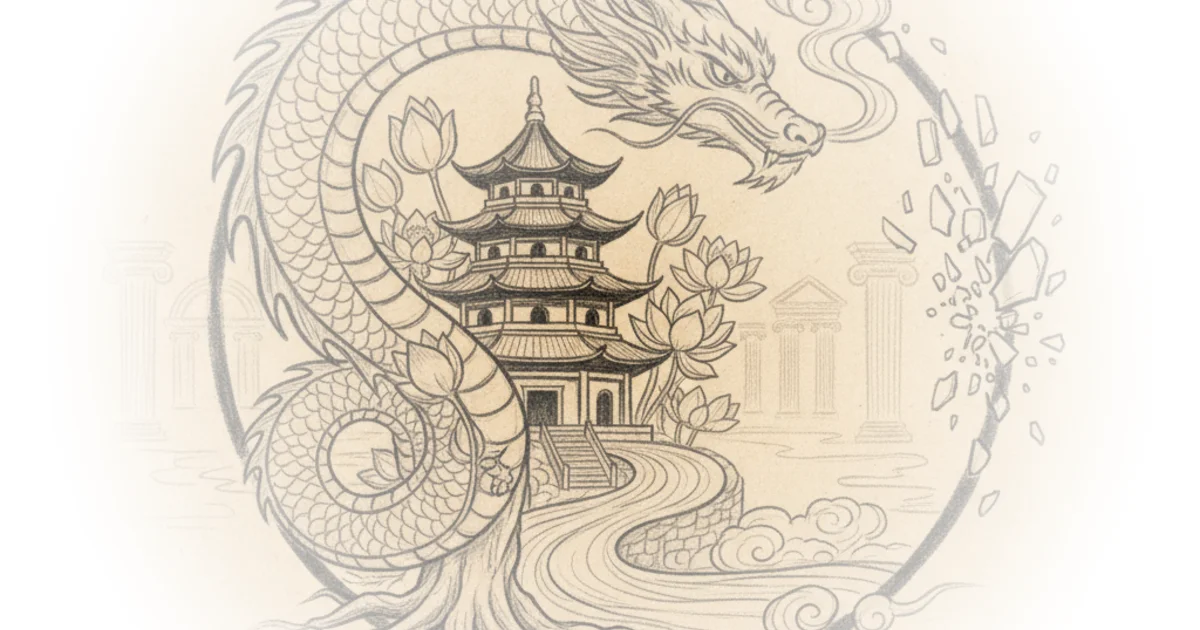
The critique of Western realism is particularly sharp. Ren points out that neorealism, which relies heavily on the stability of systemic structures, failed to predict the end of the Cold War. "It ended through the interaction of policy adjustments at the state level, ideological change, domestic political and economic conditions, and other factors," he notes, exposing the theory's inability to account for unit-level agency. The argument gains traction when Ren turns to offensive realism, specifically the work of John Mearsheimer. Ren dismisses the prediction of an "unpeaceful rise" for China as a theoretical error born of applying a zero-sum logic to a complex reality. "Such a theory and such assertions are mistaken and misleading," Ren asserts.
This is a bold move. By labeling established Western theories as "mistaken" rather than just "incomplete," Ren is not asking for a seat at the table; he is suggesting the table itself is built on faulty foundations. Critics might argue that dismissing realism entirely ignores the very real power dynamics that continue to drive state behavior, regardless of ideology. However, Ren's point is that relying solely on these tools limits our understanding of a changing world.
A Growing "Chinese School"
Wang then guides us through the specific alternatives being constructed under the banner of a "Chinese School." These are not mere translations of Western concepts but distinct ontological frameworks. Ren introduces "relational theory," which swaps the Western focus on individual rationality for "relationality," arguing that identities are shaped by dynamic networks of interaction rather than static national interests. "These relationships are dynamic rather than static, processes of becoming rather than fixed conditions," Ren explains.
Next is "moral realism," which injects an ethical dimension into power politics. Unlike traditional realism's focus on material capabilities, this framework posits that a rising power needs "broad recognition and support at the moral level" to lead. This echoes the historical concept of the Mandate of Heaven, where legitimacy is derived from moral governance rather than brute force alone. Then there is "Tianxia theory," a concept that transcends the nation-state. As Wang notes, this draws on ancient political ideals to envision a world where the entire globe is the basic political unit. "To understand the world through Tianxia is to take the entire world as the unit of thought and analysis," Ren argues, offering a holistic alternative to the Westphalian system of sovereign states. Finally, "symbiosis theory" reframes difference not as a source of conflict but as a source of growth, advocating for "open forms of heterogeneous symbiosis."
"The purpose of learning from others is to enrich and develop our own knowledge system."
The sheer variety of these theories is impressive, suggesting a fertile intellectual environment. However, the coherence of this "school" is still being tested. As Ren admits, there are internal debates regarding the conflicting ontologies of these different approaches. A counterargument worth considering is whether these theories are truly distinct or simply repackaged Western concepts with Chinese terminology. Yet, the effort to ground them in specific Chinese historical experiences like Tianxia gives them a unique texture that Western academia cannot easily replicate.
From Heteroautonomy to Autonomy
The article culminates in a call to move from "heteroautonomy" (relying on external standards) to true "autonomy." Ren defines this as judging scholarly work "with ourselves as the principal point of reference." This is a direct challenge to the current academic hierarchy, where publication in English-language journals is often the ultimate benchmark of quality. "We need to move beyond the constraints of Western theoretical frameworks and examine and construct international relations theory from more open and pluralistic perspectives," Ren concludes.
This section reveals the political stakes. The push for an "autonomous knowledge system" is not just academic; it is a state-sponsored initiative dating back to a 2016 speech by Xi Jinping, who called for disciplines with "Chinese characteristics." The goal is to translate high-level political directives into concrete theoretical frameworks. While Ren insists this is not about "intellectual isolation," the emphasis on self-referential standards suggests a deliberate decoupling from Western epistemic authority.
Critics might note that rejecting Western benchmarks could lead to intellectual isolationism, where Chinese scholarship becomes an echo chamber. But Ren anticipates this, arguing that autonomy is the prerequisite for genuine engagement. "The construction of an autonomous Chinese theory of international relations can move considerably further on the foundations already established," he writes, implying that true dialogue can only happen between equals, not between a student and a master.
Bottom Line
Ren Xiao's argument is a powerful assertion that the West's monopoly on the language of global politics is ending, and China is ready to speak in its own voice. The strongest part of this piece is its rigorous dismantling of the idea that Western theories are universal, particularly the failure of realism to explain the end of the Cold War. The biggest vulnerability lies in the potential for these new theories to become rigid ideological tools rather than flexible analytical frameworks. For the global observer, the key takeaway is that the next decade of international relations scholarship will be defined by a clash of paradigms, not just policies. Watch for how these "Chinese characteristics" translate into actual diplomatic behavior, not just academic papers.