This piece delivers a jarring reality check: America's era of cost-free aerial dominance is over, replaced by an alarming arithmetic where cheap drones are bankrupting expensive missile defenses. Reason doesn't just report on empty shelves; it exposes the strategic fragility of a superpower that assumed it could bomb its way out of any conflict without consequence. For busy leaders tracking global stability, this isn't abstract policy—it's a warning that the very tools meant to protect allies may soon be unavailable when they are needed most.
The Arithmetic of Attrition
The article opens by highlighting a stark contradiction within the executive branch. While one official admitted to pausing arms sales to Taiwan to conserve stockpiles for an ongoing war with Iran, another dismissed concerns as media exaggeration. Reason reports that "the lady doth protest too much," noting that warning lights have been blinking for years regarding the U.S. ability to sustain multiple conflicts simultaneously.
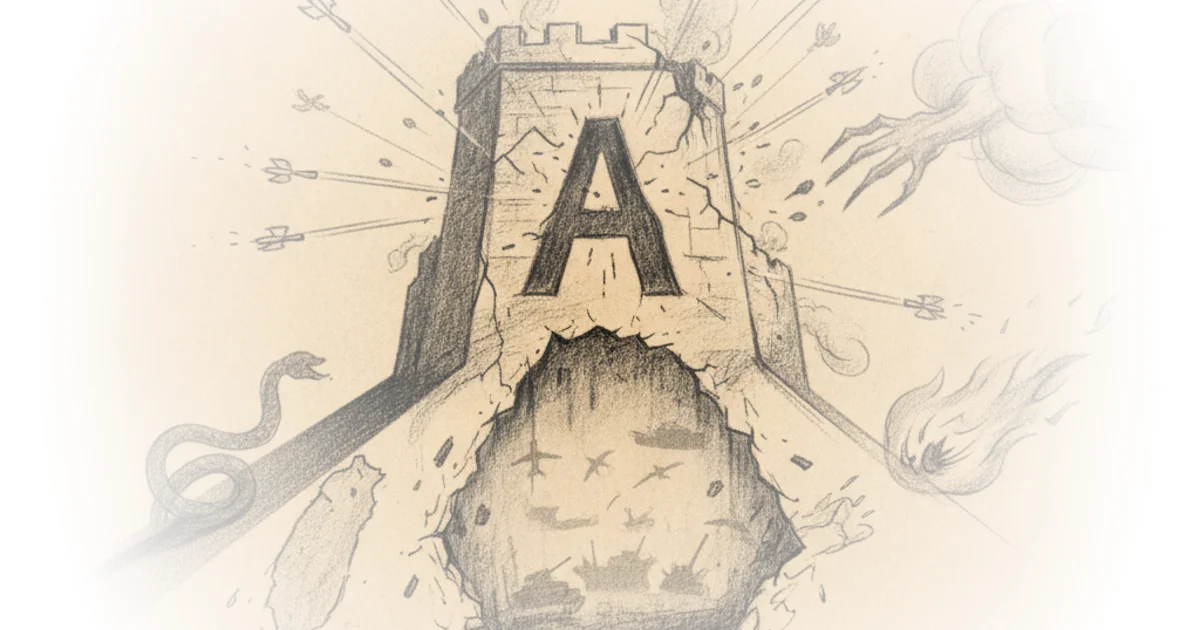
The core of the argument rests on a brutal economic mismatch. The piece details how the recent direct conflict with Iran consumed U.S. magazines at an unsustainable pace, forcing Israel to ration interceptors down to "double digits." This isn't just about money; it's about physical inventory that cannot be manufactured overnight. As the editors note, "The ability to sustain political support drops like a lead balloon when we can't intercept retaliation."
This framing is effective because it strips away the rhetoric of technological invincibility and focuses on the raw logistics of war. It forces the reader to confront the fact that the U.S. military has been fighting with a playbook designed for a bygone era—one where enemies lacked the capacity to strike back effectively.
"Everybody wants to adopt the American way of war, but nobody can afford it, including the Americans."
Critics might argue that the Pentagon's current budget requests are already addressing these gaps, but the timeline provided in the article suggests a dangerous lag. Even with massive funding increases, rebuilding missile stocks could take until the 2030s.
The End of the Free Pass
The commentary shifts to the historical context, reminding us that for decades, U.S. troops were insulated from hostile air fire—a luxury not seen since the Korean War in 1953. Reason traces how this insulation eroded through the drone revolution, noting that adversaries learned to adapt quickly. The piece cites the 2020 war between Azerbaijan and Armenia as a turning point where "kamikaze drones" debuted, followed by their mass adoption in Ukraine.
The article illustrates the absurdity of the current defense strategy with a chilling statistic: Arab militaries were firing up to eight Patriot interceptors—each costing approximately $4 million—to shoot down single Iranian drones that cost roughly $7,000. This dynamic exposes a fundamental flaw in relying on high-end systems against swarms of low-cost threats.
Justin Logan of the Cato Institute is quoted observing that "The Americans like to insulate ourselves and our friends from adversaries' ability to retaliate, but that's extremely costly." The piece argues that this insulation was always an illusion maintained by superior technology, a bubble now burst by the proliferation of cheap, effective weaponry.
Industrial Bottlenecks and Strategic Risk
Perhaps the most sobering section addresses the industrial reality. Even if political will exists to ramp up production, the supply chain cannot keep pace. The article details how a single Patriot interceptor requires parts from over 400 companies, while Chinese export controls on rare earth minerals have already complicated sourcing.
Reason points out that the private sector faces a dilemma: "if you're a publicly traded company, would you rather have a full 10-year book, or spend a chunk of your own capital to build a new production facility... for a system that may be outdated in 10 years?" This structural barrier means that shortages are not just a temporary glitch but a long-term vulnerability.
The stakes are highest in the Pacific. The piece references a 2023 war game by the Center for Strategic and International Studies (CSIS) which found that in a conflict over Taiwan, U.S. forces would run out of critical anti-ship missiles within days. The simulation concluded that while an invasion could be repelled, it would come at a cost of hundreds of aircraft and casualties exceeding those of the past generation combined.
"Warfare is about larger numbers of smaller, cheaper, plentiful things that strongly favor the defense... Rather than trying to fight this trend, the United States can stop putting itself in the position of an attacker."
This conclusion challenges the conventional wisdom of military preparedness. Instead of building a bigger arsenal to match every potential threat, the article suggests a strategic pivot: leveraging defensive technologies to deter aggression rather than enabling offensive campaigns.
Bottom Line
The strongest part of this argument is its unflinching look at the math of modern warfare, proving that the U.S. cannot out-spend an adversary using cheap, mass-produced drones with expensive interceptors. Its biggest vulnerability lies in the political feasibility of the proposed solution—restraining offensive ambitions is often harder than building more missiles. Readers should watch for how the administration navigates the coming gap between its global commitments and its dwindling physical capacity to fulfill them.