In an era defined by digital distraction and disembodied thinking, a recent piece in Wayfare offers a startlingly tactile invitation: to stop merely looking at the world and start holding it. The article reframes the ancient scriptural command to "behold" not as a distant visual act, but as a radical, embodied engagement that collapses the gap between the observer and the observed. For busy minds accustomed to skimming surfaces, this contemplative reading of Moses 1 suggests that true perception requires a physical and spiritual surrender that feels less like reading and more like breathing.
The Anatomy of Beholding
Wayfare argues that our modern language has stripped the word "behold" of its original, heavy weight. The piece reports, "Behold is thus participative, direct, and embodied; it means to tend from all directions." By breaking down the etymology into the intensifier "be" (to encompass) and the root "hold" (to keep, possess, cherish), the editors dismantle the idea that spiritual perception is a purely mental exercise. This linguistic excavation is effective because it immediately grounds high theology in the physical reality of the reader's body.
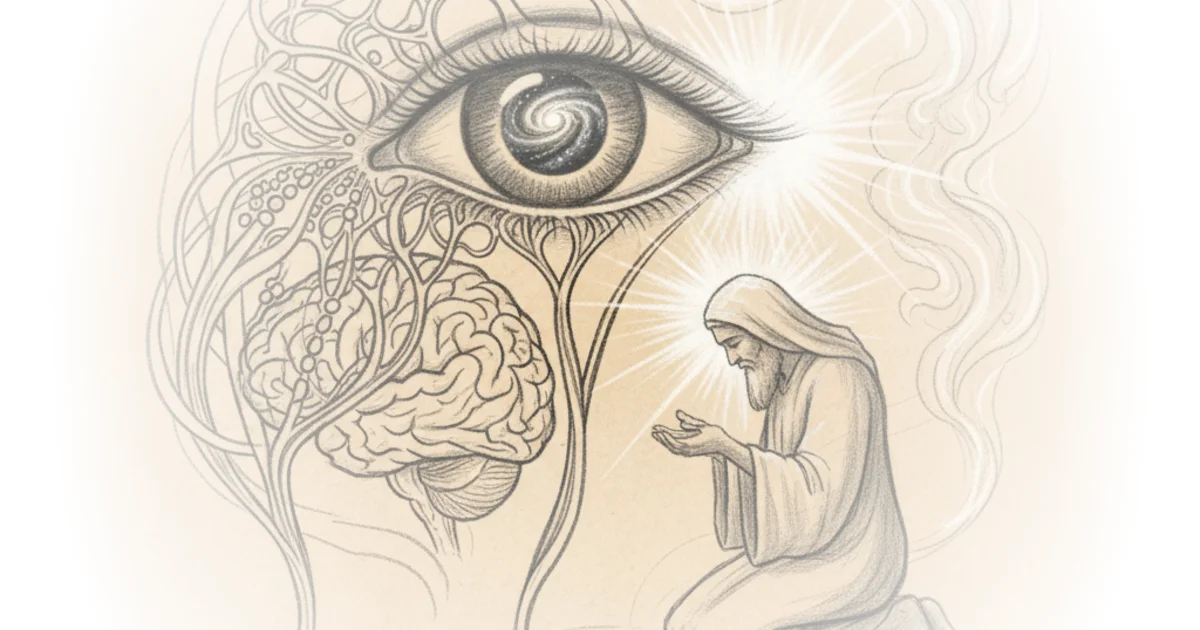
The article contrasts this with the Enlightenment legacy of "excarnation," a term borrowed from philosopher Charles Taylor to describe the cultural shift toward identifying with the disembodied mind. Wayfare notes, "Faith became a matter of propositions about God's nature, rather than participation in it." This is a sharp critique of how even religious communities can lose their way, turning faith into a checklist of beliefs rather than a lived experience. Critics might argue that this focus on embodiment risks sidelining the intellectual rigor required for doctrinal understanding, yet the piece insists that without the "heart of flesh," the mind remains a "stony heart" incapable of true transformation.
To behold is to take in and drink up with our entire soul, our body, and our spirit instead of guarding, filtering out, shutting down, and narrowing.
The Dialectic of the Divine
Moving from the self to the Divine, the text explores how scripture invites us into a dynamic relationship through two opposing yet complementary methods: the cataphatic (naming) and the apophatic (un-naming). Wayfare reports that while the cataphatic approach uses metaphors like "fortress" or "mother hen" to soften and strengthen the believer, the apophatic approach uses paradox to "pry us from our words, descriptions, and even our experiences." This dialectical strategy prevents the reader from turning God into a static concept or a mere portrait.
The piece highlights the tension in Moses 1, where God is described as "Endless" and "without end," yet simultaneously declares, "I have a work for you." Wayfare argues that this juxtaposition of infinity and particularity "transforms, rather than annihilates, the particular." This is a crucial insight for those feeling overwhelmed by the vastness of the cosmos or the insignificance of their own lives. It suggests that the divine mystery does not erase human identity but rather anchors it. As the article puts it, "Such beholding teaches us to let ourselves be grasped by God, rather than trying to grasp God."
This approach resonates with the historical tradition of apophatic theology found in the writings of Duns Scotus and Saint Teresa of Avila, who warned against loving "a mere postponement" or idolizing past experiences. The editors suggest that the apophatic method prepares the soul to be surprised, noting, "Some of my most precious and transformative encounters with God have shattered everything I thought I understood about God." This willingness to surrender even cherished spiritual experiences for the sake of new revelation is a demanding, yet liberating, proposition.
The Paradox of Self
The final section of the commentary turns inward, examining how beholding God inevitably reshapes one's view of oneself. Wayfare points to the jarring realization in Moses 1:10, where Moses states, "For this cause, I know that man is nothing, which thing I had never supposed." The piece argues that this sense of insignificance must be held in tension with the assurance that "all things are numbered unto me, for they are mine and I know them."
The editors warn that losing this polarity leads to two dangerous extremes: the narcissism of thinking one is the center of the universe, or the despair of thinking nothing matters. Wayfare suggests that holding both truths together shifts the believer's posture from an "anxious, unceasing wrestle" to a state of "deep rest." This reframing of self-worth is not based on achievement or status, but on the simple, terrifying intimacy of being known. The piece concludes with a powerful observation on the difficulty of this realization: "And I—who have probably spent too much time in the smallness... almost can't bear the searing intimacy of these words."
Bottom Line
Wayfare's contemplative reading succeeds in transforming a familiar scriptural text into a urgent call for embodied presence, effectively challenging the disembodied nature of modern faith. Its greatest strength lies in the etymological grounding of "behold," which provides a practical tool for spiritual practice, though it risks alienating readers who prefer propositional certainty over paradoxical mystery. For the busy reader seeking to reclaim a sense of connection in a fragmented world, this piece offers a necessary, if demanding, invitation to stop looking and start holding.