Sarah Kendzior's latest Q&A dismantles the comforting illusion that the current political chaos is an anomaly, reframing it instead as the inevitable harvest of decades of suppressed truth and institutional cowardice. While many observers fixate on the spectacle of the moment, Kendzior argues that the real story is the deliberate erosion of accountability by a bipartisan elite that chose appeasement over prevention. This is not just political analysis; it is a forensic accounting of how the American imagination was systematically broken, making the current reality not a surprise, but a calculated outcome.
The Cost of Silence
Kendzior addresses the fatigue readers feel when confronted with grim realities, drawing a sharp parallel to a historical figure who understood the burden of truth. Citing Harry S. Truman, she writes, "I never gave anyone hell. I just told the truth and they thought it was hell." She applies this to her own work, asserting that the global plight is objectively depressing, but "the most depressing thing of all is dishonesty." This framing is crucial: it shifts the blame from the messenger to the systemic refusal to acknowledge problems. A problem must be acknowledged to be solved, yet the political class has spent years treating the diagnosis as the disease.
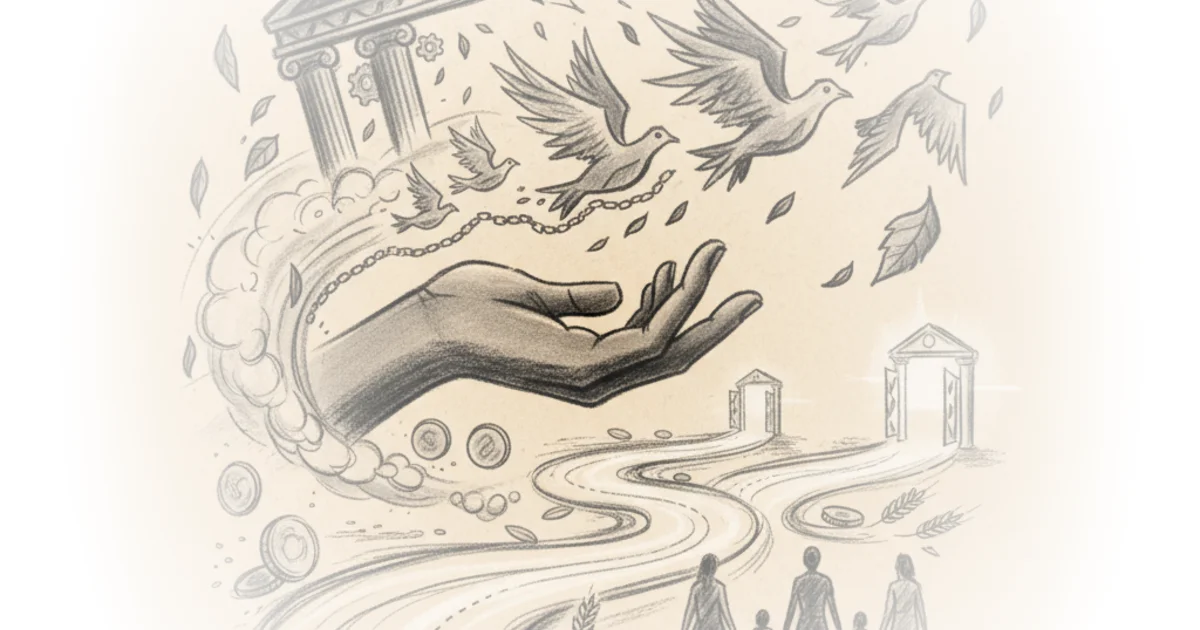
Critics might argue that this relentless focus on truth-telling ignores the pragmatic necessity of political compromise. However, Kendzior counters that compromise without accountability is merely collusion. She suggests that the public's despair is manufactured by the gap between what is known and what is admitted. As she puts it, "A problem must be acknowledged in order to be solved. I write because I believe that things can change for the better. The more we know, the greater our ability to create a just world." This argument gains weight when considering the historical precedent of the Truman administration, which, despite its own controversies, operated within a framework where the stakes of truth were understood as existential.
Fiction as Prophecy
The commentary takes a fascinating turn by examining how pop culture anticipated the current crisis, specifically through the lens of The X-Files. Kendzior notes that the show "wasn't quite ahead of its time: it reflected a dark continuum and debuted in the decade with the greatest freedom to discuss it." She highlights the spinoff The Lone Gunmen, which "negated the 'no one could have imagined 9/11' canard by having the World Trade Center nearly attacked by a plane in the first episode." This connection is more than nostalgia; it underscores a long-standing awareness of state deception that the public was conditioned to accept as fiction.
The author's personal connection to these narratives adds a layer of authenticity often missing from political punditry. She recalls her teenage road trip to Roswell and her coverage of the show for Fangoria, grounding her analysis in a lifetime of observing the intersection of culture and conspiracy. Yet, the tragedy she identifies is that these stories have become non-fiction. "I feel like I wrote several X-Files books that are, unfortunately, non-fiction," she writes. This admission transforms the genre from entertainment into a warning system that was ignored until it was too late.
The Failure of the Center
Perhaps the most contentious part of the piece is the assessment of the Obama administration's role in the rise of the current executive branch. Kendzior does not mince words about the missed opportunities for accountability. She argues that "Obama knew about the severe threat Trump and his criminal cohort posed," and that his popularity gave him "unique leverage to push for accountability for the crimes of prior administrations, but he squandered it." The argument here is that the failure to prosecute past war crimes and financial crimes created a vacuum of impunity that the current administration has exploited.
Obama treating Trump like a joke made people believe the threat was not serious.
Kendzior suggests that the administration's "cavalier attitude about the carnage his admin caused abroad and economic misery at home" extended to the threat posed by the current leader. She posits that by treating the rise of a known mafia associate as a joke, the previous leadership normalized the abnormal. Critics might note that the political landscape was incredibly polarized and that the tools for accountability were legally complex, but Kendzior insists that the moral failure was the primary driver. She writes, "Every president gets targeted by operatives for exploitation. Trump is being used as a bulldozer to break the US down for parts." This reframes the current chaos not as a rogue event, but as a dismantling of the state by external and internal forces working in tandem.
The Digital and Human Threat
Moving beyond traditional politics, Kendzior identifies artificial intelligence as a more profound threat than any single politician. She aligns with the view that "our intellectual development as a species has far outpaced our moral development," leaving humanity vulnerable to "billionaire/trillionaire tech bros." Her stance is uncompromising: "I hate AI. I do not use it. I ban it in my home. I believe it is ruining the world in every way a world can be ruined." This is a rare, unapologetic rejection of technological determinism in an era where such resistance is often dismissed as Luddism.
The core of her argument is that AI is not just a tool, but an active agent in the destruction of human agency. "AI works to destroy the parts of ourselves — our empathy, creativity, defiance — that combat authoritarianism," she writes. This connects the technological threat directly to the political one, suggesting that the same forces driving the erosion of democracy are accelerating the deployment of technologies designed to mold "the ideal fascist objects." The implication is that without a moral framework to check these technologies, the political system will inevitably collapse under the weight of its own automation.
The Illusion of Accountability
Regarding the current administration's personnel, Kendzior dismisses the idea that the cabinet members are the primary architects of policy. Instead, she describes them as "stand-ins for power players behind the scenes," with the real power held by figures like Kushner, Thiel, and Musk. She notes that the cabinet picks "required no attribute other than shamelessness and cult loyalty." This analysis strips away the drama of individual personalities to reveal the underlying kleptocracy.
She also touches on the futility of impeachment in a system where accountability has been normalized away. "Both parties are so tainted by the lack of accountability for the first Trump admin — which set a standard of normalizing sedition, among other crimes — that they feel attempts at accountability are futile." Yet, she insists that the attempt itself matters. "The worst sin is not to try," she writes, echoing the sentiment that moral standards must be upheld even when political victory seems impossible. This is a call to action for the public to demand more than just procedural correctness, but a fundamental reckoning with the nature of power.
Bottom Line
Sarah Kendzior's commentary succeeds in reframing the current political crisis as a long-term failure of truth and accountability, rather than a sudden rupture. Her strongest argument is the link between the suppression of past crimes and the normalization of present authoritarianism. The piece's greatest vulnerability is its stark pessimism, which risks alienating readers seeking a roadmap for immediate political repair rather than a diagnosis of systemic rot. However, her refusal to offer false comfort makes this a necessary read for anyone seeking to understand the depth of the challenge ahead.