In a cultural moment often defined by the spectacle of tragedy, this piece from The Pillar shifts the gaze from the sensational to the systemic, arguing that the Church's silence on postpartum mental health is not just a pastoral gap, but a theological failure. The editors do not merely offer platitudes; they commission a clinical expert to dismantle the romanticized image of motherhood that often suffocates new parents in religious communities. This is a necessary intervention that reframes vulnerability not as a lack of faith, but as a shared human condition requiring structural, not just spiritual, solutions.
The Cost of Creation
The article opens by anchoring the conversation in the raw reality of the postpartum season, rejecting the notion that it is a time of uninterrupted grace. The Pillar reports that Aimee Gutowski, a licensed clinical social worker, describes the period as a time when "body, mind, heart, and soul all at once" undergo a profound transition. This framing is crucial because it validates the physiological and psychological whiplash many women experience, moving the conversation away from moral judgment and toward medical and emotional reality.
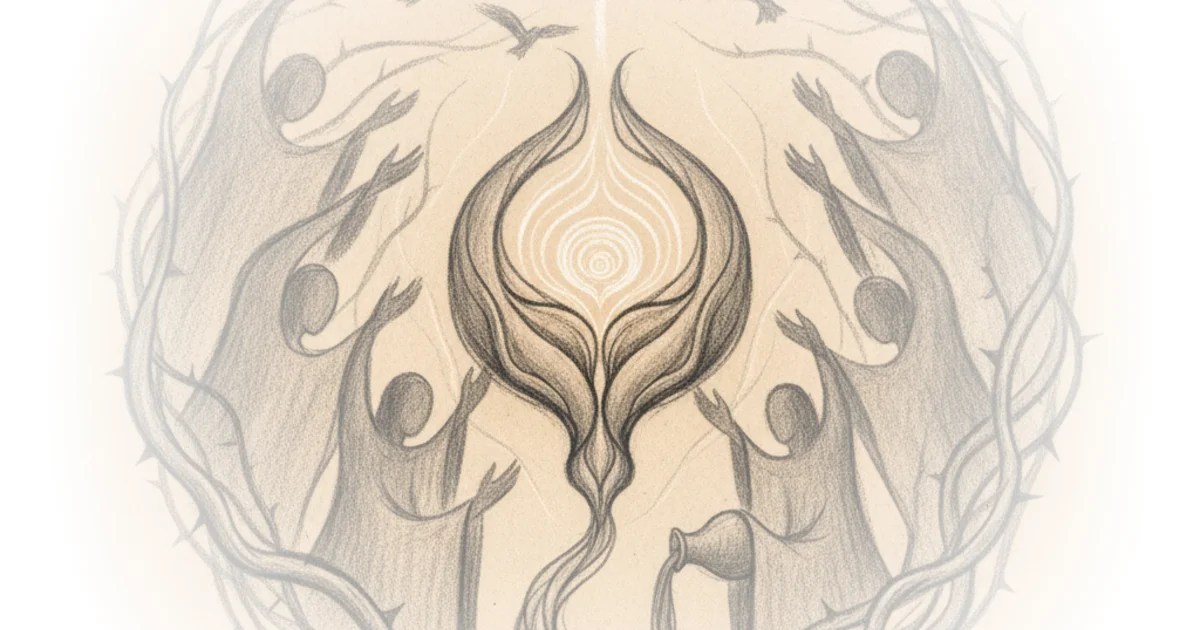
The piece argues that the Church must hold two conflicting truths simultaneously: that motherhood is a sacred vocation and that it is "a season of real vulnerability, physical change, and sometimes clinical need." This dual acknowledgment is the article's strongest theological move. By refusing to let the holiness of the vocation erase the difficulty of the experience, the editors create a space where a mother can admit to suffering without feeling she has failed her faith. Gutowski, quoted in the piece, notes that "bringing forth life is costly work," drawing a direct line between the pain of childbirth and the redemptive suffering of the cross. This connection is powerful, yet it risks being misinterpreted if not handled with care; the goal is not to glorify pain, but to give it meaning within a context of support.
"When we can, through the Church culture, hold two truths together -- that motherhood is a sacred vocation and it is also a season of real vulnerability, physical change, and sometimes clinical need -- we're allowing for that experience to be okay, to be welcomed."
Beyond Spiritualizing the Struggle
A significant portion of the commentary addresses the well-intentioned but often harmful tendency to "spiritualize" mental health struggles. The Pillar highlights Gutowski's warning against the advice to simply "offer it up," comparing it to the dismissive platitude of telling a tired mother to "sleep when the baby sleeps." The editors make a sharp distinction here: empathy requires listening to understand, not listening to fix. This is a vital critique of a culture that often prioritizes quick theological solutions over the slow, messy work of accompaniment.
The piece suggests that priests and lay leaders often rush to "fix" or "rationalize" the struggle, which inadvertently invalidates the mother's experience. Gutowski, quoted in the piece, explains that when a woman is met with reverence instead of judgment, "that gives her almost the permission to be able to speak freely." This insight aligns with the broader theological concept of the via dolorosa—the way of suffering—where the community's role is to walk with the sufferer, not to prematurely lift them out of the valley. Critics might note that some traditionalists could view this as minimizing the power of prayer, but the article clarifies that it is about timing and the order of operations: validation must precede spiritual direction.
Structural Support and the Myth of the Perfect Family
Moving from individual interaction to institutional responsibility, the article challenges the "happy face" culture that often pervades Catholic communities, particularly those with large families. The Pillar argues that portraying family life as "effortless, always joyful, having it all together" sends a dangerous message that struggle is a personal failure. This is a necessary counter-narrative to the curated images of domestic perfection that can isolate struggling parents.
Gutowski points out that the Church should be a place where "isolation loses power," advocating for dedicated structures like meal trains, resource navigation for lactation consultants, and confidential peer groups. The editors note that "coffee and donuts after Mass is rarely the right setting for that level of vulnerability." This distinction between casual socialization and intentional support is a practical, actionable takeaway for parish leaders. The article also expands the scope to Catholic employers, arguing that parental leave should be treated with the same gravity as disability leave for a car accident. This reframing of birth as a medical event requiring recovery time is a compelling argument for policy change within Catholic institutions.
"If we are portraying family life as effortless, always joyful, having it all together, then we might be signaling that postpartum struggles can look like personal failures."
The piece also touches on the depth of postpartum psychosis, a condition where the line between struggle and crisis blurs. While the article focuses on general support, the mention of professional resource arsenals acknowledges that some cases require medical intervention beyond what a parish can provide. This nuance prevents the article from becoming a substitute for clinical care, instead positioning the Church as a bridge to it.
Bottom Line
The Pillar's editorial stance is a robust call to replace performative piety with practical compassion, effectively arguing that true support for new mothers requires a willingness to sit in the discomfort of their reality without rushing to fix it. Its greatest strength is the refusal to separate the sacred from the suffering, creating a theological framework where vulnerability is not a sin but a site of grace. The only vulnerability in the argument is the sheer difficulty of implementing these structural changes in a church culture that often defaults to the status quo; the piece offers the 'what' and 'why' clearly, but the 'how' remains a challenge for local communities to solve.