Shirvan Neftchi delivers a chilling revelation: the most advanced military machine on Earth, the F-35 fighter jet, is fundamentally dependent on a supply chain controlled by its primary geopolitical rival. While many analysts focus on trade deficits or tariff wars, Neftchi zeroes in on the physical reality that 418 kilograms of rare earth elements are embedded in every single F-35, and without them, the United States defense industrial base grinds to a halt. This is not a theoretical risk; it is a documented vulnerability where the Pentagon's ability to project power rests on Beijing's willingness to sell.
The Hidden Architecture of War
Neftchi begins by dismantling the assumption that "rare earths" are scarce geological anomalies. Instead, he clarifies that the bottleneck is not the earth itself, but the capacity to process it. "Despite the name, rare earths are actually quite common. Most are scattered all over the Earth's crust," he writes. The real barrier is the environmental and economic cost of extraction. He notes that turning ore into usable material is a "complicated, dangerous, and highly polluting process," which is why most nations, including the US, opted out decades ago. This framing is crucial because it shifts the blame from a lack of resources to a lack of political will to endure the environmental fallout.
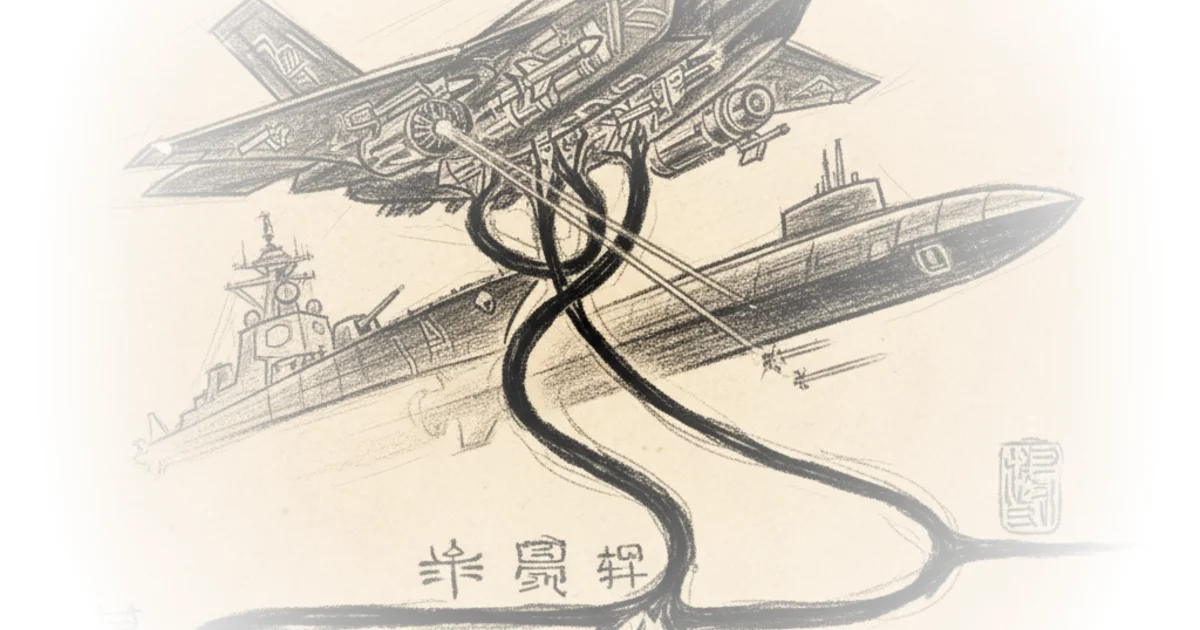
The author traces the historical arc of this dependency, showing how the US voluntarily ceded dominance. In the 1980s, stricter environmental regulations and higher operational costs pushed American mining overseas. "By 1996, America had outsourced so much that Congress shut down the US Bureau of Mines, the government's leading research agency on the issue," Neftchi states. This decision was not accidental; it was a policy choice that allowed China to fill the void. While the US retreated, China accepted the environmental burden to secure market control. "China used export incentives and tax breaks to push down global prices, thereby undercutting international competitors and discouraging investment in alternative supply chains," he explains. The result was a monopoly that persists today, with Beijing controlling 85% of global refining and over 90% of magnet production.
For the defense sector, the risks are even greater because in some shape or form, the world's strongest military now rests on its rival supply chain.
The Weaponization of Supply Chains
The commentary becomes particularly urgent when Neftchi discusses the political leverage this monopoly provides. He points to the 2010 embargo against Japan as a precedent, but highlights a more recent, direct confrontation. In April 2025, amidst a trade war, Beijing retaliated against US tariffs by imposing export controls on seven types of rare earths and magnets. Neftchi observes that while rare earths were a tiny fraction of China's exports to the US, the move "caused little economic pain at home, but provoked an outcry from American manufacturers." This asymmetry is the core of the threat: China can weaponize a niche market with devastating effect on the US, while the US has no reciprocal leverage.
The Rand Corporation study cited by the author underscores the immediacy of the danger. "A rare earth supply disruption lasting just 90 days could shut down production lines at 78% of US defense contractors," Neftchi reports. This statistic transforms the issue from a long-term strategic concern to an immediate operational crisis. It explains why the Trump administration's interest in Greenland and Canada was not merely rhetorical but a desperate scramble for alternatives. "Both countries sit on vast reserves of rare earths," he notes, specifically highlighting the heavy elements in Greenland and the neodymium in Canada. However, he adds a layer of complexity, noting that Chinese state-owned companies have already expanded their involvement in Canada, raising alarm in Washington.
Critics might note that the focus on 2025 trade war scenarios assumes a level of escalation that may not occur, potentially overstating the immediacy of the embargo risk. Yet, the underlying dependency remains regardless of the political climate.
The Decade-Long Gap
The article then pivots to the US response, detailing the massive federal investment required to rebuild domestic capacity. The White House has invoked the Defense Production Act and allocated billions through the National Defense Authorization Act to fund mines in Texas and magnet plants in Oklahoma. Neftchi identifies the Roundtop Mountain project in Texas as a centerpiece, expected to supply one-fifth of US demand by 2027. However, he tempers this optimism with a sobering timeline. "Rand estimates it will take the US at least a decade and between 10 and 15 billion dollars to build a self-sufficient rare earth supply chain," he writes.
The author argues that money is not the primary obstacle; rather, it is the time and the regulatory environment. "Unlike China, which has long tolerated the pollution, America faces a stark trade-off: how to secure critical minerals without abandoning its environmental standards," Neftchi explains. This creates a structural disadvantage for the US. While China can move quickly, the US must navigate permitting processes, waste disposal rules, and social opposition from indigenous communities. "In democratic societies, such debates are more transparent and tend to delay development, while authoritarian governments can simply sidestep them," he observes. This comparison is the piece's most penetrating insight: the very systems that make the US a democracy also slow its ability to compete in resource security.
America's approach to rare earths is a litmus test for the kind of nation it will be in the decades ahead.
Furthermore, Neftchi warns that the US is racing against a moving target. While Washington scrambles to build domestic capacity, Beijing is aggressively expanding its global footprint. "Last year, Beijing registered its highest number of overseas mining acquisitions in more than a decade," he notes, citing investments in Myanmar, Kazakhstan, and the Congo. The US is not just trying to catch up to China's current capacity; it is trying to catch up to a supply chain that is actively growing elsewhere.
Bottom Line
Neftchi's strongest argument is the reframing of rare earths not as a commodity issue, but as an existential national security vulnerability that exposes the fragility of the US defense industrial base. The piece's biggest vulnerability lies in its somewhat fatalistic view of the environmental trade-off, potentially underestimating the speed of technological innovation in cleaner mining methods. Readers should watch for the next decade of permitting battles in the American West, as those outcomes will determine whether the US can truly break its dependency or merely delay the inevitable. "