Wayfare tackles a silence that often goes unspoken in religious communities: what happens when the emotional engine of faith sputters out? The piece argues that for many believers, the loss isn't intellectual doubt but a visceral numbness where prayer becomes monologue and scripture turns to text. This is not a standard theological defense; it is a psychological and spiritual autopsy of the moment the "heart" fails to function as a reliable sensor for the divine.
The Failure of the Heart
The article opens by acknowledging a terrifying question that few admit aloud: "¿y si lo que sentí antes tampoco era real?" (what if what I felt before wasn't real either?). Wayfare suggests that this crisis often strikes those who once served missions or experienced intense spiritual fervor, only to find their internal landscape has gone quiet. The piece notes that while some leave due to historical scandals or leadership conflicts, others simply fade away without a dramatic exit.
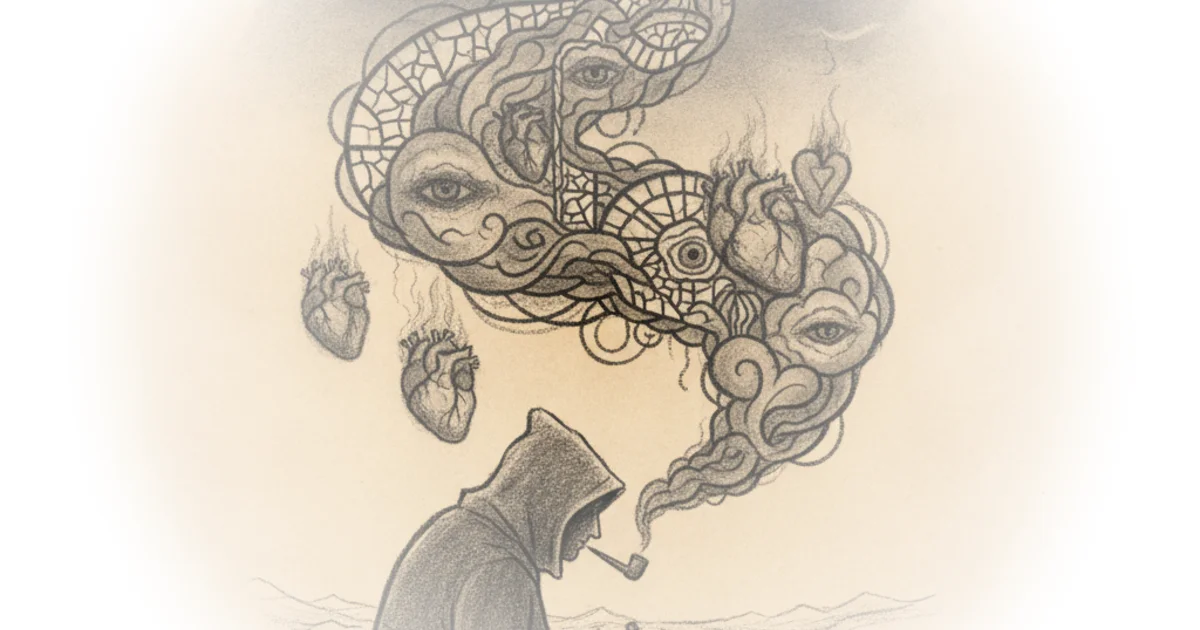
This framing is crucial because it shifts the blame from the individual's lack of faith to the fragility of human emotion as a foundation for belief. Wayfare draws on the 17th-century French mathematician and philosopher Blaise Pascal to explore this vulnerability. Pascal, who famously sewed a note describing his mystical experience into his coat before dying in 1662, argued that "El corazón siente a Dios, no la razón" (The heart feels God, not reason). The article highlights how Pascal viewed the heart as the faculty where intuition and first principles converge, distinct from discursive logic.
El corazón tiene sus razones, que la razón no conoce; Corazón, instinto, principios.
Wayfare uses this historical context to explain why modern believers struggle when their emotions are compromised. If faith relies on feeling, what happens to those suffering from depression or anxiety? The piece asks a piercing question: "¿Pueden estas personas confiar en sus sentimientos o intuición que tanto dependen de su corazón?" (Can these people trust their feelings or intuition that depend so much on the heart?). This is where the argument gains its modern urgency. It acknowledges that for someone with severe depression, the "heart" may be a broken instrument, rendering the traditional path to God impossible.
Inverting the Order of Faith
The core of Wayfare's proposal is a radical inversion of Pascal's hierarchy. While Pascal prioritized feeling as the gateway to truth, the article suggests that for those whose emotional faculties are impaired, reason must take the lead. The editors propose: "que la razón sostenga la estructura mientras el corazón sana, y que cuando este vuelva a funcionar, corrobore lo que la razón mantuvo en pie" (that reason holds up the structure while the heart heals, and when it returns to function, it corroborates what reason kept standing).
This is a pragmatic shift. It treats faith not as a static state of feeling but as a dynamic construction where logic can act as scaffolding during emotional storms. The piece references the biblical story of Elijah, who found God not in the wind or fire, but in a "voz apacible y delicada" (a gentle and delicate voice), suggesting that divine communication is often subtle and easily drowned out by internal turmoil.
However, this reliance on reason carries its own dangers. Wayfare warns against letting logic become a tyrant, noting that Pascal himself fell into the trap of accepting dogmas that defied human justice, such as the condemnation of unbaptized children due to original sin. The article critiques this blind spot: "Pascal renunció a la razón en favor del misterio... Este es el peligro cuando relegamos nuestra razón y aceptamos 'dogmas'." (Pascal abandoned reason in favor of mystery... This is the danger when we relegate our reason and accept 'dogmas').
Si no usamos en conjunto el corazón y la razón, podemos ser víctimas de inquisidores.
By invoking Dostoevsky's "The Grand Inquisitor," Wayfare illustrates the risk of demanding submission without reasoning. The piece argues that when a believer's reason rejects a doctrine but their heart is too broken to feel otherwise, the result is often spiritual exile. Many who leave the church do so because they were told to obey authority rather than reconcile their internal dissonance.
Bottom Line
Wayfare's strongest contribution is its refusal to pathologize the loss of religious feeling, instead offering a structural solution where reason and emotion must cooperate rather than compete. The argument's vulnerability lies in its assumption that reason can remain neutral enough to serve as scaffolding without imposing its own rigid dogmas on the healing heart.
Critics might argue that this approach risks reducing faith to a philosophical exercise for those who cannot feel, potentially losing the very mystery it seeks to preserve. Yet, the piece succeeds in validating the experience of the spiritually numb, suggesting that doubt is not the end of the road but a different kind of path requiring both head and heart to navigate.
Construir con la razón no es dudar; es darle cimientos a lo que el corazón nos ha dado.