Greg Olear's latest installment on the Jeffrey Epstein saga refuses the easy path of rehashing known scandals, instead turning a forensic lens on the strange, symbiotic relationships between a convicted sex trafficker and the world's most brilliant minds. While the recent release of photos by the House Oversight Committee offers a visual catalog of the elite, Olear argues that the images are merely the surface of a deeper, more disturbing question: why did geniuses like Bill Gates, Noam Chomsky, and Dean Kamen remain in Epstein's orbit long after the allegations became public?
The Labyrinth of Intelligence
Olear begins by dismantling the expectation of a sensationalist reveal, comparing the new photo dump to the anticlimactic opening of Al Capone's vault. Yet, he quickly pivots to the real value of the release: the unexpected company Epstein kept. "I wonder why the Oversight Committee chose to release the material it did," Olear writes, highlighting images of figures like Woody Allen and Noam Chomsky alongside the accused pedophile Prince Andrew and former White House strategist Steve Bannon. The author suggests these releases are not random but strategic "shots across the bow," potentially signaling which associates have already cooperated with investigators.
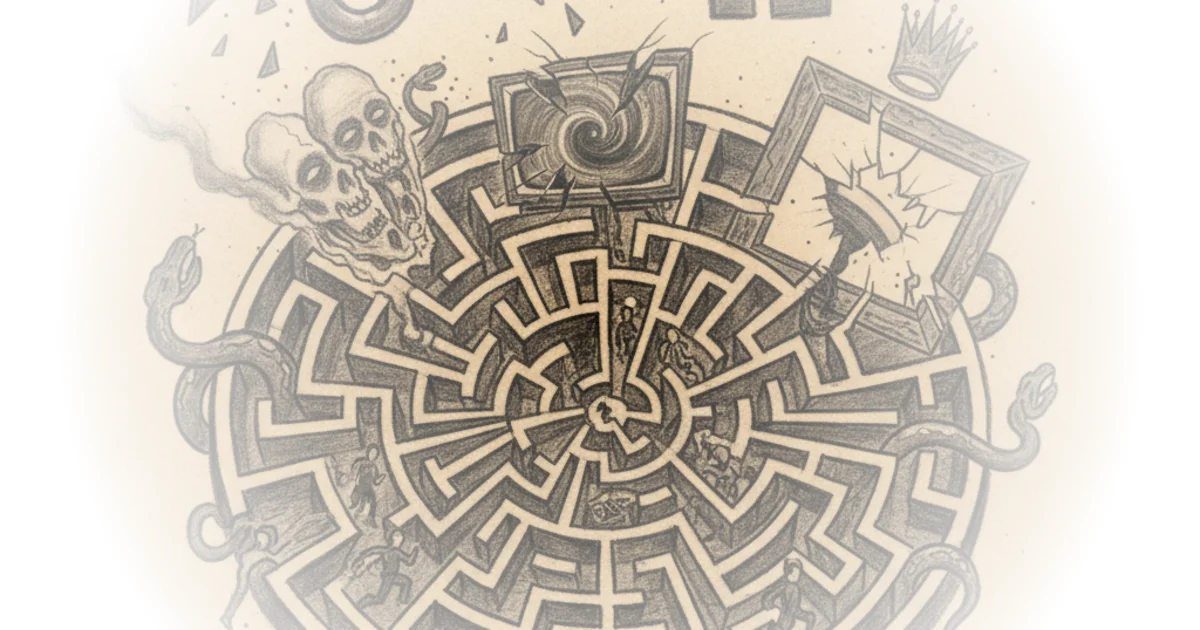
The commentary takes a sharp turn when examining the intellectual allure Epstein held. Olear cites a 2007 profile by Philip Weiss to explain how Epstein's mind worked, quoting a Nobel Prize winner who described the trafficker's ability to "make connections that other minds can't make." This intellectual agility, Olear argues, created a unique vacuum for scientists and tech pioneers who craved a peer who could match their rapid-fire thinking. "He has enough information after fifteen minutes so that you can see his mind thrashing about, as if in a labyrinth," the geneticist Richard Axel is quoted as saying. This framing is compelling because it humanizes the victims of Epstein's grooming not just as social climbers, but as individuals seduced by a rare intellectual kinship.
He has enough information after fifteen minutes so that you can see his mind thrashing about, as if in a labyrinth.
However, Olear does not let intellect off the hook. He posits that money and a specific type of social isolation were the true glue. He notes that Epstein was a "munificent supporter of cutting-edge research," creating a dynamic where "you don't bite the hand that feeds you—even if that hand looks like this." The author connects this to a broader cultural observation about the tech and science community, suggesting a significant overlap between the cohort Epstein courted and the "incel community." He illustrates this with a vivid anecdote from journalist Michael Wolff, who described Epstein arriving on a private jet followed by "three teenage girls not his daughters... who towered over Jeffrey." For many of these men, Olear argues, this was a "sexual fantasy come to life," a dangerous combination of power, intellect, and access.
The Human Cost and the Assistants
The piece shifts from the high-flying elites to the human machinery that kept Epstein's operation running. Olear details the stories of the women who worked for him, moving beyond the caricature of the "assistant" to explore their complex, often tragic positions. He highlights Nadia Marcinkova, a Slovakian model alleged to have been "bought" from her family, and notes the disturbing detail that she visited Epstein in jail 54 times. The author also examines Masha Bucher, a former member of a pro-Putin youth group who defected to the U.S. on an "Einstein" visa only to work for Epstein for a year and a half.
Olear's treatment of Bucher is particularly nuanced. He acknowledges her role in Epstein's PR machine but contextualizes her actions within the desperate reality of a young woman navigating a new country with limited networks. "She was in Nashi as a teenager, but so what?" Olear asks, challenging the reader to consider the moral gray areas of survival. He points out that Bucher eventually distanced herself from Epstein once she understood the scope of his crimes, a move he contrasts with the silence of others. This section is vital because it refuses to flatten these women into mere villains or victims, instead presenting them as actors within a system designed to exploit vulnerability.
Critics might note that Olear's defense of figures like Bucher risks minimizing the agency of those who actively facilitated abuse, even if they were young or new to the country. While the context of her defection is relevant, the duration of her employment with Epstein remains a significant ethical stain that the author's sympathetic framing may underplay.
The Billionaire's Paradox
The commentary concludes by returning to the central paradox: the presence of the world's most rational thinkers in an irrational, criminal enterprise. Olear lists a who's who of intellect—Gates, Kamen, Chomsky, Summers, Elon Musk, Peter Thiel—and asks why they stayed. He references Dean Kamen's statement that he had "no knowledge of any of the horrific actions," yet questions why the photo of Kamen walking behind Epstein, with Richard Branson holding a notebook marked "million dollars," was released at all. The implication is that the administration and oversight bodies are using these images to pressure the unindicted, creating a public record that makes denial increasingly difficult.
The author's choice to weave in the specific detail of the "hideous tablecloth" in a photo of Epstein and Woody Allen serves as a jarring reminder of the banality of evil. It grounds the high-stakes drama in a grotesque reality. Olear's argument is that these intelligent people were not just bribed; they were trapped in a social and intellectual labyrinth of their own making, unable or unwilling to see the moral rot beneath the surface.
Bottom Line
Olear's most powerful contribution is his refusal to separate the intellectual from the moral, showing how Epstein's genius was the very tool used to disarm the world's smartest men. The piece's greatest vulnerability lies in its reliance on speculative motives for the photo releases, which, while plausible, remain unproven. Readers should watch for how the legal system navigates the silence of these high-profile figures as the pressure from these "shots across the bow" intensifies.