Fred Mills doesn't just report on a bridge; he documents a war against geography where the enemy is the Himalayas themselves. In "India (Finally) Finished its Impossible Bridge," Mills argues that the Chenab Bridge is not merely an infrastructure project but a triumph of engineering over the planet's most hostile conditions, a feat made possible only by abandoning every standard construction playbook.
The Unforgiving Arena
Mills immediately establishes the sheer hostility of the location, noting that the site is "somewhere no human being was ever meant to go." He details how the environment itself fights the builders, with temperatures swinging from scorching heat to freezing cold, and winds that can reach "gusts of up to 165 mph." This isn't just bad weather; it is a structural threat. As Mills explains, the canyon acts as a giant funnel due to the Venturi effect, accelerating wind speeds by 20% beyond what standard models predict. This framing is crucial because it shifts the narrative from "difficult construction" to "survival engineering."
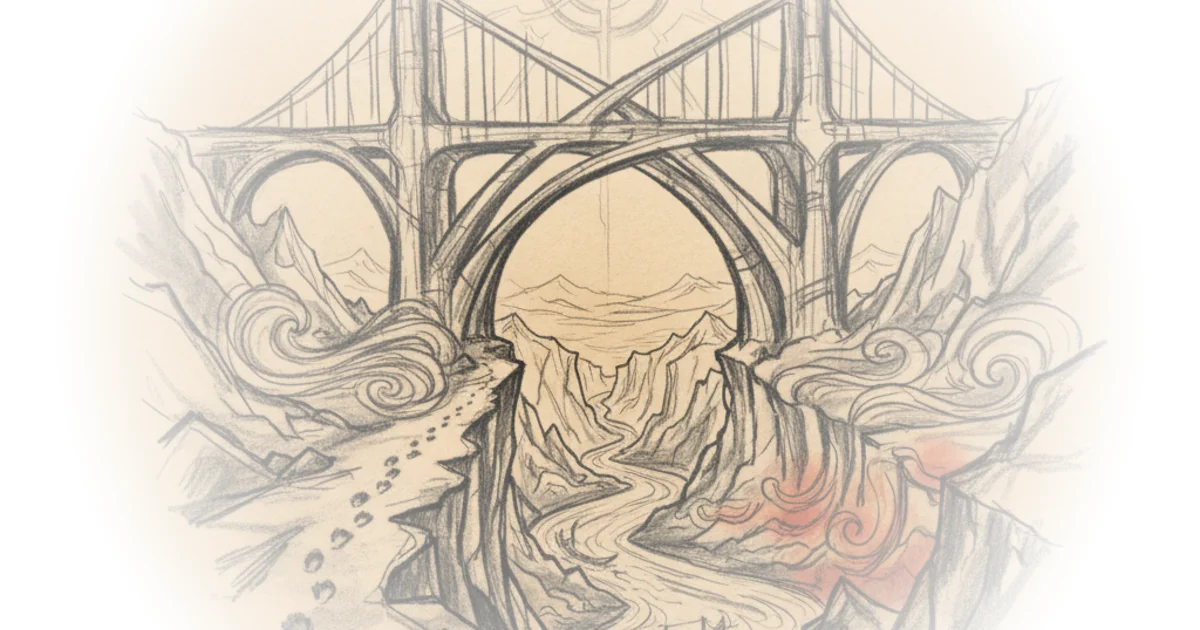
The author highlights that the physical terrain is just as treacherous as the weather. The Himalayas are geologically young and "still moving," creating fractured rock that threatens to slide down the valley if a traditional tower were used. Instead of fighting the slope, the engineers embraced the arch design, which "pushes against each other and force their weight down their legs into the sides of the mountain." This is a brilliant pivot in the argument: the solution wasn't to stabilize the ground, but to let the bridge lock into the instability. Critics might argue that Mills glosses over the immense human cost and the political tension in Kashmir, where opponents view the rail line as a tool for military control rather than economic development, but the focus here remains strictly on the physical impossibility of the task.
"Constructing Chenab Bridge should have been impossible."
Logistics of the Impossible
Perhaps the most surprising element of Mills' coverage is the logistical nightmare of simply getting materials to the site. With no motorways or nearby factories, the team couldn't rely on pre-fabrication. Mills writes, "Just to make this extraordinary location even remotely accessible, they put in 26 km worth of roads just for this project." He describes these access roads as clinging to "precarious locations, clinging to the side of mountains and going along some serious cliff edges."
The scale of the material transport is staggering. Mills notes that crews had to maneuver "30,000 tons of steel" up the mountains, a feat accomplished by shipping everything "flat packed" like an IKEA catalog and drilling on-site. This detail effectively dismantles the assumption that mega-projects always rely on massive, pre-assembled components. The argument here is that innovation in logistics was just as vital as the bridge design itself. The author's comparison of the $5 billion cost to New York's subway system—where the same money would buy only two miles of track—serves to ground the reader in the sheer value of this achievement, even if the political context of the spending remains complex.
Engineering the Unbuildable
Mills moves from the logistics to the specific mechanical solutions, particularly the use of a "cable crane" that functions like an "aerial trapeze" to lift steel pieces hundreds of meters into the air. He explains that the bridge deck was built using a "launch methodology," where sections were pushed out from both sides until they met in the middle. This section is the technical heart of the piece, where Mills demonstrates how the engineers solved the problem of thermal expansion. With temperatures varying so wildly, the steel would bend and flex, threatening the safety of the trains.
The solution, as Mills puts it, was that "the rails can move back and forth as the bridge moves over time." By pre-stressing the rails and allowing them to slide freely within their fixings, the design accommodates the bridge's natural breathing. This is a subtle but powerful point: the bridge is designed to be flexible, not rigid. Mills quotes senior technical director David McKenzie, who reflects on the project's longevity: "I've been fortunate... to work on a number of very exciting structures in my lifetime. Um, but this one holds particular passion for me because it's having seen it from ground up over a 20-year period." This personal touch adds weight to the technical data, reminding the reader that this was a multi-decade human endeavor, not just a machine output.
"The rock and steel blend in with the mountainous backdrop and in doing so offer some of the best train passenger views on the planet."
Bottom Line
Mills' strongest argument is that the Chenab Bridge redefines the limits of what is physically possible, proving that with enough innovation, even the "unforgiving" Himalayas can be crossed. The piece's biggest vulnerability is its relative silence on the geopolitical friction that makes this connectivity so contentious, focusing almost exclusively on the engineering triumph. However, as a testament to human ingenuity in the face of natural extremes, the coverage is unmatched in its clarity and awe.
The Chenab Bridge stands not just as a crossing, but as a monument to the idea that no terrain is too hostile for human determination.