Karim Zidan delivers a startling diagnosis of the modern sports landscape: the line between athletic competition and state-sanctioned theater has not just blurred; it has been erased by the very institutions sworn to police it. While most coverage fixates on the mechanics of a single rigged bout, Zidan exposes a systemic rot where financial desperation, organized crime, and political patronage converge to make the outcome of a fight a foregone conclusion before the first bell rings.
The Architecture of a Fixed Fight
Zidan opens with a visceral, first-hand account from 2015 in Sochi, Russia, where the choreography of violence was laid bare for a live audience. He recalls watching Adam Yandiev, a fighter backed by a powerful oligarch, engage in a bout that defied the logic of combat. "Voitov did the unthinkable: he stepped off the mount and stood up," Zidan writes, capturing the moment the illusion of sport shattered. The fight, which should have been a display of dominance, instead unfolded with the precision of a script, leading Zidan to observe, "Every moment felt calculated, as if the fight was unfolding according to someone else's script."
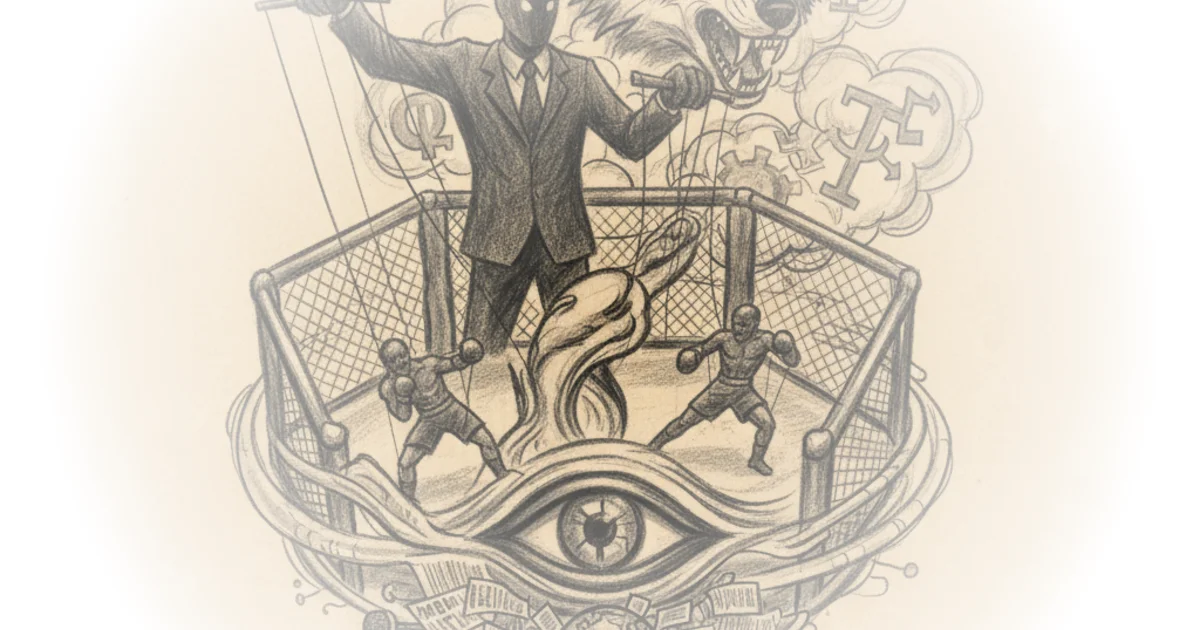
This anecdote is not merely a story about a bad night in Russia; it is the foundational evidence for Zidan's broader argument that match-fixing is not an anomaly but a feature of the industry's ecosystem. He notes that while the Russian MMA Union launched an inconclusive review, the structural incentives remained untouched. The author draws a direct line from these historical instances to the current crisis in the United States, where the Federal Bureau of Investigation has now stepped in to investigate unusual betting patterns surrounding a recent UFC Fight Night in Las Vegas.
"The lion does not look back at the dogs," Yandiev said at the time.
Zidan uses this quote to illustrate the arrogance of the powerful, a sentiment that permeates the entire sport. The argument here is that when the stakes involve millions in betting markets and the protection of high-profile investors, the integrity of the competition becomes secondary to the narrative. Critics might note that Zidan relies heavily on anecdotal evidence from his own commentary days, but the subsequent details regarding the James Krause scandal and the NBA investigation provide the necessary corroboration to elevate this from personal observation to systemic critique.
The Business of Desperation
The piece pivots sharply from the spectacle of the ring to the grim economics that fuel it. Zidan argues that the UFC's business model, which pays fighters a fraction of the revenue compared to other major leagues, creates a fertile ground for corruption. "That financial imbalance leaves many fighters vulnerable to malicious actors looking to exploit their desperation," he writes. This is a crucial reframing: the problem isn't just a few bad apples, but an orchard designed to produce them.
He details how the organization has historically embraced gambling partnerships while failing to implement safeguards, creating a conflict of interest that is baked into the corporate DNA. The author highlights the case of Vince Morales, who was offered $70,000 to throw a fight, and Vanessa Demopoulos, who faced similar overtures. These aren't isolated incidents of greed; they are symptoms of a system where the cost of integrity is too high for the athlete to pay.
"We take these allegations very seriously, and along with the health and safety of our fighters, nothing is more important than the integrity of our sport," the statement concluded.
Zidan treats this official statement with deep skepticism, contrasting the public relations spin with the reality of the 2022 scandal involving coach James Krause. In that instance, despite the UFC's tough talk, no one served prison time, and the organization simply returned to business as usual. The author points out that the current investigation is happening under the watch of an FBI leadership that is deeply entangled with the very culture it is supposed to regulate.
The Political Shield
The most provocative section of the commentary addresses the political machinery protecting the sport. Zidan notes that the current FBI leadership, specifically Director Kash Patel, has close ties to the UFC and the executive branch. He describes a scene where Patel, a known UFC enthusiast, is now leading the agency investigating the sport's integrity. "The Trump administration's affinity for the UFC simply runs too deep," Zidan asserts, arguing that the sport has become a cultural proxy for a specific political movement.
He draws a sharp distinction between the NBA, which faces a sprawling scandal with no apparent political protection, and the UFC, which he describes as "tailor-made for the MAGA spectacle." The author suggests that the upcoming planned event at the White House is not just a game, but a "grotesque fusion of sport and statecraft." This framing is bold, suggesting that the investigation itself may be performative, designed to identify scapegoats rather than dismantle the corrupt system.
"Any notion of a legitimate crackdown is not just improbable—it's utterly laughable."
Zidan's analysis here is that the UFC doesn't need to change its exploitative model; it just needs a villain to blame. He predicts that, much like Krause in 2022, a new scapegoat will be cast out to preserve the empire. The argument holds weight because it aligns with the historical pattern of the organization: when threatened, it isolates the individual rather than addressing the structural flaw.
Bottom Line
Karim Zidan's most compelling contribution is the refusal to treat the recent betting scandal as a simple regulatory failure; instead, he frames it as the inevitable result of a business model that prioritizes profit over people, shielded by a political establishment that views the sport as an ideological asset. While the piece leans heavily on the political angle, potentially underplaying the genuine efforts of independent integrity monitors, its core warning is undeniable: without a fundamental restructuring of fighter compensation and oversight, the "fixed fight" will remain the sport's most consistent outcome. The reader should watch not for a conviction, but for the next carefully curated sacrifice to the altar of the brand.