Cory Doctorow delivers a stinging rebuttal to the prevailing hope that expanding copyright law can shield creative workers from the economic devastation of artificial intelligence. He argues that the current push to ban data scraping is a strategic dead end that will inadvertently destroy vital public infrastructure while failing to stop the very wage erosion it claims to prevent. For busy professionals navigating the AI landscape, this piece cuts through the noise to reveal that the real battle isn't about who owns the data, but who holds the power to set wages.
The Illusion of Property Rights
Doctorow dismantles the popular narrative among some artists that stricter copyright laws are the silver bullet against AI. He writes, "Copyright will not protect their livelihoods from AI-based wage erosion." This is a provocative stance, especially given the intense lobbying currently underway to criminalize the scraping of public data for machine learning. The author's logic is grounded in the reality of market dynamics: even if artists gain more legal rights, they lack the leverage to enforce them against monopolistic media giants.
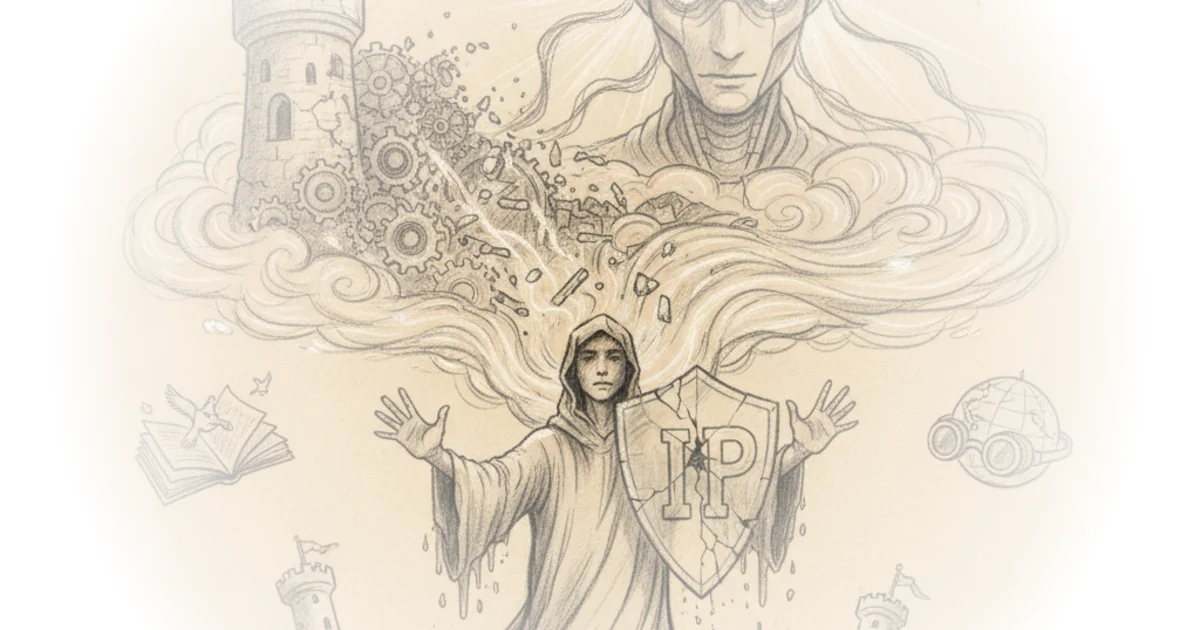
He points out that decades of copyright expansion have coincided with a consolidation of power in the hands of a few corporations. "The media companies we creative workers bargain with are larger, richer and more profitable than at any time in history — and we are poorer," Doctorow observes. The core of his argument is that giving workers more rights without giving them more bargaining power is futile. He compares this dynamic to a specific, tragic scenario: "Giving us more rights without giving us more bargaining power is like giving your bullied schoolkid extra lunch-money." This analogy effectively illustrates that the problem isn't the lack of legal tools, but the imbalance of power.
Critics might argue that without robust copyright protections, there is no legal framework to prevent the unauthorized use of creative works, leaving artists completely defenseless. However, Doctorow counters that the current legal framework is already being weaponized by the very companies that seek to replace human labor.
Giving us more rights without giving us more bargaining power is like giving your bullied schoolkid extra lunch-money.
The Corporate Double Game
The commentary takes a darker turn as Doctorow exposes the hypocrisy of major media studios. While these companies are currently suing AI firms for copyright infringement, their primary goal isn't to protect workers' wages. Instead, they are fighting to ensure that when AI is deployed, the profits flow to the media conglomerate rather than the tech giant. "The AI copyright fight isn't being fought to protect your wages — it's being fought to see whether your lost wages end up in the pockets of a tech boss or a media boss," he asserts.
This reframing is crucial. It suggests that the current legal battles are a turf war between two types of capital, with human workers caught in the middle. Doctorow notes that the studios suing for "mass copyright theft" are the same entities eager to "buy chatbots from those AI companies and use them to erode our wages and thin our ranks." The argument holds significant weight because it aligns with the historical behavior of capital: it seeks to reduce labor costs regardless of the technology used.
He contrasts this with the only successful strategy employed by creative workers to date: collective action. "The Writers Guild — the only creative workers in world history to have comprehensively beaten AI in their workplace — won their AI fight with a strike," Doctorow writes. This highlights a fundamental distinction: copyright is a property right that can be bought and sold, whereas labor rights are derived from the collective power of workers to withhold their labor. The historical context of the Taft-Hartley Act of 1947, which banned sectoral bargaining, further underscores why individual copyright claims are so weak compared to organized labor.
The Spirit Airlines Precedent
Doctorow grounds his theoretical arguments in a chilling, real-world example involving the bankruptcy of Spirit Airlines. He details how the airline's employees' private data—emails, calendars, and personal messages—was sold to Google for AI training as part of the bankruptcy proceedings. "Every single one of them will have signed an employment agreement that designates their emails and other copyrightable work as 'works made for hire,' owned by Spirit Airlines," he explains.
This scenario demonstrates the catastrophic failure of copyright to protect privacy. Even though the workers created the content, the copyright belonged to the employer, who was free to sell it off. Doctorow draws a parallel to the Enron scandal, where the collapse of the company led to the public release of employee emails, creating the "Enron Corpus." He notes, "The Enron Corpus isn't just a data-set, though. It's a privacy catastrophe, full of sensitive personal information that haunts the 158 employees whose correspondence is now permanently afloat upon the internet." This historical reference adds depth, showing that the commodification of employee data is not a new phenomenon, but one that has been exacerbated by weak labor laws.
The author argues that the solution lies not in copyright, but in labor and privacy law. "Any fit-for-purpose labor rights regime would recognize that your privacy rights must extend to the data that finds its way onto your boss's computers, even if you put that data there," he writes. This is a vital distinction: copyright protects the expression, but labor law should protect the person. The failure to make this distinction leaves workers vulnerable to having their most intimate communications used to train algorithms that may eventually replace them.
Bottom Line
Doctorow's most compelling contribution is his insistence that copyright is a poor substitute for labor rights, a point that is often lost in the technical debates over data scraping. The argument's greatest strength is its ability to connect abstract legal theory to the tangible reality of workplace surveillance and wage suppression. However, the path to implementing sectoral bargaining and restoring labor power is politically fraught and historically difficult, a challenge the author acknowledges but does not fully solve. The reader must watch for whether the creative industries can pivot from a copyright-focused strategy to a labor-focused one before the window for meaningful reform closes.