Chris Chappell and his collaborators at China Uncensored present a disturbing, data-driven allegation: that YouTube's algorithm has systematically suppressed content critical of the Chinese Communist Party while artificially boosting pro-Beijing narratives. This isn't a rant about bad content; it is a forensic audit of search results, view counts, and algorithmic behavior that suggests a coordinated shadow-banning operation affecting independent creators simultaneously.
The Algorithmic Anomaly
The piece opens not with a conspiracy theory, but with a statistical impossibility. Chappell notes that multiple independent channels critical of China saw their viewership collapse overnight, specifically around the US election, while pro-Beijing content surged. "It's like if a conspiracy theory didn't involve tin foil hat if it didn't involve theories but just facts," Chappell argues, framing the situation as a matter of observable data rather than speculation. The evidence is stark: one creator saw a 72% drop in views, while another channel's videos, despite having millions of historical views, vanished entirely from search results.
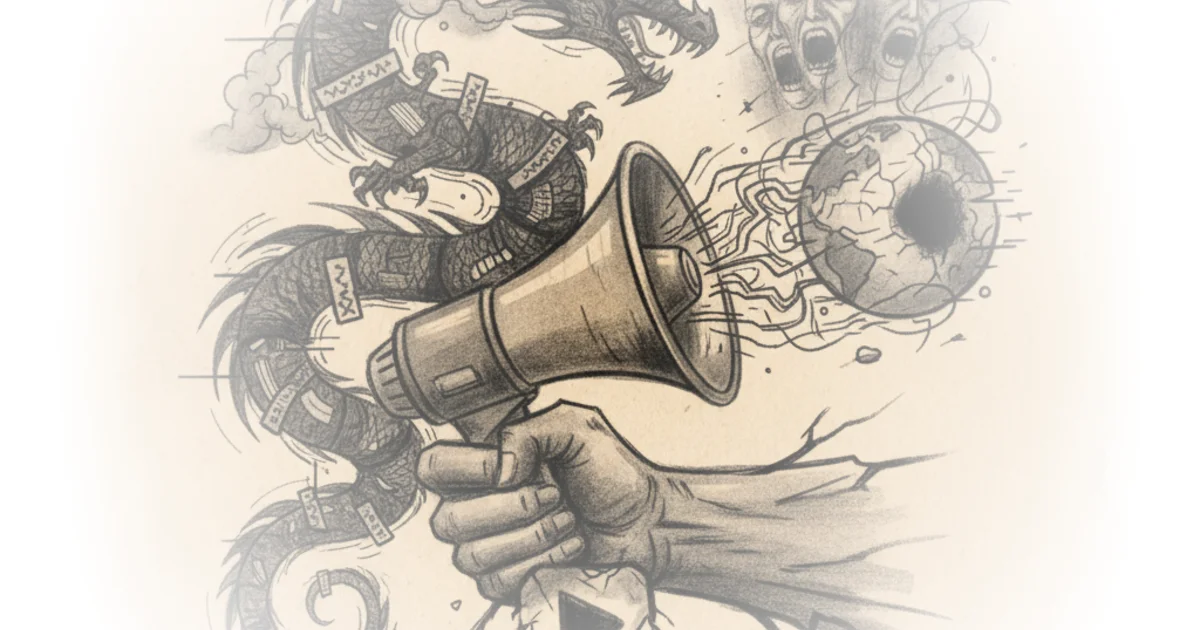
The core of the argument rests on the "10 out of 10" metric. Chappell explains that YouTube's internal ranking system flags videos with a score of 10/10 as performing poorly, not well. "I just hit a 10 out of 10 I must have done something really bad," he recounts, only to realize this was happening to every video in a row. This pattern suggests a systemic manipulation rather than a content quality issue. The creators argue that if the algorithm were working normally, they would see a mix of results, but instead, they are being erased from the platform's discovery engine.
Critics might note that algorithmic shifts often happen without clear public explanation, and correlation does not always equal causation. However, the sheer synchronization of the drop across competing channels makes a simple "algorithm update" explanation difficult to sustain.
It's like if a conspiracy theory didn't involve tin foil hat if it didn't involve theories but just facts.
The Search Engine Test
To move beyond anecdotal evidence, the authors conducted a controlled experiment. They searched for the term "China" using incognito windows and various VPN locations to strip away personalization filters. The results were, according to Chappell, "shocking." Instead of a diverse range of news and commentary, the top results were dominated by travel vlogs and content promoting the Chinese government's narrative.
Chappell highlights the absurdity of the search results: "You've got some China shill videos which are a year old or more than a year old four years old that have got like maybe like I don't know 120,000 views they're coming up and you've got channels and videos that are completely unrelated to China just happen to pop up as well but you know La 86's channel is focused on China every video he puts out is about China has China in the title very well known for covering China topics and not one of his videos."
The disparity is even more glaring when considering the engagement metrics. Videos with zero views were appearing in search results, while high-performing critical content was pushed to page 600 or completely removed. Chappell points out that even pro-Beijing content in Spanish and Indian languages began flooding the results, suggesting a global, not just domestic, push. "It doesn't even make sense how does it how do you compete when if if YouTube search results are based on competition like the YouTube reps say then that then then they're wrong," he asserts. This section effectively demonstrates that the issue is not about what viewers are choosing to watch, but what the platform is forcing them to see.
The Human Cost and Official Denial
The commentary shifts to the human impact, revealing that the suppression extends beyond views to the very connection between creator and audience. A viewer survey of 6,000 responses revealed that one in four subscribers had been "secretly unsubscribed" by the platform, and a third were not receiving notifications despite having them enabled. This suggests a deliberate decoupling of the audience from the content.
When the creators reached out to YouTube for clarification, the response was dismissive. Chappell recounts that the platform's representative claimed the drop was due to "lower viewer interest" and that their investigation found "no wrongdoing." This denial stands in stark contrast to the empirical evidence presented. "They said they were going to investigate and then after a week they were like oh we've investigated and you know it's everything's fine we've investigated ourselves and found no wrongdoing we do not secretly unsubscribe people we don't do that," Chappell notes with evident frustration.
The piece also addresses the financial incentives at play. With US foreign aid funding being pulled, the authors suggest that the platform may be pivoting to align with new geopolitical realities or economic pressures. "People people now they know our our scam is over you know," Chappell quips, referencing the narrative that these critical channels are part of a US government agenda, a claim he and his peers deny while acknowledging the shifting landscape of information warfare.
You've got some China shill videos which are a year old or more than a year old four years old that have got like maybe like I don't know 120,000 views they're coming up and you've got channels and videos that are completely unrelated to China just happen to pop up as well but you know La 86's channel is focused on China every video he puts out is about China has China in the title very well known for covering China topics and not one of his videos.
Bottom Line
Chappell's most compelling contribution is the transformation of a vague feeling of censorship into a reproducible, data-backed case study. By documenting the specific metrics of suppression—zero-view search results, synchronized view drops, and secret unsubscribes—he forces the reader to confront the possibility that the platform's neutrality is compromised. The argument's vulnerability lies in its reliance on the creators' own data without independent third-party verification of the algorithm's code. However, the consistency of the experience across rival channels makes the case for institutional bias difficult to ignore. The reader should watch for whether YouTube releases any transparency reports addressing these specific claims, as the silence from the platform remains the most telling evidence of all.