Kings and Generals reframes a notorious diplomatic disaster not as a story of personal humiliation, but as the precise moment the Eisenhower administration realized its Cold War playbook was broken. While history often remembers the 1958 tour as a chaotic footnote, this analysis argues that the violence in Caracas was the catalyst that forced a fundamental shift from military containment to economic development in the Western Hemisphere.
The Illusion of the Backyard
The piece opens by dismantling the comfortable myth that Latin America was ever a passive "backyard" for the United States. Kings and Generals writes, "Latin America was not a loyal audience waiting patiently for American leadership. It was a region with grievances, memory, and its own political weather system, and it did not need Washington's permission to turn violent." This framing is crucial because it shifts the blame from a mob's irrationality to a structural failure of US policy. The author effectively argues that the tour was doomed before it began because it ignored decades of economic frustration and resentment toward American support for authoritarian regimes.
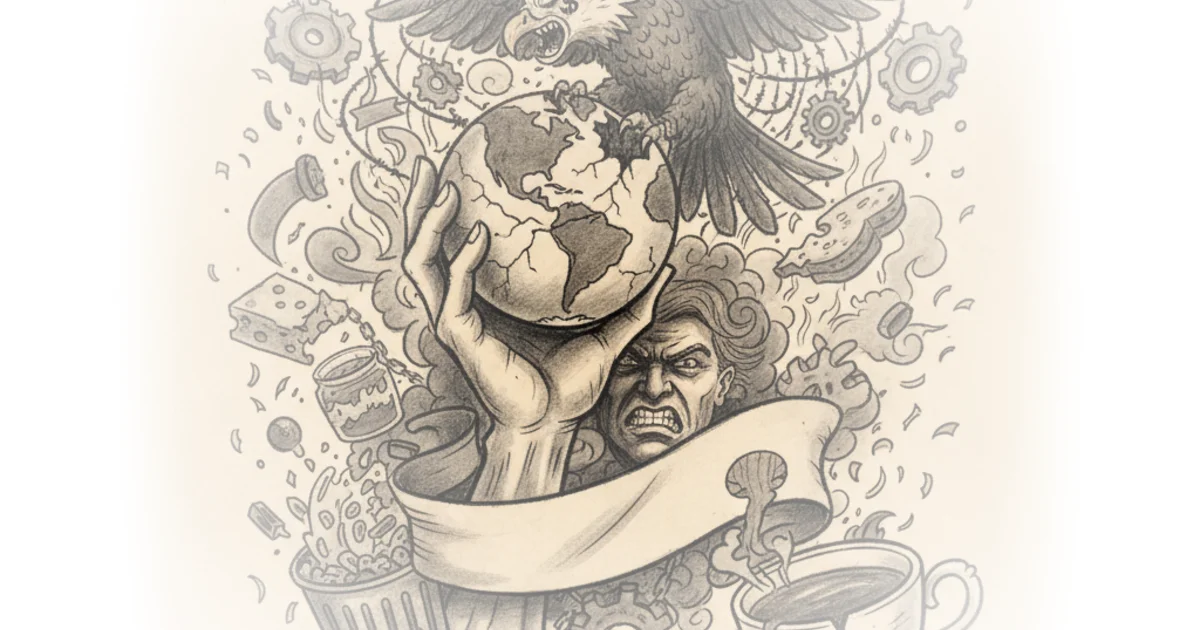
The coverage highlights how US officials viewed the region through a rigid Cold War lens, where any unrest was immediately suspected to be Soviet manipulation. As Kings and Generals puts it, "In that worldview, unrest was never just unrest. It was a potential opening for Soviet influence." This interpretation reveals a dangerous blind spot: by assuming every protest was a communist plot, the administration failed to see the genuine, organic anger driving the crowds. A counterargument worth considering is that the fear of Soviet expansion was not entirely unfounded given the geopolitical stakes of the era, but the piece rightly suggests that this fear blinded Washington to the reality on the ground.
A communist minority can throw sparks, but it cannot manufacture decades of resentment from scratch.
The Caracas Collapse and the Intervention Trap
The narrative reaches its peak in the description of the attack in Caracas, where the Vice President's motorcade was surrounded by a hostile mob. Kings and Generals details the scene with cinematic precision, noting that "local police declined to intervene and the motorcade only escaped due to the intervention of either the Venezuelan military or the quick thinking of the US press corps who used a flatbed truck to clear a path." The author uses this chaos to illustrate the fragility of US power; the Vice President was trapped, and the very government he was trying to support was unable to protect him.
The most insightful part of the analysis concerns the US military response. In reaction to the violence, the administration prepared "Operation Poor Richard," a plan to deploy troops to rescue Nixon. Kings and Generals points out the bitter irony here: "The very act of preparing to protect Nixon threatened to make the situation politically worse for the Venezuelan government and diplomatically worse for the United States." This is a sophisticated observation on the nature of soft power. The mere rumor of an intervention delegitimized the host government, making them look like puppets, while simultaneously trapping US diplomats in a contradiction where they wanted influence without the optics of domination.
From Humiliation to Policy Shift
The piece concludes by connecting the physical violence to a tangible change in US strategy. The tour was a "public humiliation and a private revelation" that accelerated a policy review already underway. Kings and Generals notes that the riots served as evidence for reformers inside the White House, making it "harder to pretend the old policy was working." This led to a pivot toward development lending and the creation of institutions like the Inter-American Development Bank.
The author highlights a rare moment of self-reflection from Nixon himself. In a report to the cabinet, Nixon admitted that "continued friendly relationships with dictators were a fundamental source of discontent with US policy in Latin America." This admission is striking because it acknowledges the contradiction between American rhetoric of freedom and the reality of supporting authoritarian allies. While the US did not abandon its strategic interests, the piece argues that the tour forced a rebranding of those interests into a more sustainable economic framework.
The riots were not only a problem to solve. They were evidence that could be used inside Washington to push a new approach.
Bottom Line
Kings and Generals delivers a compelling argument that the 1958 tour was the turning point where the US realized it could not simply dictate terms to Latin America through military posturing alone. The piece's greatest strength is its analysis of how the threat of intervention can be as damaging as the act itself, a lesson that remains relevant for modern foreign policy. The only vulnerability is a slight tendency to underplay the genuine role of Soviet agitators, though the author correctly identifies them as sparks rather than the fuel for the fire.