Most security analyses focus on missile counts or naval movements, but Tim Mak's reporting for The Counteroffensive identifies a far more insidious vulnerability: the demographic collapse of the island itself. While the world watches the Taiwan Strait, Mak argues that the island's plummeting birth rate is not merely a social statistic, but an existential threat that could render its defense impossible before a single shot is fired.
The Human Cost of Demographics
Mak anchors this geopolitical crisis in the intimate, personal refusal of a highly skilled professional to bring a child into the world. He introduces Dr. Wu En-Tsz, an obstetrician-gynecologist who delivers life daily but chooses not to create it. "I often tell people I'm an OB-GYN who doesn't want to have a baby," Mak writes, quoting Dr. Wu. "I want to focus on myself more instead of taking care of others." This framing is effective because it immediately dismantles the abstract nature of population data, forcing the reader to confront the agency of women who feel suffocated by the dual pressures of career and traditional expectation.
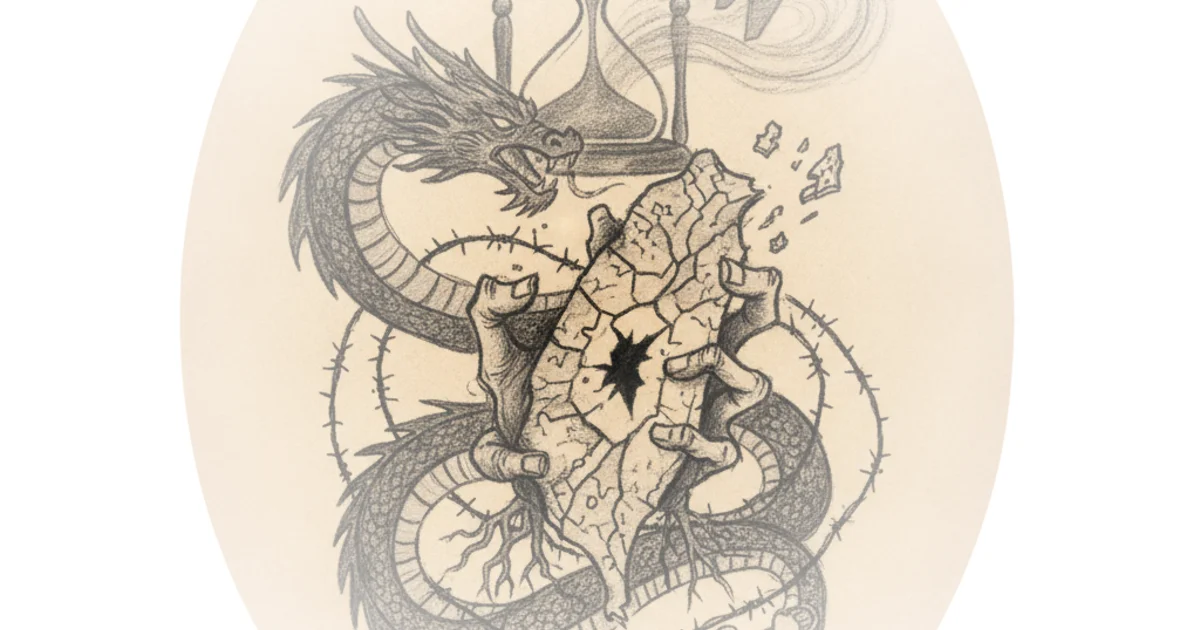
The author meticulously connects this personal choice to a national security deficit. As Mak puts it, "In Taiwan, this is becoming a national risk issue; as Beijing intensifies its gray-zone warfare... Taiwan's plummeting birth rate represents a severe existential vulnerability." The logic here is stark: a shrinking population cannot sustain a military capable of deterring a neighbor with 1.4 billion people. The data supports the alarm; the birth rate hit a record low last year, and projections suggest the population could be halved by 2065. Mak notes that the number of eligible men for conscription fell below 100,000 for the first time in 2023, a figure that threatens to drop further.
"A bigger population doesn't always guarantee victory in a war," En-Tsz said. "But a country like Taiwan, without a consolidated security net, could be in serious trouble if the birth rate continues on this downward spiral."
This quote serves as the piece's moral and strategic pivot. It acknowledges that numbers alone do not win wars, yet it insists that without a baseline of human capital, no amount of advanced weaponry can compensate. Critics might argue that modern warfare is increasingly automated, reducing the need for mass manpower, but Mak counters this by highlighting a specific talent shortage: the army planned to train 1,000 drone operators but could only fill 300 spots due to a lack of qualified recruits.
The Structural Failure of Support
Mak does not stop at the demographic math; he dissects the societal architecture that drives women away from motherhood. He details how economic burdens, such as rising housing prices and a lack of childcare resources, create a hostile environment for families. The piece highlights a critical failure in the social contract: public childcare centers cover only 4 percent of Taiwanese babies aged two. This scarcity forces a choice that many professionals cannot make.
The author illustrates this through the experience of Lia Hsu, a tech worker who feels the crushing weight of balancing a high-pressure career with motherhood. "I feel my kids would live in a difficult era," Mak quotes her saying. "My kids are lovely, but I work so many hours a day. It's hard for me to spend quality time with them and at the same time balance my career." This sentiment is echoed by Dr. Wu, who reflects on her own childhood neglect and the absence of a supportive family model. "I didn't get to see what a complete family was supposed to be like," Wu tells Mak, explaining her fear of replicating that isolation for a new generation.
The article also touches on the gendered nature of this crisis, noting that men are often not educated to manage relationships or share domestic burdens. "Men weren't educated to manage a relationship," Mak writes, quoting Dr. Wu. This cultural lag means that even as women enter the workforce in record numbers, the domestic sphere remains unchanged, making the prospect of raising children a career-ending risk rather than a shared life goal. While the military has attempted to adapt by expanding female recruitment and offering subsidies, Mak points out that these measures are insufficient against the tide of inflation and the soaring cost of education.
The Geopolitical Stakes
The commentary broadens its scope to place Taiwan's demographic struggle within the wider context of authoritarian pressure. Mak draws a parallel to the lessons learned from Russia's full-scale invasion of Ukraine, noting that Taiwan has been pivoting toward autonomous defense systems. However, the manpower shortage threatens even this high-tech pivot. The piece references the aggressive actions of the Chinese People's Liberation Army, which has been sending fighter jets across the middle line of the Taiwan Strait with increasing frequency. This context is vital; it reminds the reader that the demographic decline is happening while the threat level is rising, not falling.
Mak also weaves in the broader economic reality, noting that for many, salaries are lagging behind asset prices, creating a debt burden that makes starting a family financially impossible. The administration's efforts to incentivize birth, such as extending unpaid leave for service members, are presented as necessary but ultimately reactive measures to a deep-seated cultural and economic shift. The piece suggests that without a fundamental restructuring of how society supports families, the "consolidated security net" Dr. Wu mentions will remain out of reach.
"The responsibility of bearing children, and often raising them, has always fallen on women, but modern women are feeling suffocated and reluctant to sacrifice their careers for children."
This observation underscores the core tension: the state demands sacrifice for national survival, but the society it seeks to protect no longer offers the conditions necessary for that sacrifice to be sustainable. The author effectively argues that the solution cannot be found solely in military recruitment drives but must address the root causes of the demographic collapse.
Bottom Line
Tim Mak's most compelling argument is that Taiwan's greatest vulnerability is not a lack of missiles, but a lack of people willing and able to defend them. The piece's strength lies in its refusal to treat demographics as dry statistics, instead grounding the crisis in the lived experiences of women who feel the system has failed them. Its biggest vulnerability is the lack of concrete policy solutions beyond acknowledging the severity of the problem, leaving the reader with a clear diagnosis but no clear cure. The world must watch not just for military escalations in the Strait, but for the quiet, steady erosion of the island's human foundation.