Forget everything you think you know about climate progress. Dave Borlace exposes how the very solutions sold as saving us are actively prolonging fossil fuel dominance—a revelation buried under glossy corporate pledges and political theater. His evidence isn’t speculation; it’s a forensic audit of 48 real-world projects where renewables and carbon tech aren’t replacing oil rigs but powering them.
The One Question That Changes Everything
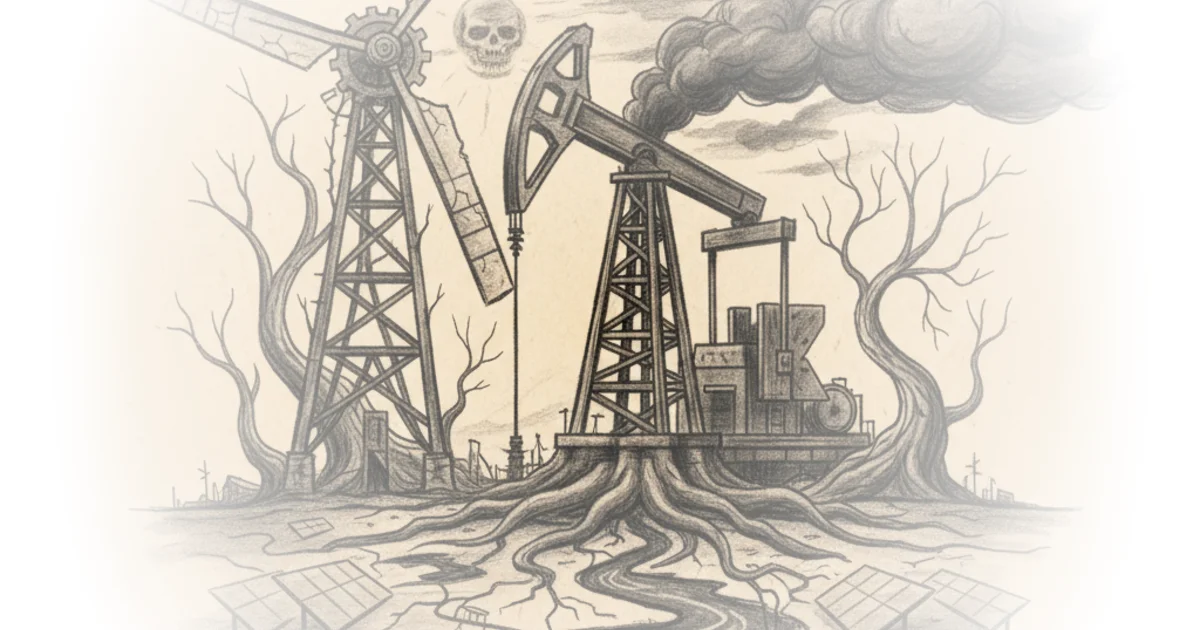
Dave Borlace writes, "For any proposed climate solution, we just need to ask one simple question. Will that proposal result in a genuine real world reduction in fossil fuel production and combustion, or will it facilitate its continued use?" This cuts through decades of obfuscation. The Barcelona/Sussex research team proves how offshore wind in Norway isn’t displacing oil—it’s electrifying extraction rigs, locking in decades more drilling. Similarly, Shell and BP secured North Sea oil licenses on wind-dedicated seabed, weaponizing renewables to decarbonize extraction. The core insight is devastatingly simple: projects touting "emissions per barrel" reductions often enable more total barrels burned. This lands because it reframes the entire climate debate—from counting carbon to tracking fossil fuel expansion. Critics might note that transitional technologies like carbon capture have legitimate niche uses, but Borlace rightly stresses their strategic deployment: as Prime Minister Mark Carney’s Canada deal shows, CCS becomes a Trojan horse for new pipelines when it’s used to justify increased production.
"A horrible tradeoff from a climate perspective... those barrels are going to be burned and the climate impacts... are going to outweigh any gains."
False Solutions, Real Consequences
Borlace masterfully connects infrastructure lock-in to human cost. He reveals how carbon capture projects extend the life of polluting facilities near vulnerable communities, exposing them to CO2 pipeline risks and groundwater contamination—while global "benefits" remain abstract accounting tricks. This isn’t theoretical: since Gold Standard’s 2019 credibility crisis, carbon offsets have become corporate fig leaves, letting data centers and new oil projects claim climate virtue via dubious tree-planting schemes. As Borlace puts it, "Offsets simply become a way of postponing real action... from the climate’s point of view, it’s an absolute cluster catastrophe." His evidence holds up because it’s rooted in material outcomes, not promises. Yet he overlooks how political realities—like energy security fears post-2022—create pressure for these compromises, making pure idealism impractical. Still, his dissection of hydrogen’s role is razor-sharp: repurposing gas pipelines as "hydrogen-ready" isn’t innovation; it’s fossil lobbying disguised as transition, risking methane amplification when hydrogen leaks.
The PR Machine Exposed
The most chilling evidence comes from corporate emails unearthed in a U.S. congressional probe. Dave Borlace quotes BP directly: "Sponsored content advertising is a powerful way to reach an audience focused on specific issues... to push our messages directly to Washington DC elites who set and influence energy policy." This confirms a coordinated strategy: tiny green investments buy massive legitimacy. Borlace argues fossil giants aren’t just greenwashing—they’re preempting regulation by convincing policymakers they’re part of the solution. It’s a brilliant reframing of "net zero" pledges as survival tactics, not commitments. The historical parallel to Delhi’s 2019 smog towers—expensive distractions from systemic pollution—shows how this playbook repeats: shiny tech substitutes for hard choices. His commentary on Jeff Dembiki’s DMOG investigations lands because it proves this isn’t rogue actors but industry doctrine.
Bottom Line
Borlace’s greatest strength is exposing the renewables-fossil fuel symbiosis—a truth most climate coverage avoids. His biggest vulnerability? Underplaying how possible it is to deploy wind/solar without enabling extraction (e.g., community-owned grids). Watch for whether COP30 forces fossil majors to abandon "net zero" pledges that greenlight new drilling.