Sarah Kendzior transforms a pilgrimage to a horror movie landmark into a searing critique of a modern America that has traded its soul for algorithmic predictability. By weaving a personal memoir of the late actor Gunnar Hansen with a 2025 observation of Austin's transformation, she argues that the true horror is not the fictional cannibal, but the real-world erosion of meaning, nature, and human connection under the weight of tech oligarchy and political autocracy.
The Ghost in the Machine
Kendzior frames the visit to the original Texas Chainsaw Massacre gas station not as nostalgia, but as an encounter with a vanishing American reality. She notes that the site, once a shrine to the film's raw authenticity, has been sanitized into a generic barbecue joint. The owner's lament—that "Californians ruined everything" due to copyright enforcement—serves as a microcosm for a broader cultural homogenization. Kendzior writes, "The owner explained that an entertainment corporation had forced them to transform their TCM pilgrimage site into a generic chop shop due to an alleged copyright infringement, despite the store's connection to the original film."
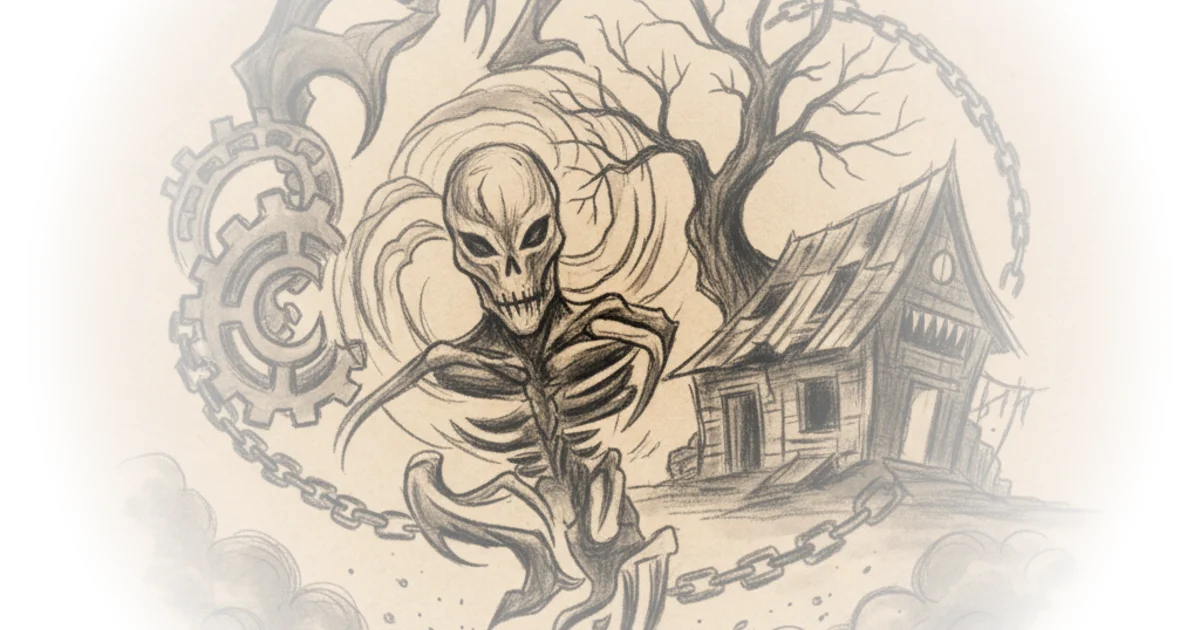
This observation is sharp: it highlights how intellectual property laws, often wielded by distant corporations, can erase local history and community identity. The piece suggests that the "bad ideas" loom large over the Texas skyline, turning a place of unique character into a sterile landscape. Kendzior contrasts the "driverless cars" and "bitcoin-bathed streets" of Austin with the visceral, human chaos of the 1974 film, arguing that the modern city has lost its capacity for the "impolite" truths that art can reveal.
"Tech oligarchs had built a skyline of skyscrapers that loomed like landing pads for bad ideas."
The argument gains depth when Kendzior introduces Gunnar Hansen, the actor who played Leatherface. Far from a one-dimensional horror icon, Hansen is portrayed as a scholar of Moby Dick and a guardian of the natural world who rejected fame to live in seclusion. Kendzior recalls their conversations, noting that Hansen believed horror films were targeted not for their violence, but for their refusal to offer comforting lies. She quotes him directly: "People go after horror films not because they're violent, but because a lot of times horror films have values that contradict normal values."
This distinction is crucial. It reframes the cultural backlash against horror as a defense mechanism against uncomfortable truths. Hansen's insight—that "a horror film does not pretend that death is not horrifying"—stands in stark contrast to the polished, sanitized narratives of the current political and technological era. Critics might argue that this romanticizes the horror genre or overlooks the genuine harm of violent media, but Kendzior's focus is on the function of horror as a mirror to societal anxiety, not its literal content.
The Unpunished Monster
The piece takes a darker turn as Kendzior connects Hansen's philosophy to the current geopolitical and environmental crisis. She notes that Hansen died before the rise of a "technofascist belief in human disposability," a phrase that captures the dehumanizing logic of the current administration's policies and the tech sector's disregard for ecological limits. Kendzior writes, "He died before a technofascist belief in human disposability became mainstreamed into global politics: an extinction racket that shuns even the pretense of valuing life."
Here, the commentary shifts from cultural critique to a warning about the future. The "monster" in the story is no longer Leatherface, but the systemic forces that prioritize profit and efficiency over human and ecological survival. Kendzior suggests that the real horror is the "narrowing of vision" that leads to a dystopia where "movies made by robots" pander to the unimaginative. This is a powerful indictment of a culture that has lost its ability to grapple with complexity and ambiguity.
"The monster goes unpunished. He is still there, still capable of returning. The normality, the predictability of the world is gone. There is no punishment. There is no relief of suffering. There is no justice. There is no order."
Kendzior uses Hansen's description of the film's ending to describe the current moment: a world where justice and order have collapsed, leaving only "mass of unknowability." The piece argues that the administration's actions and the tech industry's trajectory are accelerating this collapse, creating a reality where the "impolite" truths of the past are being erased.
Nature's Rebellion
In the final section, Kendzior finds a glimmer of hope in the natural world, specifically the emergence of bats from the Congress Avenue Bridge in Austin. She describes the scene as a moment where "nature, unrepentant," breaks through the dystopian veneer. The crowd cheers as the bats fly, a symbol of a force that is "impervious to tech lord transformations." Kendzior writes, "There's a crack in the dystopia. That's how the night gets in."
This ending is a masterful pivot. After a tour of cultural decay and political despair, she points to the resilience of the natural world as the ultimate counter-narrative. The bats, like the horror of the film, are a reminder that the world is not as polished or predictable as the powers that be would like. It is a call to recognize the "mass of unknowability" not as a threat, but as a source of freedom and humanity.
"A gentle man famed for playing a serial killer taught me I never had to choose one way to live or to be. I could be of the world, and that was enough."
Kendzior's argument is that we must embrace the complexity and ambiguity of life, rather than seeking the false comfort of a sanitized, algorithmic existence. The piece suggests that the only way to survive the coming darkness is to remember the lessons of Hansen and the horror genre: to face the truth, however ugly, and to find meaning in the struggle.
Bottom Line
Sarah Kendzior's piece is a masterclass in using pop culture to dissect deep societal fractures, arguing that the real horror is the loss of human agency in an age of algorithmic control and political autocracy. Its greatest strength is the poignant juxtaposition of Gunnar Hansen's intellectual depth with the hollowed-out reality of modern Austin, creating a narrative that is both deeply personal and urgently political. The argument's vulnerability lies in its reliance on a specific, somewhat nostalgic view of the past, but its core message—that we must resist the sanitization of truth to preserve our humanity—is a vital one for any reader navigating the current crisis.