In a medium often obsessed with spectacle, Animation Obsessive turns its gaze to a seven-minute sequence where almost nothing happens, arguing that this deliberate stillness is precisely what makes Mamoru Oshii's Patlabor 2 a timeless warning about the distance between modern citizens and the reality of war. The piece does not merely analyze an anime; it dissects a specific cultural anxiety about how screens mediate violence, offering a lens through which to view our own world where military presence is often viewed through the filter of a monitor rather than felt in the streets.
The Architecture of Unease
The editors anchor their analysis in the film's depiction of martial law in Tokyo, a scenario where the military occupies the city yet daily life grinds on in a surreal, dissonant rhythm. They highlight how the director, Mamoru Oshii, intentionally strips away the dramatic action expected of the genre to focus on the psychological impact of the occupation. "The very existence of military vehicles within ordinary everyday scenes — where they must not be — creates an inexplicable feeling of unease," the piece notes, quoting a writer who identifies this dissonance as the film's core. This observation is crucial because it shifts the focus from the tanks as weapons to the tanks as intruders in a domestic space, forcing the audience to confront the absurdity of war bleeding into peace.
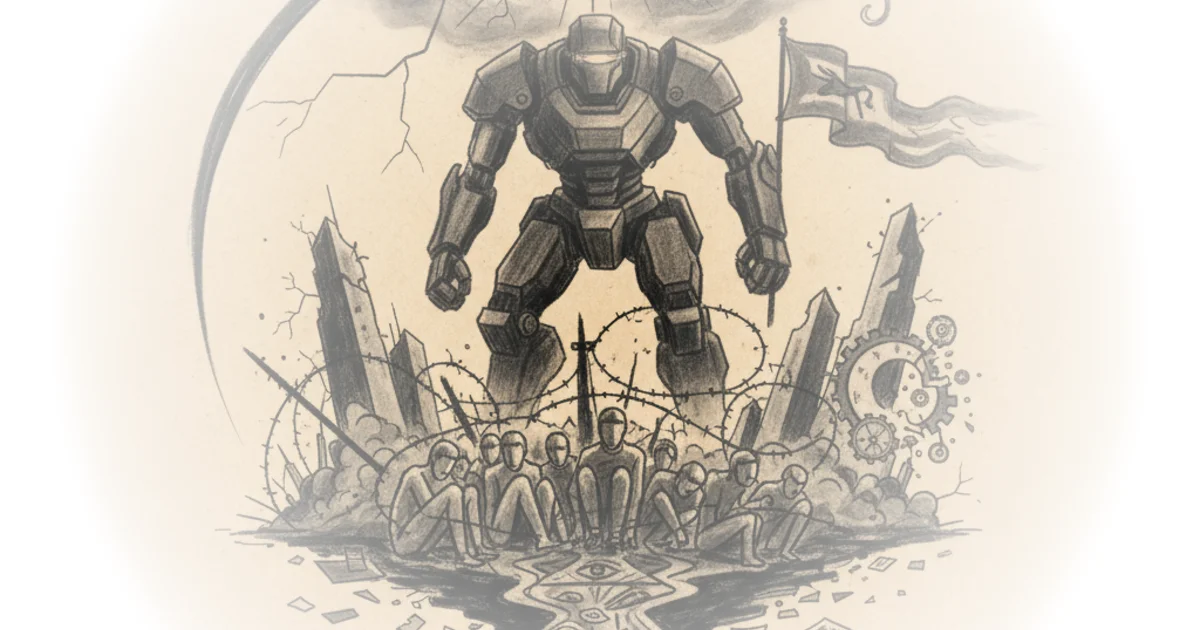
Oshii's approach is described as a rejection of the "fake peace" that characterized Japan in the 1990s, a nation accustomed to viewing conflict as distant footage from abroad. The editors report that Oshii wanted to show how the line between the screen and daily life blurs when soldiers enter the city, creating a reality where "nothing makes sense." This framing is particularly potent today, as the mediation of conflict through digital interfaces has only deepened. The piece suggests that Oshii was ahead of his time in recognizing that "we've reached a point where, constantly, we can only come into contact with reality through a kind of curtain, such as the fluorescent screen of a monitor." By emphasizing this "curtain," the article argues that the film is not just a sci-fi thriller but a critique of how modern society insulates itself from the human cost of violence.
"We've reached a point where, constantly, we can only come into contact with reality through a kind of curtain, such as the fluorescent screen of a monitor. I'm not sure anyone can break through that curtain anymore."
The Power of Stillness and Layout
A significant portion of the commentary is dedicated to the technical execution of this vision, specifically the film's reliance on "layout" over traditional animation movement. The editors explain that Oshii and his team, including the young Satoshi Kon, prioritized the static composition of shots to emulate the look of live-action cameras, using telephoto and wide-angle lenses to create a sense of distortion and anxiety. The piece quotes writer Ryusuke Hikawa, who notes that "higher priority was placed upon the layout stage of the production to assure the needed mise en scène, and upon adorning individual scenes with fine details." This technical detail supports the broader argument that the film's power lies in its atmosphere rather than its plot.
The editors point out that the sequence is filled with symbolic imagery, such as elementary schoolers waving at a war robot or "military otaku" posing in Nazi uniforms, all framed to highlight the absurdity and normalization of the military presence. Oshii's use of reflections and screens within the frame is highlighted as a deliberate choice to show the "peace inside the window" versus the "war beyond the window." This visual strategy forces the viewer to recognize the artificiality of their own safety. However, a counterargument worth considering is whether this heavy reliance on stillness and symbolism risks alienating audiences who seek more narrative drive, a point the editors acknowledge by noting that Oshii faced criticism for sidelining fan-favorite characters and defying industry conventions.
The editors also credit the soundtrack by Kenji Kawai for enhancing this sense of dread, describing the music as "heavy and filled with a sense of coming dread" that complements the visual stillness. The result is a sequence that feels less like an action movie and more like a haunting meditation on the surreal nature of modern conflict. The piece argues that this unorthodox style was a necessary rebellion against an industry that was "suffocating under" cliches, urging creators to "open the hatch wide, stick your head out and take a good look all around."
Beyond the Screen
While the article focuses heavily on the film's artistic merits, it also touches on the broader implications of Oshii's work for understanding contemporary geopolitics. The editors suggest that the film's depiction of a military occupation where soldiers are "hypnotized" and the city is empty of civilian traffic serves as a warning about the dehumanizing effects of war. They note that Oshii's vision was not about glorifying military power but about exposing the "distorted reality" of a world where violence is mediated and distant. This perspective is vital, as it reminds readers that the human cost of conflict is often obscured by the very screens through which we view it.
Critics might note that the piece's focus on the aesthetic and philosophical aspects of the film could downplay the specific historical and political context of Japan's post-war pacifism, which is essential to fully understanding Oshii's critique. Nevertheless, the editors successfully argue that the film's relevance transcends its specific setting, offering a universal commentary on the relationship between technology, perception, and violence.
Bottom Line
Animation Obsessive delivers a compelling analysis that elevates Patlabor 2 from a cult classic to a prescient commentary on the mediated nature of modern warfare. The piece's strongest asset is its ability to connect Oshii's technical choices—specifically the use of stillness and layout—to a profound philosophical argument about the "curtain" of screens that separates us from reality. Its biggest vulnerability lies in its dense focus on film theory, which may require the reader to have a baseline familiarity with the medium to fully appreciate the nuances of the argument. For the busy reader, this commentary serves as a vital reminder that the most powerful depictions of war are often those that show us how little we truly see.