Naomi Kanakia delivers a rare, clear-eyed dissection of why we read, cutting through the noise of literary snobbery to reveal the mechanics of mass appeal. Rather than dismissing the "buzzy" novel or the paperback Western as inferior, she argues that both are sophisticated responses to specific distribution channels and human needs for reliable entertainment. This is essential listening for anyone trying to understand the current fracture in the literary world, where high-minded criticism often ignores the actual readership.
The Illusion of the "Buzzy" Novel
Kanakia begins by exposing the fragility of the contemporary literary ecosystem. She describes her own hesitation to read Flesh, a novel that eventually won the Booker Prize, noting how difficult it was to justify its value to her friends. "Basically I had trust: I trusted Celine that it was worth reading," she writes, highlighting that the success of these "buzzy literary novels" relies entirely on the attention of a specific, self-selecting group. She argues that this phenomenon is an institution perpetuated by the very people who claim to champion it.
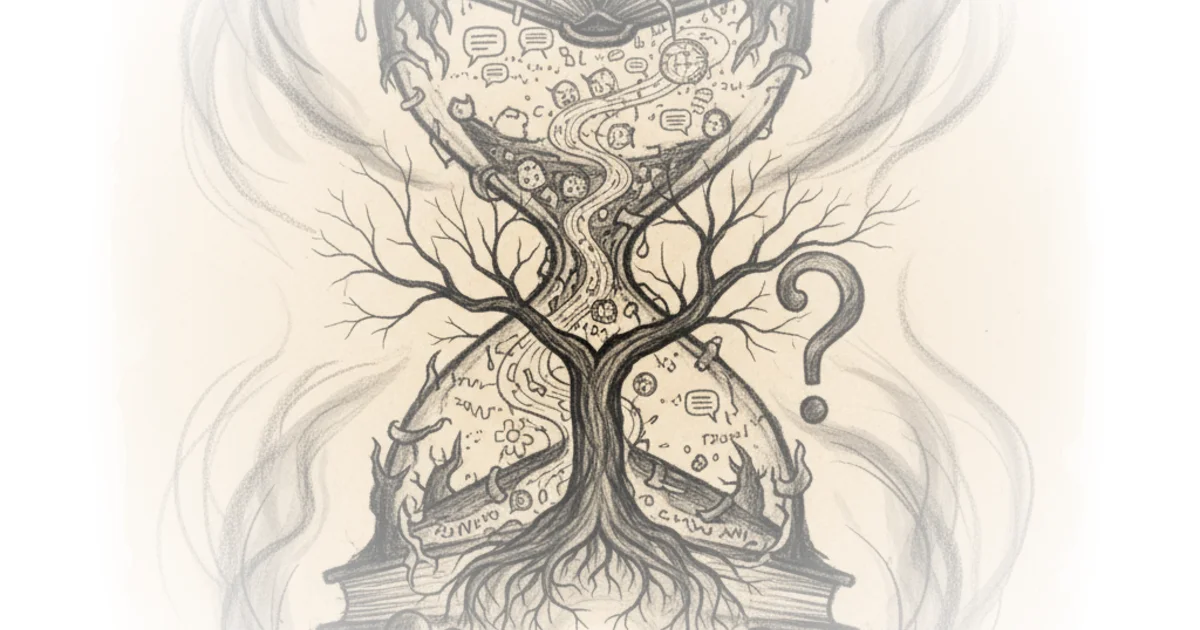
The author points out a stark contrast between this elite circle and the broader reading public. While literary critics often sneer at bestsellers, labeling them "slop," Kanakia suggests this dismissal is a form of cultural gatekeeping that ignores history. She notes that in the mid-20th century, bestsellers like Gentleman's Agreement tackled social issues squarely, selling millions of copies. Today, that space is largely empty, replaced by a divide where highbrow readers and mass-market audiences rarely intersect. "The conceit of The Drift is that it's for people who don't read bestsellers," she observes, critiquing how modern criticism treats popular genres like "romantasy" as anthropological curiosities rather than legitimate literature.
The buzzy literary novel can only exist if it's able to arouse the attention of people like me... To some extent, this institution is only perpetuated by our attention.
This framing is powerful because it forces the reader to acknowledge their own complicity in the literary hierarchy. Kanakia's argument holds up well against the backdrop of the Booker Prize, which often rewards this specific type of "flat" but event-driven prose. However, one might argue that the decline of the socially conscious bestseller is less about a lack of ambition and more about the fragmentation of the media landscape itself, a factor she touches on but does not fully explore.
The Paperback Machine and the Western Hero
The piece shifts gears to examine Louis L'Amour, a writer who sold over three hundred million books yet remains largely absent from the literary canon. Kanakia's deep dive into L'Amour is not just a biography but a study of distribution. She explains that L'Amour's dominance was inextricable from the "paperback-original" format, sold in drugstores and railway stations where readers could easily pick up a book after a long day of work.
She highlights the disconnect between critical reception and reader loyalty. Despite being dismissed by other Western writers, L'Amour maintained a passionate fanbase of cowboys, ranch hands, and isolated rural workers. "He was like Law and Order, he was something that was always available and that would always be pretty good," Kanakia writes, capturing the essence of his appeal: reliability. This mirrors the historical context of the paperback revolution, where accessibility trumped critical acclaim. Just as the Booker Prize creates a specific type of literary celebrity, L'Amour's brand was built on a distribution model that guaranteed a steady supply of entertainment to a specific demographic.
Kanakia delves into L'Amour's own frustration with this dynamic. The author notes that L'Amour was "wounded by the lack of critical attention for his fiction," famously stating, "I don't give a damn what anyone else thinks, I know it's literature and I know it will be read 100 years from now." This ambition led him to write The Walking Drum, a massive historical novel intended to break into the hardcover market. It was rejected, and he set it aside for fifteen years. Kanakia argues that this rejection was shattering because it denied him the validation he sought from the literary establishment.
His success is inextricable from the success of the distribution channel his books used... If you picked a book at random from this rack, it would likely be his.
The author's analysis of L'Amour's later work, particularly Last of the Breed, reveals a surprising depth. She praises his ability to depict human continuity across cultures, noting his sympathetic portrayal of Russians during the Cold War. This challenges the stereotype of the Western author as a simple storyteller. Yet, critics might note that Kanakia perhaps overstates the literary merit of L'Amour's prose to make her point about distribution; while his themes are universal, his writing style often lacks the complexity of the "upmarket" fiction he aspired to emulate.
The Human Need for Narrative
Ultimately, Kanakia's commentary circles back to the fundamental human need for stories that are accessible and consistent. She contrasts the "flat tone" of modern literary fiction with the "major life events" that actually happen in L'Amour's books. The author suggests that the literary world's obsession with prose quality often misses the point of why people read: to unwind, to escape, and to connect with a narrative that feels real.
She draws a parallel between the isolation of L'Amour's readers in the 1970s and 80s and the modern reader's search for connection. "These men spent a lot of time alone. They worked hard. And they read his books at the end of a long day to unwind," she writes, reminding us that literature has always served a functional purpose beyond critical acclaim. The piece implies that the current divide between "literary" and "commercial" fiction is artificial, created by critics who have lost touch with the diverse ways people engage with stories.
I don't give a damn what anyone else thinks, I know it's literature and I know it will be read 100 years from now.
Kanakia's argument is a necessary correction to the prevailing narrative that equates sales with low quality. By grounding her analysis in the history of distribution and the specific needs of readers, she provides a more nuanced view of the literary landscape. The only gap in her argument is a deeper exploration of how digital distribution is currently reshaping these dynamics, potentially creating new forms of "paperback racks" in the algorithmic age.
Bottom Line
Naomi Kanakia's piece is a compelling defense of the reader's experience over the critic's approval, successfully arguing that the value of a book is determined by its ability to meet human needs, not just its adherence to literary trends. The strongest part of her argument is the historical context she provides for Louis L'Amour's success, revealing how distribution channels shape literary history. Her biggest vulnerability is a slight over-correction in elevating genre fiction to the same critical plane as literary fiction without fully addressing the aesthetic differences that matter to many readers. Watch for how this tension between accessibility and artistic ambition plays out as the publishing industry continues to fragment.