Crash Course makes a startling claim: that the most honest way to document state terror is not through clear facts, but through the messy uncertainty of fiction. In a landscape often dominated by historical documentaries or political analysis, Kurly Velasquez argues that the children of Latin American dictatorships have developed a unique literary genre—postmemorial literature—that thrives on the very gaps in memory that regimes tried to create. This matters now because it challenges the reader to accept that not knowing the full truth is, in itself, a form of testimony.
The Architecture of Silence
Velasquez opens by describing the peculiar trauma of growing up in the shadow of a dictatorship, where the horror is felt but not fully understood. "Imagine you're a kid doing the usual kid things... but even in the bubble of childhood, you feel it. The secrets, the silence, the fear, there's a dark shadow around you." This framing is effective because it immediately grounds abstract political history in the visceral, confused experience of a child. The author posits that for a generation raised under regimes like Augusto Pinochet's in Chile, the official record was a lie, making traditional historical narratives feel dishonest.
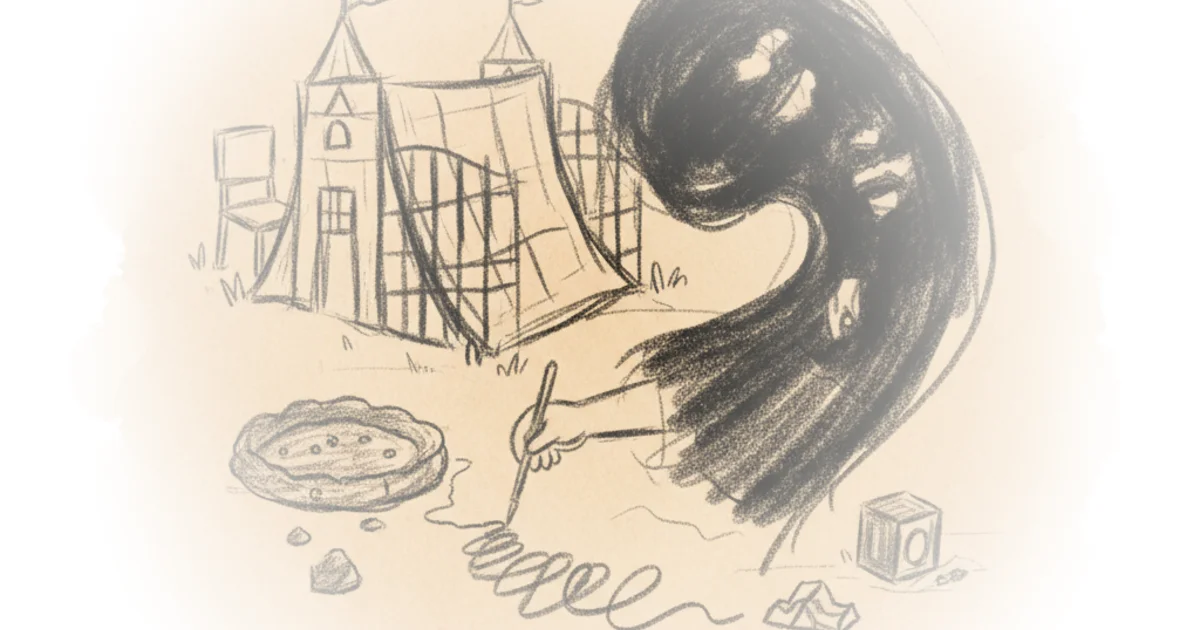
The piece focuses heavily on Alejandro Zambra, a writer who was too young to remember the 1973 coup but grew up in its aftermath. Velasquez notes that Zambra's work, specifically Ways of Going Home, uses a self-aware style called metafiction to expose the difficulty of reconstructing the past. "While the boy in the story eventually learns some big important truths, the novelist never gets answers. And that uncertainty is kind of the point." This is a crucial distinction. The author suggests that for these writers, the traditional novel's "sure declarative voice" belongs to the older generation who imposed the false reality. By contrast, experimental fiction that admits its own fictionality feels more truthful to those living in the aftermath.
"When a false version of the truth has been imposed on you, you might find black and white certainty to be less honest than the messiness of not knowing."
Critics might argue that relying on fiction to process historical trauma risks trivializing the actual events or allowing for historical revisionism. However, Velasquez counters this by showing how these authors use fiction not to invent, but to fill the voids left by state censorship and fear.
The Individuality of Grief
The commentary shifts to Argentina, where the military dictatorship under Jorge Videla led to the forced disappearance of tens of thousands, including pregnant women whose babies were stolen. Velasquez highlights the work of Mónica Ojeda and other authors who write about the "children of the disappeared." The author argues that literature allows us to see that trauma is not a monolith. "Brous challenges the idea that all children of disappeared parents are destined to go to the same places and ask the same questions." This is a vital correction to the tendency to view victims of war as a single, undifferentiated mass. Each person's journey through grief is unique, and the literature reflects that complexity.
The piece then moves to El Salvador and Claudia Hernández's novel Slash and Burn, which depicts the civil war through the eyes of an unnamed woman. The narrative tracks her from a child dodging rebels to a pregnant fighter whose baby is sold to fund the rebellion. Velasquez emphasizes how the novel makes disappearance "intimate," showing that even the bond between mother and child was not safe. The author notes that the threat of sexual violence follows the woman throughout her life, a reality that extends to "everyone named sister, daughter, or mother." This focus on the specific, gendered experience of war adds a layer of depth often missing from broader political summaries.
The Limits of the Frame
Finally, Velasquez examines Claudia Salazar Jiménez's Blood of the Dawn, set during Peru's "Time of Fear." The novel weaves together the lives of three women: a photojournalist, an indigenous farmer, and a social worker. The author uses the metaphor of the camera to discuss the limitations of memory. "She reminds us that she represents just one lens and it has limits. These are photos that push you to look outside the frame that gesture at all that hasn't been captured." This is a powerful insight: the act of witnessing is always partial. What is outside the frame—censored, feared, or simply forgotten—is just as important as what is captured.
The author concludes by quoting Salazar Jiménez on the necessity of writing about violence despite the pain it causes. "We cannot relegate these stories to silence." This sentiment ties the entire episode together, suggesting that the act of writing and reading these difficult stories is a form of healing and a way to reclaim history from the forces that tried to erase it.
"Writing and reading can be healing, a way of reconstructing history, naming what's been disappeared, and finding answers for how to live here now."
Bottom Line
The strongest part of Velasquez's argument is the reframing of fiction not as an escape from reality, but as the only viable tool for navigating a reality where the truth has been systematically obscured. The biggest vulnerability lies in the sheer density of historical context; without prior knowledge of these specific conflicts, a listener might struggle to grasp the full weight of the literary references. However, the core message remains clear: in the face of state-sponsored silence, the messy, uncertain voice of the novelist is often the most honest witness we have.