This briefing from Sinification cuts through the noise of daily headlines to reveal a startling consensus: the world's most powerful nation is not retreating from the global stage, but rather retooling its machinery of control. While Western observers often mistake the new National Security Strategy for a moment of ideological surrender, the piece argues that Chinese analysts see something far more calculated—a "strategic retrenchment" designed to let the United States recuperate before striking again with greater precision. For a busy reader tracking the shifting tides of global power, this distinction is not academic; it is the difference between preparing for a vacuum of power and preparing for a more efficient, less sentimental hegemon.
The Illusion of Retreat
The core of the analysis rests on a divergence in interpretation. Western commentary tends to diagnose the shift as an "ideological abdication," a moment where the West simply gives up. Sinification reports, however, that the dominant mood in Beijing is not triumphalism, but caution. The piece notes that while some see a fleeting window of opportunity, many warn that even partial US withdrawal could generate "violent turbulence" rather than peace. This is a crucial correction to the narrative of American decline. The strategy is not a retreat; it is a "deliberate renunciation of America's role as a global hegemon" only in the sense that it is shedding the burdens of policing the world to focus on core interests.
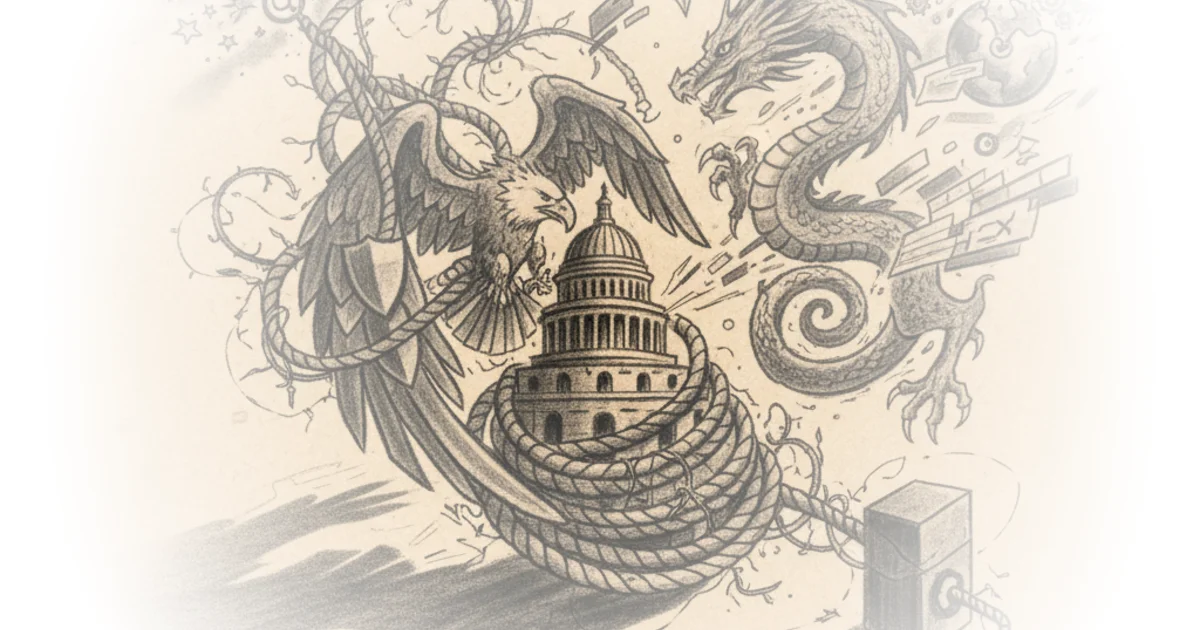
The editors highlight a specific historical parallel that adds significant depth to this reading. One major strand of analysis likens the current move to the "Nixon–Reagan sequence during the Cold War," suggesting a period of apparent withdrawal is actually a prelude to a more aggressive counterattack. This reframing challenges the reader to look past the surface-level rhetoric of "America First" and consider the long game. As the piece argues, the shift is often read as "strategic retrenchment": a period in which the US recuperates and rebuilds, laying the foundations for a later counterattack.
The underlying tone of America's China strategy does not change: maintaining its own position of advantage, and guarding against and containing China's rise.
This perspective, attributed to scholar Meng Weizhan in the source text, cuts through the diplomatic fog. It suggests that the toned-down language is merely tactical. The argument holds weight because it aligns with the historical pattern of great powers consolidating resources before expanding influence. However, critics might note that assuming such a seamless transition from "retrenchment" to "counterattack" underestimates the internal political fractures within the United States that could derail such a long-term plan.
A New Architecture of Alliances
The briefing also dissects how the United States is reshaping its relationships with allies, moving away from shared values toward shared costs. The piece argues that NATO is expected to "reshape rather than collapse," with costs shifting to Europe while US control persists. This is a stark departure from the post-WWII model. The editors note a shift from a "values alliance" to a "cost alliance," where the bond is no longer about democracy but about the financial and military burden of containment.
Jin Canrong, a professor at Renmin University quoted in the text, captures the transactional nature of this new order: "We should of course take this federally mandated document seriously, but we needn't overinterpret it, because it only represents the US government's policy direction for the next four years." This pragmatism suggests that the administration is willing to discard the moral high ground if it serves the strategic goal of focusing on the Western Hemisphere. The piece further suggests that the US might be courting European populists to re-knit a tighter bloc, replacing an "ideological threat" with a "civilisational threat."
This move toward a "civilisation" frame is particularly significant. It implies a harder, more coherent mobilization against China that transcends the looser, often fractious alliances of the past. As the editors observe, this could prove more aggressive than previous iterations of Western unity. Yet, a counterargument worth considering is whether a transactional alliance can sustain the long-term commitment required for a "marathon" of competition, or if the lack of shared values will eventually cause the coalition to fracture under pressure.
The West, in Sun's telling, is cultural and institutional rather than geographic... Europe used to be within the West, but it is now outside the Western Hemisphere.
Sun Liping's observation, cited by Sinification, marks a profound historical break. It signals the end of the transatlantic community as a cultural entity, replacing it with a geographic and strategic definition that excludes Europe from the core "Western Hemisphere" interests. This redefinition echoes the sphere-of-influence logic of the Yalta Conference, where great powers carved up the world into zones of control. While the piece treats the idea of a "Yalta 2.0" as rumour, the underlying logic of "sphere-of-influence thinking" is undeniable. The strategy is, as one author puts it, "different soup, same medicine."
The Contradiction of Power
Despite the strategic clarity, the piece does not shy away from the internal contradictions of the National Security Strategy. It is described by several experts as a "strategic hotchpotch" rather than a coherent doctrine. The tension between a "Western Hemisphere first" approach and the insistence on maintaining military deterrence in the Indo-Pacific creates a dangerous ambiguity. Shen Yi, a professor at Fudan University, argues that the document is an attempt at a "backwards offensive," abandoning the neoliberal global hegemonic ideal while retaining the symbols and benefits of traditional hegemony.
This incoherence is not just a rhetorical flaw; it is a strategic vulnerability. The piece notes that the "ambition–means gap" may be fatal, with some analysts arguing the strategy will "accelerate America's decline" rather than arrest it. The administration is trying to do too much with too little, expecting allies to shoulder more while the US retains global primacy. As the editors summarize, the strategy is a "dignified, orderly strategic retreat" on paper, but the implementation is likely to be "uneven and messy."
The new NSS is actually aimed at China throughout; it is just less explicit. We should see through this confusing surface appearance and clearly recognise its strategic intent.
This warning from Meng Weizhan serves as the piece's central thesis: do not be fooled by the softer rhetoric. The shift from an "American football game" to a "marathon" implies a long, grinding contest where the US is willing to play the long game, even if it means appearing to step back in the short term. The human cost of this strategic recalibration is not explicitly detailed in the text, but the implication of "violent turbulence" suggests that the instability caused by this shift will be felt most acutely by populations caught in the crossfire of great power competition.
Bottom Line
Sinification's analysis offers a sobering correction to the narrative of American withdrawal: the United States is not leaving the stage; it is changing the script to play a more ruthless, efficient game. The strongest part of this argument is its ability to connect current policy shifts to historical precedents like the Nixon Doctrine, revealing a pattern of strategic consolidation rather than collapse. However, the piece's biggest vulnerability lies in its assumption that the US can successfully execute this complex pivot without triggering the very instability it seeks to avoid. Readers should watch for the gap between the administration's rhetorical focus on the Western Hemisphere and its continued, albeit quieter, military entanglements in the Indo-Pacific, as this contradiction will likely define the next decade of global tension.