Cory Doctorow reframes the daily frustrations of modern life—from locked-up merchandise to deadly medication errors—not as inevitable inefficiencies, but as a deliberate, calculated business strategy. He argues that understaffing is not a symptom of a broken labor market, but a primary engine for shifting value from workers and patients directly to shareholders, a process he terms "enshittification." This perspective is vital because it dismantles the popular narrative that poor service is simply a result of "people not wanting to work," revealing instead a systemic extraction of wealth that endangers public health and safety.
The Mechanics of Value Extraction
Doctorow begins by defining the economic engine behind this phenomenon. He writes, "At root, enshittification can only take place when companies can move value around." He explains that while digital tools have made this extraction more granular, the fundamental logic predates the internet. It is the same logic that allows an airport shop to charge ten dollars for a bottle of water: the customer is trapped by a monopoly created by the very infrastructure they must use. As Doctorow puts it, "When a business has something you really want (or even better, something you need) and it's hard (or impossible) for you to get it elsewhere, they can take value away from you and harvest it for themselves."
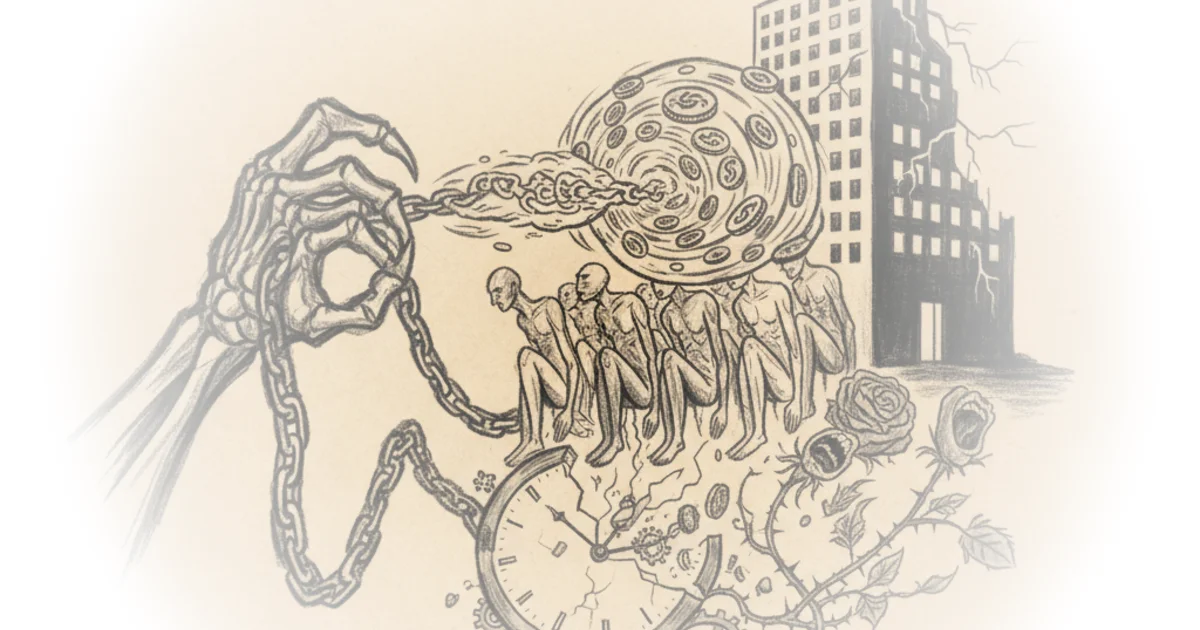
This argument is compelling because it connects disparate annoyances into a single, coherent theory of corporate predation. The author illustrates this with the example of dollar stores, which create "food deserts" by driving out local grocers, only to exploit the resulting lack of competition to charge high per-unit prices for "cheater sizes." This dynamic mirrors the historical pattern of price discrimination, where monopolies exploit their position to extract maximum value from the most vulnerable populations who have no alternative. The author notes that these stores are also situated in "work deserts," destroying competition for labor and allowing them to suppress wages further.
"CVS is trading your time for their wage-bill."
The commentary shifts to the pharmacy sector, where Doctorow identifies understaffing as a direct method of cost-shifting. He describes how massive chains like CVS and Walgreens operate with skeleton crews, forcing customers to wait for a single employee to unlock merchandise or fix malfunctioning self-checkout machines. This is not an operational failure; it is a feature. By reducing staff, these corporations transfer the labor of restocking, security, and customer service onto the consumer and the remaining overworked employees. The author points out that this strategy also externalizes costs to the public, noting that understaffed stores become easy targets for theft, which in turn forces publicly funded police to respond to problems created by the business model.
The Human Cost of Profit Maximization
The article draws heavily on reporting by Robin Kaiser-Schatzlein from The American Prospect to demonstrate the systemic nature of this trend. Doctorow writes, "Kaiser-Schatzlein lays the blame for many of life's frustrations at the feet of this business trend: 'long lines, messy grocery aisles, organized theft, high hotel costs, frequent flight cancellations, deadly medication errors at pharmacies, increased use of medical restraints in nursing homes, and, more generally, a palpable and rising dissatisfaction with work.'" This list is not merely a catalog of inconveniences; it is an indictment of a system that prioritizes profit margins over human well-being.
The evidence presented is stark. A 2024 Kennedy School survey found that a majority of workers feel their workplaces are "always" or "often" understaffed. In the healthcare sector, the consequences are lethal. Doctorow highlights a 2023 study indicating that public health institutions need 80% more workers to be adequately staffed, and cites a $2 million fine levied against New York's Mt Sinai hospitals for understaffing critical units. The author connects this to the rise of "chemical handcuffs" in nursing homes, where understaffing leads to the overuse of antipsychotic drugs to manage patients who staff cannot physically attend to. This parallels the broader issue of institutional neglect seen in other sectors, where the lack of resources leads to a reliance on chemical or physical restraints rather than human care.
"Private equity firms lead the charge here, 'rolling up' multiple, competing businesses in a sector and then cutting staffing across all of them."
Doctorow identifies private equity as the primary architect of this strategy. By consolidating competing businesses under a single ownership, these firms eliminate market competition, ensuring that when they slash staffing levels, customers and workers have nowhere else to go. This is particularly pernicious in nursing homes, where the drive for profit has led to dangerous conditions for the elderly. The author notes that in Ohio, CVS was fined for boarding up walk-up pharmacies and forcing customers to use drive-throughs because there was only one pharmacist on duty, leading to massive backlogs and unopened deliveries. The result is a system where patients wait weeks for medication, and pharmacists, unable to take bathroom breaks, develop kidney stones. One pharmacist told regulators, "I am a danger to the public working for CVS."
Critics might argue that market forces and supply chain disruptions, particularly those stemming from the pandemic, are the primary drivers of these staffing shortages. However, Doctorow counters this by pointing out that prices and profits have soared even as staffing levels have not recovered. He writes, "Today's high prices never came down after the 'greedflation' that bosses boasted about to shareholders, even as they told customers that it was because of 'supply chain shocks.'" The pandemic, in this view, was not a cause but an excuse used to implement a permanent reduction in labor costs.
The AI Connection and the Future of Work
The commentary concludes by linking the trend of understaffing to the current artificial intelligence bubble. Doctorow suggests that the push for AI is fueled by a "billionaire solipsism" that envisions a world without workers. He writes, "The billionaire solipsists who have directed hundreds of billions of dollars in AI investment like to rhapsodize about a future where a boss's ideas are turned into products and services without having to be funneled through workers." In this context, AI is not a tool to augment human labor, but a mechanism to replace it entirely, furthering the goal of extracting value without the friction of human wages or needs.
The author argues that the frustration of waiting on hold for customer service was always a way of shifting value from the customer to the shareholder. By replacing human agents with chatbots, companies can claim to solve the problem while actually worsening the user experience and eliminating the cost of labor entirely. "'We did this with AI' has become a synonym for 'We don't care if this is done well'," Doctorow observes. This connection highlights a dangerous trajectory where the pursuit of efficiency leads to the degradation of essential services and the abandonment of human responsibility.
"We don't care if this is done well" could well be the motto of the understaffing craze.
Bottom Line
Doctorow's most powerful contribution is his reframing of understaffing not as a labor shortage, but as a deliberate strategy of value extraction that endangers public health and safety. While the argument relies heavily on the premise that corporate consolidation is the primary driver, it effectively exposes the human cost of a business model that treats workers and customers as obstacles to profit. The reader should watch for how this trend intersects with future regulatory attempts to curb private equity consolidation and the growing union movement that is beginning to challenge these practices directly.