Benn Jordan transforms a routine software beta test into a meditation on the chaotic beauty of shared human experience, arguing that the true innovation of the new Superliminal multiplayer update isn't the code, but the psychological friction it creates between players. While the technical achievement of merging a single-player puzzle game into a live, asynchronous environment is impressive, Jordan suggests the real story lies in how the game forces strangers to navigate a space where helping one another is often indistinguishable from sabotage.
The Architecture of Chaos
Jordan frames the stream not merely as a gameplay session, but as a historical moment where the boundaries of the game's reality are being tested in real-time. He acknowledges the precarious nature of the build, noting, "This build of the game that we're about to see was built for this stream... if something goes wrong, I want you to know that uh it's it's not the final version." This admission of fragility sets the stage for the commentary: the chaos observed is not a bug, but a feature of the experimental design. The author highlights the absurdity of the situation, where players are racing through puzzles while simultaneously acting as physical obstacles to one another.
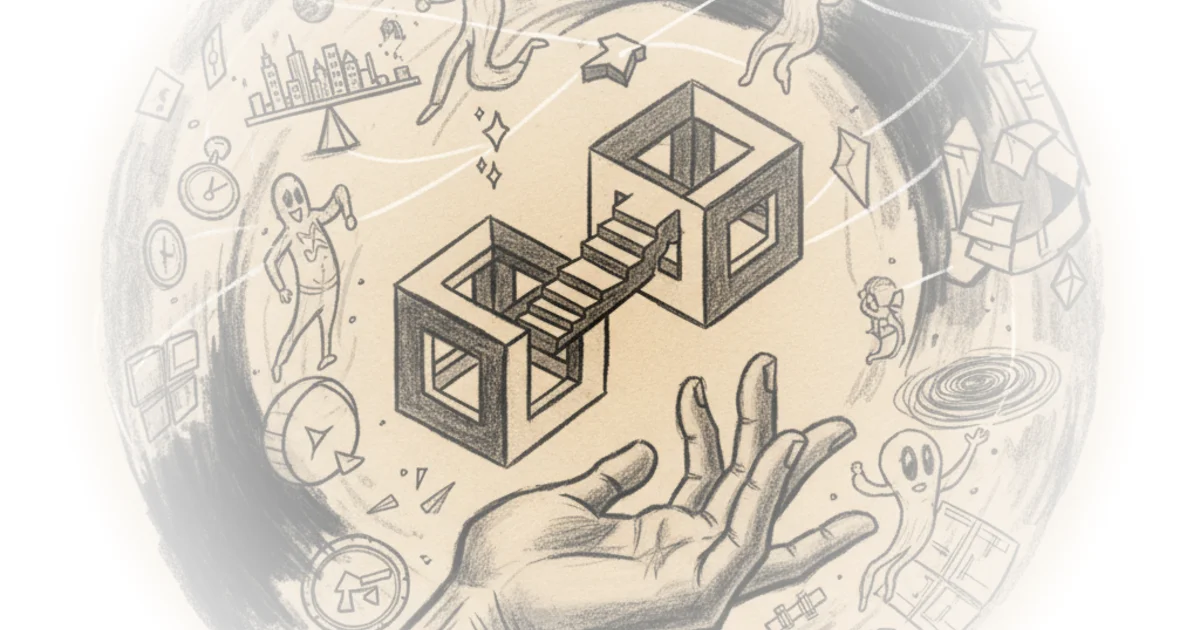
The core of Jordan's argument rests on the game's ability to subvert the traditional competitive dynamic. He observes, "Basically it seems like everybody can sabotage one another, which is nice," and later notes the game's instruction to "courteously reposition all obstacles for the next group of patients." This juxtaposition of politeness and obstruction creates a unique social pressure. Jordan's commentary is effective because it doesn't just describe the mechanics; it captures the emotional toll of the experience. He admits, "I like how this seems like it could get very frustrating very quickly," acknowledging that the game's design intentionally walks the line between fun and rage.
"The degree to which you can succeed in life by copying the person in front of you there."
This observation serves as a pivot point in the piece, shifting the focus from gaming mechanics to a broader commentary on human behavior. Jordan suggests that in this digital space, as in life, progress is often a matter of mimicry and opportunism rather than pure individual skill. The game's environment, where scale and perspective are fluid, becomes a metaphor for the instability of social standing. When Jordan remarks, "I'm just so bad at it at video games in general apparently," he is not just self-deprecating; he is highlighting how the multiplayer element democratizes failure, making the struggle a shared, communal event rather than a solitary one.
Critics might note that Jordan's focus on his own lack of skill risks overshadowing the technical brilliance of the developers who managed to synchronize these complex physics engines across multiple clients. However, this personal vulnerability is precisely what makes the analysis resonate; it grounds the high-concept puzzle mechanics in a relatable, human struggle.
The Illusion of Control
As the session progresses, Jordan delves into the psychological impact of the game's "Group Therapy" mode. The game explicitly frames the experience as a medical experiment, with prompts like "Multi-patient mode irresponsibly initiated" and "Please look forward to reinterpretations of your numerous mistakes as evidence of hidden brilliance." Jordan leans into this framing, treating the game's narrative voice as a character in its own right. He notes, "If this was a competition and not a medical experiment, it would have been tremendously victorious. Not for me," effectively using the game's own language to critique the nature of competition itself.
The author's commentary shines when he describes the disorienting nature of the multiplayer interactions. "I like how I'm having my own individual experience right now that like nobody else seems to be sharing," he writes, capturing the surreal feeling of being in the same digital room but existing in entirely different realities. This is the game's most potent feature: it creates a shared space where individual perception is the primary variable. Jordan's realization that "altering the scale of other patients can create a permanent but false depth in their thoughts" serves as a brilliant, if accidental, commentary on how digital interactions can distort our perception of others.
The piece also touches on the technical hurdles, with Jordan noting, "I don't see enough bugs to criticize anything. This is actually pretty pretty incredible work." This praise is significant because it comes from a streamer who is actively trying to break the game. The fact that the beta holds up under the stress of a live, public test speaks volumes about the stability of the underlying architecture.
"Above average session complete. Please look forward to reinterpretations of your numerous mistakes as evidence of hidden brilliance."
This line, quoted directly from the game's interface, becomes a central theme of Jordan's analysis. It suggests that failure is not an endpoint but a necessary component of the learning process. Jordan's willingness to embrace his own failures—"I was in first for so long. I was doing so good. Okay, now I see. Oh, thank you. Thank you, Chicago Ted. Us Chicago and stick together"—demonstrates a maturity that elevates the commentary above a simple "let's play" video. He is not just playing a game; he is participating in a social experiment.
Bottom Line
Benn Jordan's commentary succeeds because it treats the Superliminal multiplayer update as a lens through which to examine human cooperation and competition, rather than just a technical milestone. The strongest part of the argument is the identification of the game's ability to turn sabotage into a form of social bonding, where the shared frustration creates a unique camaraderie. The biggest vulnerability is the reliance on the specific, chaotic energy of a single beta stream, which may not reflect the polished experience of the final release. Readers should watch for how the developers balance the "Group Therapy" narrative with the actual gameplay loop in the full launch, as the tension between helping and hindering is the engine that drives this entire experience.