Jonathan Rowson argues that the modern crisis of attention is not merely a distraction problem, but an existential failure to treat learning as a matter of life and death. By weaving together a personal pandemic survival story with the high-stakes ritual of chess, he reframes education from a bureaucratic obligation into a vital mechanism for human survival in an age of ecological and social collapse.
The Stakes of Attention
Rowson begins by grounding his abstract argument in the visceral fear of the early pandemic. He describes the paralysis of trying to decide whether to send his sons to school while he, a type-one diabetic, faced a high risk of severe illness. "The ethics of the relationship between knowledge and action had never felt so palpable," he writes. This personal anecdote serves a specific purpose: it strips away the luxury of casual learning. When the consequence of being wrong is death, the quality of one's understanding becomes the only variable one can control.
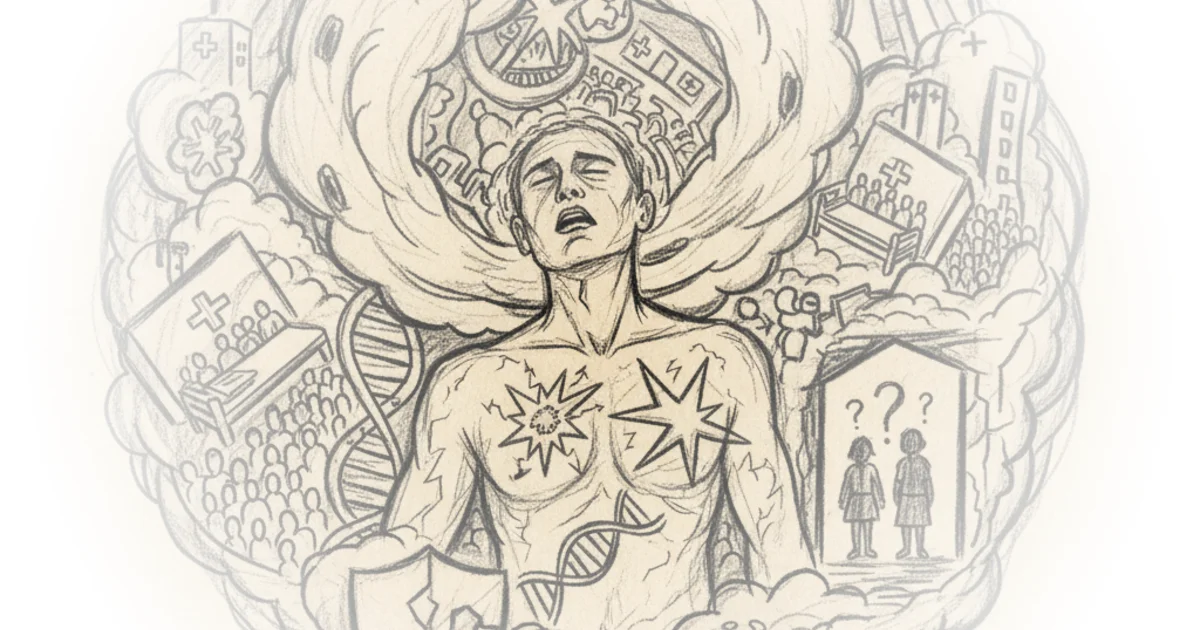
He contrasts this intensity with our current digital habits, where we skim and screenshot without truly processing. "Understanding has become fugitive," Rowson observes, noting that we often treat reading as a reflexive impulse to signal our presence rather than an act of deep appraisal. This critique lands with force because it identifies a structural flaw in how we consume information: we are hoarding data while starving for wisdom. Critics might argue that the sheer volume of information makes deep engagement impossible for everyone, but Rowson suggests the problem is not capacity, but a misplaced sense of urgency.
"This is how it feels for truth to be a kind of oxygen, for my continued existence to depend on making full use of my capacity to make sense of the world."
The Chessboard as a Mirror
To illustrate the mindset required for such deep learning, Rowson turns to his background as a professional chess player. He posits that the game's popularity surged during the pandemic not just due to entertainment, but because it simulates the weight of responsibility. "Chess simulates the meaning of life because it is a ritual encounter with death in disguise," he explains, referencing the Persian origin of the word checkmate, which means "The King is Dead."
He retells a Zen story where a young man plays chess under the threat of beheading. The threat forces the player into a state of "complete concentration and complete compassion," transforming a game into a profound moral exercise. Rowson uses this to argue that we need to approach our current global challenges with the same gravity. The argument is compelling because it shifts the focus from solving specific problems to cultivating a specific disposition. However, one could question whether a mindset forged in the artificial constraints of a board game translates effectively to the chaotic, unstructured nature of real-world policy and social change.
Education as a Planetary Reckoning
The commentary then pivots to a broader critique of our information ecosystem, which Rowson describes as "parasitic on attention." He warns that artificial intelligence and large language models may exacerbate this by encouraging us to "outsource the graft" of deep thinking. "We are being duped into thinking that it's enough to get the gist," he writes, a sharp indictment of the efficiency-over-depth culture that dominates modern work and learning.
In response to this "dysfunctional infosphere," Rowson highlights a new book by Olli-Pekka Heinonen, Learning as If Life Depended on It. He frames the book not as a standard educational text, but as a work of "epistemic leadership." Heinonen, the Director General of the International Baccalaureate, argues that the root cause of global crises is a failure to perceive the ideas we live by. Rowson endorses this view, suggesting that education must become a "collective act of reorientation" to prevent ecological and social collapse.
"Democracy cannot be based on fear; it must stand on reciprocal trust, which is one of the hallmarks of love."
Rowson notes that Heinonen's writing style is "curiously Finnish" and aphoristic, offering zingers like "Slowness is a quality of the brave." This stylistic choice reinforces the book's central thesis: that rushing to conclusions is a dangerous habit. While the call for slowness is a powerful antidote to the current pace of life, it remains to be seen how such a philosophy can be operationalized in institutions that are structurally designed for speed and scalability.
Bottom Line
Rowson's most potent contribution is his refusal to treat the attention crisis as a mere productivity issue; he correctly identifies it as a survival mechanism that has been disabled. The argument's greatest vulnerability lies in its reliance on individual disposition change in the face of systemic algorithms designed to prevent it. Readers should watch for how institutions like the International Baccalaureate attempt to operationalize this "slowness" in a world that demands immediate answers.