Sara Hildreth delivers a sharp, necessary critique of a pervasive trend in contemporary fiction: the reliance on manufactured mystery over genuine narrative momentum. While many readers accept the bait of a hidden past as a standard feature of modern storytelling, Hildreth identifies it not as a clever device but as a structural crutch that renders stories "dull and lifeless." Her analysis is particularly vital for listeners who value emotional resonance over plot mechanics, challenging the assumption that suspense must always stem from what was withheld rather than what is happening.
The Trap of the Tease
Hildreth anchors her argument in a personal reading experience with Ann Patchett's Whistler, noting how the novel successfully defies the reader's expectation for a secret-driven plot. She writes, "I've had the odd experience of realizing that I'm liking it as much for what it isn't as for what it is." This observation serves as the catalyst for her broader complaint: the industry has become obsessed with the promise of revelation rather than the substance of the present moment.
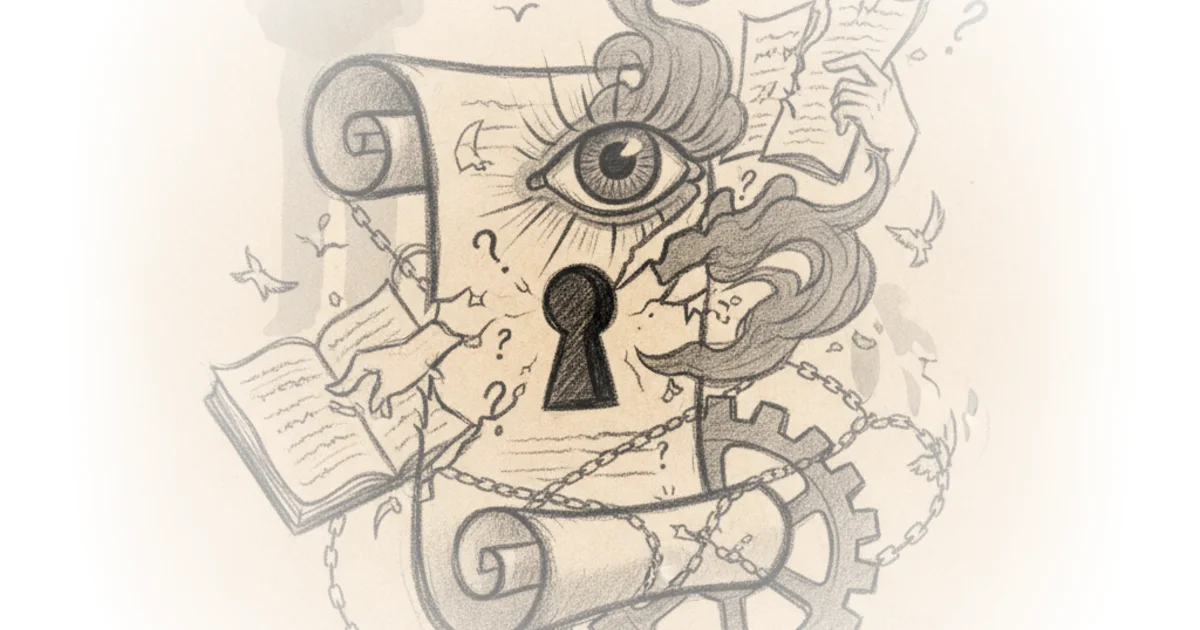
The author contrasts this modern approach with the Gothic tradition, where secrets are inherent to the atmosphere but not used as a tool to manipulate pacing. She notes that while classics like Jane Eyre or Rebecca deal in "long-buried secrets," they do not rely on "stringing the reader along by hinting at what might have happened." Instead, she argues that effective historical tension comes from limited perspectives where the narrator is genuinely unaware, rather than an author deliberately withholding information to create artificial suspense.
"Personally, I think it's tedious to regularly find myself reading to find out what happened rather than to find out what will happen."
This distinction is crucial. Hildreth suggests that when a narrative exists solely to unpack the past, it loses the vitality of the unfolding story. She points to Gillian Flynn's Sharp Objects as a genre-appropriate example where this tension works because readers understand the contract: thrillers are about uncovering secrets. The problem arises, she argues, when this thriller-esque style "crosses the line into other styles of fiction," turning literary sagas into mere puzzles.
The Commercial Engine of Mystery
The commentary traces the proliferation of this trend to specific commercial successes, identifying Taylor Jenkins Reid's The Seven Husbands of Evelyn Hugo as a potential source code for modern publishing. Hildreth observes that in such books, "there was really nothing happening in the novel's present for readers to care about—discovering the past was the point of the book." She posits that the massive success of these titles has signaled to publishers and authors that the "tease-a-secret method" is a reliable formula for page-turning engagement.
This shift raises questions about the integrity of character development in contemporary literature. If the primary driver of tension is a bombshell revelation from years ago, does the present-day narrative suffer? Hildreth argues yes, describing the result as "something so dull and lifeless." She criticizes the manipulation involved, stating it is "annoying to have a writer dangle a reveal in front of readers every few chapters."
Critics might note that this preference for present-tense momentum overlooks the psychological reality that human beings often live in the past. Many literary masterpieces rely on retrospective revelation to deepen our understanding of character motivation, and dismissing all secret-driven narratives risks flattening complex explorations of memory and regret. However, Hildreth's point remains focused on manipulation versus theme.
She identifies a key structural flaw in how some authors handle this device, particularly in first-person present tense novels where the narrator is aware of the truth but chooses to withhold it from the reader for no logical reason other than plot convenience. "I will die on the hill that it makes zero sense for a first-person present point-of-view to be keeping and teasing the reader with secrets!" she declares. This highlights a disconnect between narrative voice and authorial intent, where the mechanics of the twist override the logic of the character's perspective.
Exceptions That Prove the Rule
Despite her frustration, Hildreth offers a nuanced framework for when secret-driven storytelling succeeds. She outlines four specific conditions under which these devices feel earned rather than manipulative: narrative voice that justifies the withholding, a big reveal without prior teasing, thematic exploration of memory, and inventive structural balancing of past and present.
She cites Shannon Sanders' The Great Wherever as an example where a "ghost narrator" makes the withholding feel like a stylistic choice rather than a trick. Similarly, she praises Julian Barnes' The Sense of an Ending because the secrecy serves a thematic purpose: questioning "the veracity of human memory." In these cases, the mystery is not a hook to keep pages turning but an integral part of the book's intellectual and emotional inquiry.
"Writers, please trust me to not bail once I have that information. Trust me to be interested in the story that's unfolding—I don't need the lure of a secret to carry me along."
This plea underscores her central thesis: readers are capable of engaging with complex, slow-burn narratives without being constantly prodded by the threat of a withheld fact. She argues that when authors rely on these tricks, they implicitly distrust their audience's ability to care about character development in real-time. The best exceptions, she suggests, are those where the revelation changes how we view the present, not just what happened in the past.
Bottom Line
Hildreth's critique is a compelling call for authors to trust the power of the present moment over the cheap thrill of the withheld secret. Her strongest argument lies in distinguishing between thematic necessity and commercial manipulation, offering readers a vocabulary to articulate their fatigue with formulaic plotting. The biggest vulnerability in her stance is that it may inadvertently dismiss valid literary traditions where the past is the present for many characters; however, her distinction remains vital: if the story stops moving forward just to look backward, the reader has been shortchanged.