This is not just a story about internet sleuthing; it is a chilling account of how digital deception can cross the line from social media noise to lethal real-world violence. Rohin Francis, a cardiologist and commentator for Medlife Crisis, details how his investigation into a fraudulent online persona led to the arrest of a man now accused of killing seven patients. The stakes here are immediate and fatal: a fake doctor, masquerading as a respected academic, is on the run for manslaughter, and the only thing that exposed him was a thread about medical credentials.
The Anatomy of a Digital Imposter
Francis begins by recounting his history of debunking online medical frauds, noting that his "cardiac spidey sense was tingling" when he first encountered the suspicious claims of a figure known as Professor N. John Cam. While the internet was initially charmed by the man's wild stories, Francis identified the inconsistencies. "He was lifting them from other places, like from journals or wherever," Francis writes, describing how the impostor curated cases that were not his own. This pattern of theft is common in the digital age, but Francis argues that the consequences here were uniquely dangerous because the fraud extended beyond mere plagiarism into the realm of identity theft and political manipulation.
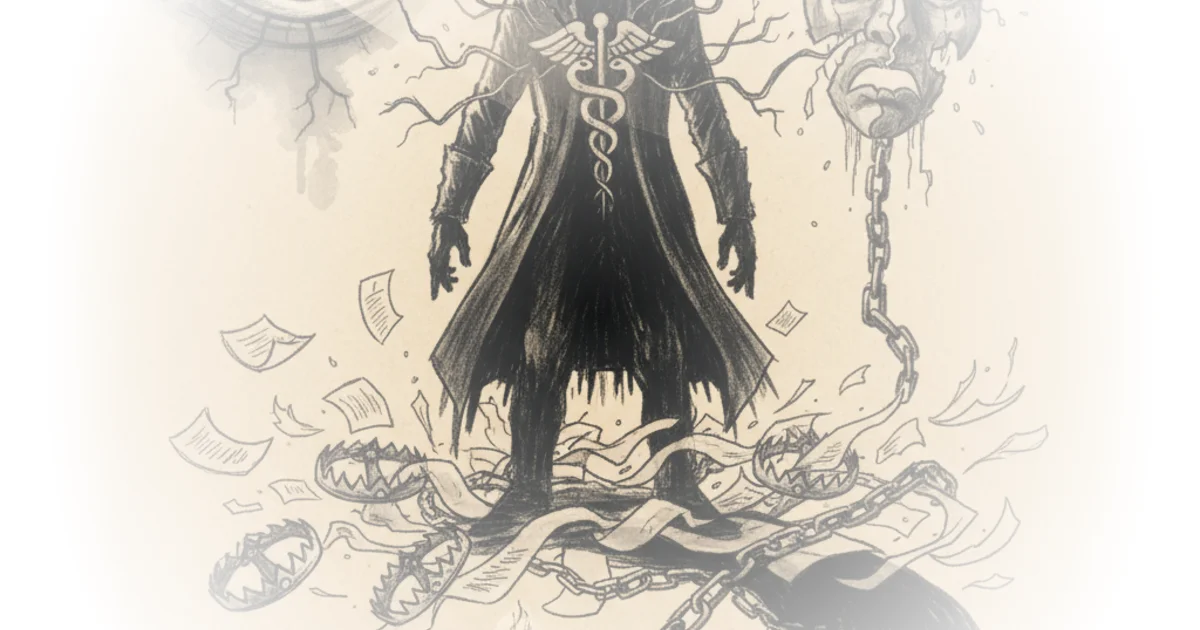
The impostor's online behavior was a red flag cocktail of extremism. He was described as "very anti-Islamic, very openly Islamophobic" and a staunch supporter of far-right political factions in India. Francis notes the bizarre convergence of these views, pointing out that the fake doctor was also a "huge Elon Musk fan" who praised controversial figures. "So you can see how a lot of these thought process coales," Francis observes, highlighting how the online persona was designed to appeal to a specific, radicalized audience. This framing is effective because it shows how bad actors weaponize identity politics to build a shield of credibility, making it harder for the public to question their medical expertise.
"If you mess with the myocardium, if you come into the cardiac house and start talking about the heart, you will have to deal with me."
Critics might argue that focusing on the impostor's political views distracts from the core issue of medical malpractice, but Francis correctly identifies that the political posturing was the very mechanism that allowed the fraud to flourish. The impostor used his online clout to deflect scrutiny, creating a cult of personality that masked his lack of qualifications.
From Online Fraud to Fatal Negligence
The investigation took a darker turn when Francis realized the impostor was not just stealing ideas but stealing the identity of a real, respected cardiologist named Professor John Cam. The real professor was a "legend" in the field, and the impostor's actions were causing genuine reputational harm to the man and his family. "I didn't want him seeing all this horrible stuff where people are mistaking this guy for his dad," Francis explains, underscoring the personal toll of the deception. The impostor's website was riddled with errors, featuring "photoshops" of him with Indian politicians and claiming affiliations with hospitals he never attended.
As Francis dug deeper, the scope of the fraud became terrifyingly clear. He discovered that the man's real name was Narendra Yadav and that he had a history of legal troubles in India, including charges of kidnapping and negligence. The impostor had not just faked his credentials; he had faked his entire existence. "Not only was he suspended for several years in India for negligence but he was also arrested including a charge of kidnapping," Francis writes. This revelation shifts the narrative from a simple case of online lying to a complex criminal enterprise.
The climax of the story arrives with the news that Yadav is now the subject of a manhunt in Madhya Pradesh. The allegations are grave: Yadav allegedly impersonated a doctor, secured a job at a hospital, and through his incompetence, caused the deaths of seven patients. "He's now on the run for his role in the death of seven people," Francis reports. The sheer scale of the tragedy is hard to comprehend, especially given that the procedures involved were described as "very straightforward." This suggests a level of incompetence that borders on the incomprehensible, raising questions about how a fake doctor could even secure employment in a medical facility.
The Human Cost of Verification
Francis concludes by reflecting on the broader implications of this case. He notes that while the impostor was free to post "racist, sexist, islamophobic, transphobic, homophobic stuff on twitter.com," the moment he crossed into the realm of medical practice, the consequences became fatal. The story serves as a grim reminder of the importance of verifying credentials in an era where anyone can curate a convincing online persona. "If he truly has faked being a doctor from the beginning, then this must go down as one of the most shocking and heinous examples of a criminal inflicting harm," Francis asserts.
The investigation has now moved from the digital realm to the physical one, with police in India actively searching for Yadav. The Times of India has dubbed him "Dr. Death," a moniker that captures the gravity of the situation. Francis shares a final email from a senior cardiologist who worked with the impostor, stating, "And now his game is over." This closing sentiment offers a sense of justice, but it also leaves a lingering question about how many other such frauds are operating undetected.
Bottom Line
Rohin Francis delivers a gripping and essential exposé that connects the dots between online disinformation and real-world tragedy. The strongest element of his argument is the demonstration of how digital fraud can escalate from social media annoyance to lethal negligence, a trajectory that is often overlooked. The piece's biggest vulnerability lies in its reliance on the assumption that the impostor's political extremism was the primary driver of his success, potentially underestimating the systemic failures in hospital hiring practices that allowed a fake doctor to practice medicine in the first place. Readers should watch for the outcome of the legal proceedings in India, as the verdict will determine whether the system can hold such fraudsters accountable.