Dostoevsky wrote "Demons" as a warning about what happens when society trades spiritual depth for rational efficiency. More than 150 years later, his prediction feels eerily accurate.
In the novel, Dostoevsky constructs an intricate web of characters representing different intellectual forces competing for influence in Russian society during the 1870s. The story follows a group of revolutionaries planning acts of political violence—but that's merely the surface. What truly animates the book is Dostoevsky's exploration of belief versus non-belief, and how that tension shapes everything from individual morality to collective action.
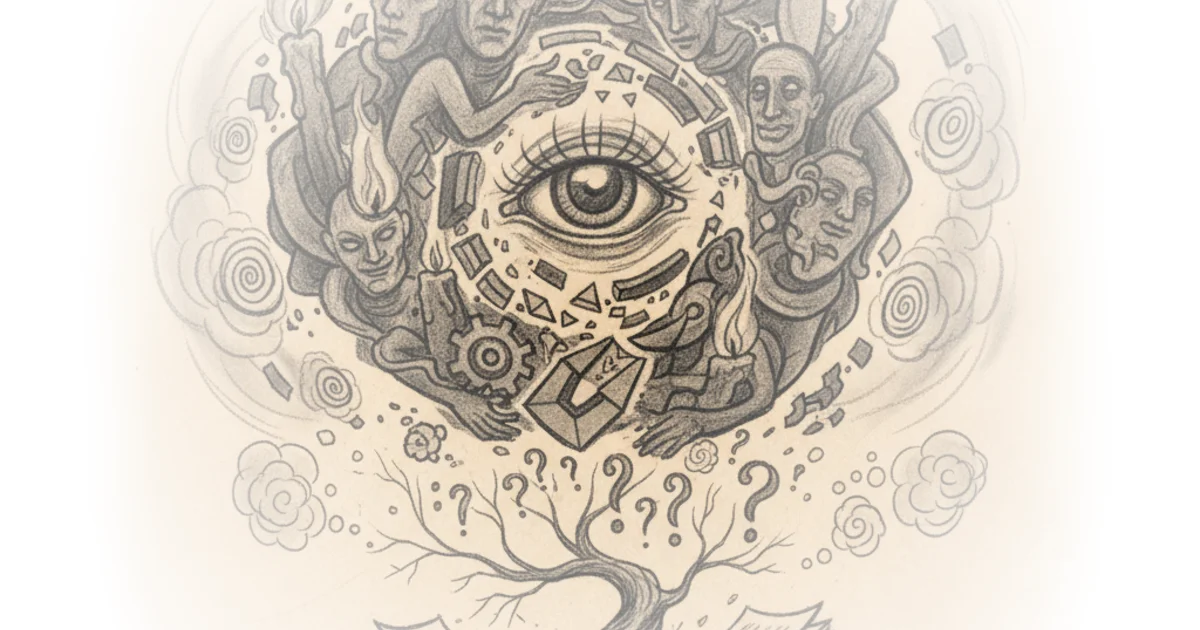
The Characters as Philosophical Battleground
The novel opens on an estate owned by Varvara, a wealthy aristocrat who represents the existing power structure. She employs Stepan, a highly respected intellectual tutoring her son—and hoping to marry someone politically useful. Their son Stogin is handsome and articulate, seemingly ideal as a figurehead for revolutionary movements.
Then there's Maria, a disabled woman who clearly has some connection to Stogin that everyone denies. A drunken captain staggers in, and conversation spirals into chaos—characters arguing about conflicts with each other, referencing events that happened before the book began. Dostoevsky never fully introduces anyone. Readers are left disoriented, forced to piece together clues.
This chaos is intentional. Each character represents a real person or type in Russian intellectual life—the Western liberal intelligentsia spreading from Europe, rational utilitarianism replacing religious connection, political elites funding intellectuals without understanding where their ideas lead.
The Utilitarian Crisis
Dostoevsky's core argument: when society organizes around utilitarianism without replacing people's connection to something greater than themselves, several troubling things emerge. People begin seeing themselves as separate from everyone else. Relationships become transactional and instrumental. Social norms feel arbitrary and pointless. Truth and social unity fade away.
The Western liberal project excels at rationally critiquing the world—breaking it into parts to understand them—but fails utterly at putting anything back together in enduring ways. Moral pluralism becomes not just possible but the only reality.
When you set society up without that connection to something greater, what you get is people whose lives endlessly rationalize their own behavior based on a limited framing of reality rather than aiming for any feeling of connection.
Dostoevsky predicts that even if you solved every material problem—solved infant mortality, made electricity cheap, created iPhones—people would still suffer. They'd suffer from boredom, alienation, envy for others' natural advantages. Suffering is part of the human experience; trying to rationally coordinate it away is always a losing battle.
The True Measure of Progress
This raises an uncomfortable question: does enduring social progress come from policies and rational protocols, or from the inner virtue of people carrying them out? Dostoevsky argues that a society poorly ordered rationally but filled with genuine love and virtue would still be great to live in. Conversely, materially abundant societies lacking connection produce hollow lives.
Critics might note that Dostoevsky's framework seems to dismiss material progress entirely—ignoring the very real benefits of addressing poverty, disease, and infrastructure. His position can read as anti-progress rather than cautionary.
Bottom Line
This episode offers something rare: a philosophical reading of "Demons" that reveals why Dostoevsky remains essential. His core insight—that meaning requires sacrifice and cannot be engineered—hasn't aged a day. The novel's greatest strength is showing how easily collective psychology becomes dangerous when ideas find political expression without moral grounding. Its vulnerability? The answer feels almost anti-modern, which might explain why it still provokes.