Hook
Some essays about losing a pet traffic in easy sentiment. Ben Burgis's piece about saying goodbye to Lucy, the miniature schnauzer who shaped eleven and a half years of his life, does something harder: it tracks the anatomy of attachment through the mechanics of daily routine.
The Constant Companion
Burgis and his then-wife adopted Lucy as a puppy in South Korea in 2014, when she fit in his hands. He wasn't sure a fifth-floor apartment was the right place for a dog. The dog decided otherwise. As Burgis writes, "Lucy, in whatever way animals do this, very quickly decided that I was her primary person." She would whine if he left for forty-five seconds to take out the cat litter. Soon, "taking out the cat feces with Lucy" became a nightly ritual that survived every subsequent move — Michigan, New Jersey, Georgia, California, Mexico.
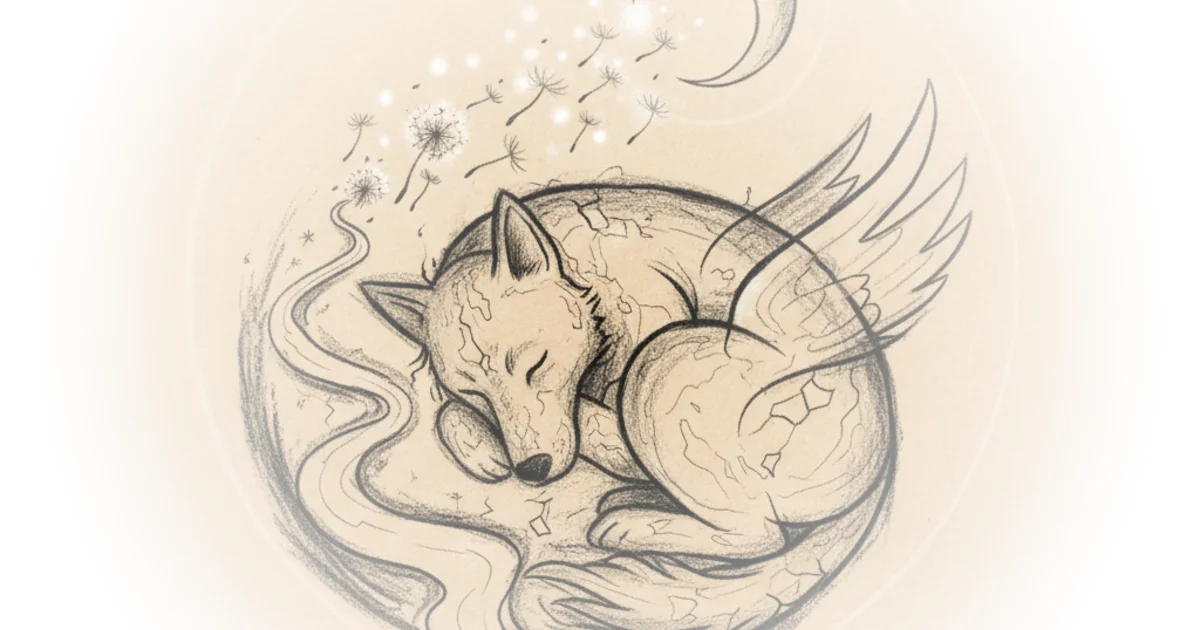
At Rutgers University, Lucy attended classes with Burgis and his colleagues. She was so well-behaved they joked she "knew how to behave in an academic environment." She would greet everyone, then settle under a favored student's desk until class ended. "Her whole life," Burgis writes, "she was always just so happy to just...come along." The essay makes clear what many dog owners feel but rarely articulate so precisely: the dog does not simply accompany the human life. The dog is the architecture of that life.
"The whole pattern of my life is structured around taking care of her and hanging out with her — the one great constant in all the ways my life has changed since 2014."
The Cliff
The decline came fast. Through most of 2023, Lucy walked an hour and a half daily without complaint. In mid-October, a stranger in Rosarito remarked on how energetic she seemed for eleven years old. A couple of weeks later, a back leg started shaking. By late October, her whole body was shaking. A spinal issue with no surgical solution. Gabapentin every eight hours. By early November she could not walk at all.
"It wasn't a slow decline," Burgis writes. "It was a cliff."
Weeks followed where she could not eat or drink without being propped up. She wore a diaper constantly. Burgis spent his days sitting with her curled against him on the couch, watching Star Trek and writing. Eventually she reached some equilibrium — enough perkiness to play with her favorite toy, an orange crab she had chosen herself at Petco. A stroller let her go on walks and enjoy the smells. But the reprieve was temporary. A heart condition, monitored but secondary to the spinal problem, finally took over. She was hospitalized. She refused to eat. When Burgis offered her food there, "she gave me what I can only describe as an offended look, like, 'What the fuck? You too? I thought you were on my side!'"
The Decision
Burgis delayed the inevitable as long as he could. He drove from Rosarito to Tijuana on a pothole-strewn highway. The veterinary staff left him alone with Lucy in an examination room on the third floor. He cradled her in a blanket. "I pet her and kissed her and babbled to her about how immensely unbelievably goddamned grateful I am for all the years we got." Then he laid her down, the vet administered the shots, and he kept petting behind her ears until she was gone.
"And God but I feel like I've lost a limb," he writes. He is not being figurative. Eleven and a half years of non-travel nights ended with a dental treat. Every morning began by taking her outside. She followed him room to room. The instinct to check on her — to look toward the dog bed by the dining table — survived the first hours after she was gone. Old reflexes outlast the creatures that built them.
Critics might note that the essay's scope is deliberately narrow. There is no argument here, no political claim, nothing to debate. That is arguably its strength. Not every piece needs to carry a thesis. Sometimes the point is simply to testify.
Others might observe that Burgis writes from a position of material comfort — a stroller, weeks of veterinary care, a dog-sitter who specializes in geriatric care, the flexibility to work from a couch while tending a sick animal. Grief is universal; the resources available to manage it are not. The essay does not pretend otherwise, but it does not examine that gap either.
Bottom Line
The best pet-loss writing resists the urge to universalize — it stays specific, concrete, stubbornly particular about the creature that was actually there. Burgis achieves that. What makes the piece linger is not its sadness but its precision: it maps exactly what a dog does to a human schedule, a human body, a human idea of what a day should look like. The grief makes sense because the architecture is visible.