In a cultural moment defined by the demand for absolute certainty, Sarah Bessey presents a conversation that finds profound power in the opposite: the sacredness of not knowing. This piece stands out not for its policy prescriptions or political analysis, but for its radical reclamation of the "ordinary" as a site of resistance and healing. Bessey argues that the most transformative shifts in our world do not come from the loudest voices or the most rigid ideologies, but from the quiet, persistent act of tending to our own spiritual fires and asking better questions.
The Fire Keeper's Mandate
Bessey introduces her guest, Kaitlin B. Curtice, not merely as an author, but as a "fire keeper" in the Potawatomi tradition of Bodewadmi Ndaw. The framing is immediate and visceral. Bessey writes, "I still remember the moment I came across this phrase from one of Rumi's poems—I was sitting in my favorite red chair in our house in Atlanta, right before my book Native came out, before the pandemic hit. I read those words and knew they would change me forever." This sets the stage for a discussion that rejects the burnout culture of modern activism in favor of a slower, more sustainable spiritual practice.
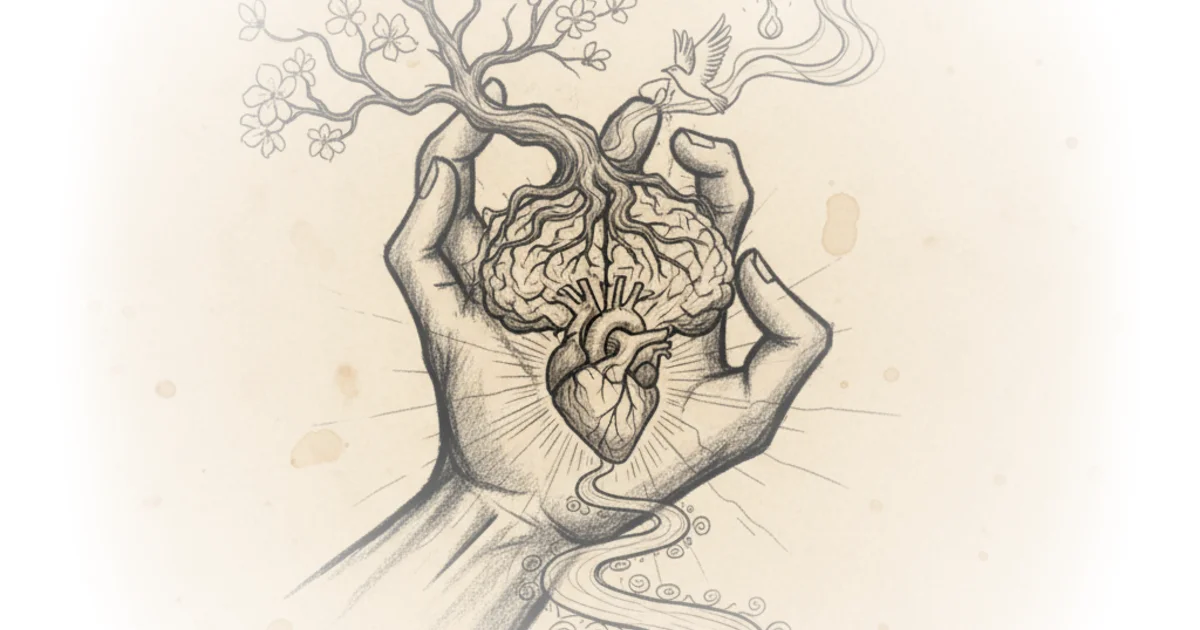
Curtice argues that true healing requires us to be "slowly cooked over time" rather than burned out by the intensity of current events. Bessey captures this distinction perfectly when she notes, "I don't want us to burn out; but I want us to be steeped in what it means to be people who are dedicated to telling stories of solidarity, care, and fierce love." This reframing is crucial. It suggests that endurance is not about withstanding pressure, but about allowing ourselves to be transformed by the heat of our own convictions and the stories we tell.
"Prayer cracks everything open and we don't know if those cracks will ever get sealed up again, and we've got to be okay with that."
The conversation moves to the nature of prayer itself, stripping away the need for answers. Bessey highlights Curtice's assertion that prayer is often just "acknowledging that we often don't know what the hell we are doing, and that's okay." This is a potent counter-narrative to the performative certainty that dominates public discourse. By validating the "liminal space of what the hell is going on," the authors offer a permission slip to sit with uncertainty. Critics might argue that such ambiguity offers no concrete path forward in a world demanding immediate solutions, yet the piece suggests that the clarity we seek often comes only after we stop pretending to have it.
The Storyteller's Vocation
Bessey then pivots to the intersection of identity and vocation, challenging the publishing industry's urge to categorize. She writes, "I am a poet, and I live and love stories, and I could never separate the two. So I thought, what if every poem I write is telling some sort of story?" This refusal to be boxed in is presented as a political act in itself. In an era where algorithms and marketing departments demand clear labels, the act of claiming the hybrid identity of "poet-storyteller" becomes a way to preserve the complexity of human experience.
The discussion expands to include unexpected arenas for storytelling, specifically sports. Bessey notes, "Sports tell our story," even for those who do not identify as athletes. This inclusion of recreation as a spiritual and communal narrative is a surprising but necessary expansion of the conversation. It suggests that the stories we live are found in the mundane rituals of community, from the football field to the rock climbing gym. Bessey observes, "I did not grow up in an athletic family... It wasn't until my 30s that I started exercising regularly and rock climb with my family, and I wanted to write about that in the book for two reasons: In case there are others out there who have told a story to themselves that they're just 'not athletic'—that's a story we need to stop telling."
The Power of the Ordinary
Perhaps the most compelling argument in the piece is the elevation of the "acorn moments"—the small, ordinary acts that shift consciousness. Bessey writes, "I don't need to be the most special person on the planet to make a difference, and neither do you." This is a direct challenge to the hero-worship that often paralyzes those who feel they lack the platform to effect change. The authors argue that the ripple effects of small, loving actions are the true engine of societal transformation.
Curtice emphasizes that we must stop underestimating the capacity of the ordinary, including children. Bessey summarizes this by stating, "If we told stories differently, we'd see that our ordinary acts of resistance and care are incredibly important." This perspective shifts the burden of change from the "experts" to the individual. It is a democratization of hope. A counterargument worth considering is whether this focus on the individual risks ignoring the structural barriers that require systemic, large-scale intervention. However, the piece maintains that systemic change is impossible without the foundational shift in individual consciousness that these "small slivers" of change provide.
"My books aren't about giving people answers; they're about helping us ask better questions."
The dialogue concludes with a focus on the courage required to hold nuance. Bessey writes, "We are all trying to decide which beliefs still fit within us, and which ones ask us to expand beyond them." This is a call for intellectual and spiritual flexibility in a polarized world. The authors suggest that the ability to let go of old beliefs and embrace new ones is not a sign of weakness, but of vitality.
Bottom Line
The strongest element of this piece is its refusal to offer easy answers in a world starving for them, instead offering the more difficult gift of better questions. Its vulnerability lies in its reliance on individual spiritual transformation as the primary vehicle for change, which may feel insufficient to those facing immediate, systemic crises. However, for the busy reader seeking a moment of grounding, the argument that the ordinary is the site of the extraordinary is a necessary and restorative truth.