Freddie deBoer makes a provocative claim that defies the conventional hierarchy of film criticism: that Paul Thomas Anderson's most confusing, joke-filled, and seemingly minor work is actually his deepest and most humane achievement. In a cultural moment obsessed with "capital-A Great Art" that announces its own importance, deBoer argues that true tragedy often hides behind a mask of absurdity, making a case for Inherent Vice that redefines what it means for a movie to be serious.
The Trap of Self-Seriousness
DeBoer begins by establishing his own credentials as a lover of bleak, difficult cinema, citing Michael Hanneke's Amour and Akira Kurosawa's Ran as benchmarks for unflinching depictions of human suffering. He notes that while these films are undeniably profound, there is a danger in equating heaviness with depth. "It's not entirely a straw man to say that some people mistake heaviness for depth, or difficulty for seriousness, or misery for insight," he writes. This observation is crucial; it challenges the reader to question whether their own appreciation for "difficult" art is sometimes just a performance of sophistication.
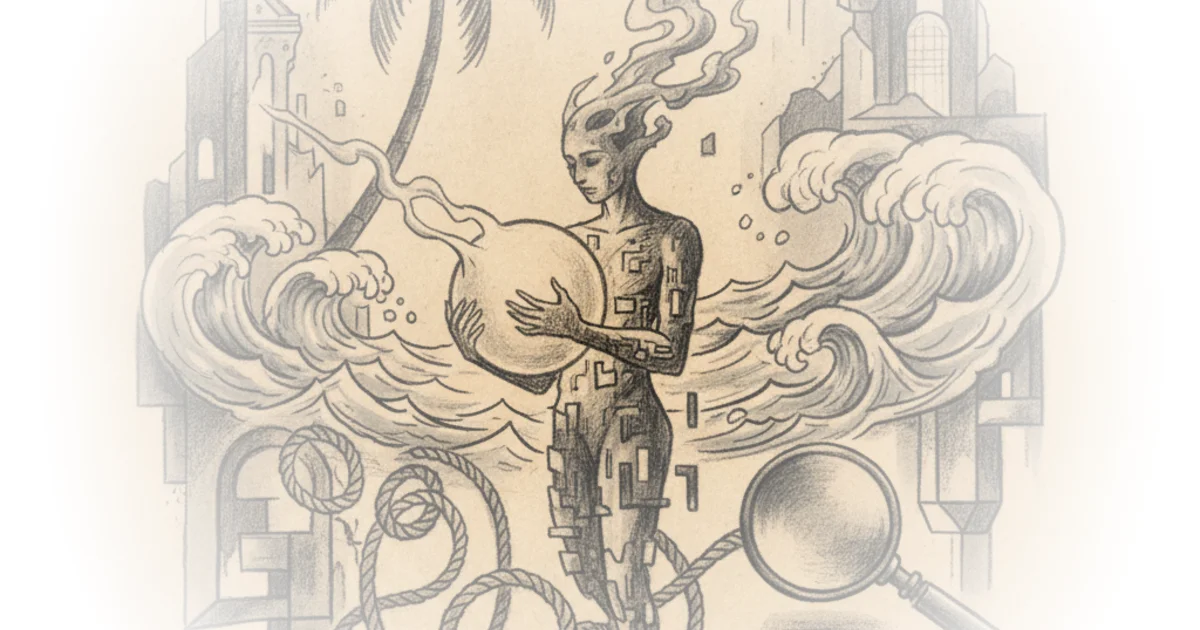
The author then pivots to the central subject, noting that while Anderson has built an "imposing filmography" with films like There Will Be Blood, his 2014 adaptation of Thomas Pynchon's novel is widely considered his weakest link. DeBoer acknowledges the film's reputation as a "goofy and inscrutable lark," filled with "juvenile jokes, meandering voiceover, unresolved plot threads," and a protagonist who spends much of the runtime "looking confused, horny, and paranoid." Yet, he insists this is precisely where the film's power lies. "Inherent Vice is overlooked largely because it seems like a lark, because it refuses the trappings of capital-I Importance that render (for example) There Will Be Blood such a chore for me to watch," he argues. The critique here is sharp: the very qualities that make the film feel light are what allow it to carry a heavier emotional truth than Anderson's more solemn efforts.
Inherent Vice is an elegy masquerading as a joke.
The Noir of Lost Time
DeBoer reframes the film's narrative confusion not as a failure of storytelling, but as a deliberate alignment with the noir tradition, where emotional resonance matters more than logical resolution. He points out that noir movies "very rarely make sense," citing Raymond Chandler's famous admission that a murder in The Big Sleep was never solved because it didn't matter. What matters, deBoer explains, is "the feeling of being lost in a corrupt system, of perceiving patterns without being able to assemble them into something clean or just." This contextualizes the film's "Byzantine" plot—real estate magnates, Aryan surf gangs, and dental cartels—not as a puzzle to be solved, but as an atmosphere to be endured.
The commentary then turns to the film's historical weight, describing the protagonist Doc Sportello as a "relic of the late-1960s counterculture, shambling through the arrival of the 1970s like a ghost who doesn't know he's dead yet." DeBoer writes that the movie is "saturated with the sense that the dream is over; the hippies are dying out or aging out, destined for early graves or an inevitable yuppie heel turn." This analysis elevates the film from a stoner comedy to a tragic meditation on the end of an era, where the "utopian promise of free love and collective liberation is being methodically dismantled by capital, law enforcement, and hard drugs."
Critics might argue that deBoer is over-romanticizing a film that many find genuinely frustrating to watch, suggesting that the "fog" of the narrative is sometimes just a lack of clarity rather than a philosophical choice. However, the author's defense rests on the idea that the confusion is the point: "It's in the world's failure to reciprocate that eternal friendliness that the movie's secret sadness lives."
Performance as Embodied Melancholy
A significant portion of deBoer's argument focuses on Joaquin Phoenix's performance, which he calls "a masterpiece of embodied melancholy." He contrasts this role with Phoenix's other acclaimed performances, stating that Doc Sportello is "greater than the addled, terrifying, utterly vulnerable L Ron Hubbard disciple in The Master" and the "self-deceiving and wounded romantic protagonist of Her." The author emphasizes that the comedy in the film is "inseparable from the sorrow," with Phoenix playing a "classic weeping clown" whose confusion carries the weight of a slipping historical moment.
The piece also highlights the dynamic between Doc and the antagonist, Bigfoot Bjornsen, played by Josh Brolin. DeBoer describes their relationship as "half rivalry, half twisted intimacy," where Bigfoot represents the brutal, corporate future and Doc represents the disorganized, empathetic past. "The movie knows who's going to win; it just isn't sure that winning will make anyone happy, including Bigfoot," deBoer notes. This adds a layer of tragic inevitability to the film, suggesting that the victory of the "appetite"-driven future will leave everyone, even the victors, spiritually empty.
The Refusal of Gravitas
Ultimately, deBoer's thesis is that Inherent Vice succeeds because it abandons the director's usual "desire to satisfy all the people who have nominated him for greatness." He contrasts this with Anderson's other works, which he feels sometimes "trip over their own self-conscious need to be Serious." In Inherent Vice, the "looseness creates space for something truer than solemnity: a recognition of how people actually live through historical collapse, not with speeches and symbols but with confusion, distraction, humor, small acts of kindness."
To bolster this point, deBoer draws a parallel to the Coen Brothers' Raising Arizona, another film often dismissed as a minor, cartoonish outlier that actually offers a "secretly profound and humane depiction of people scraping together meaning in a world that offers them very little." This comparison reinforces the idea that the most honest portrayals of human struggle often come disguised as comedies, a notion that resonates with the broader concept of the "shaggy dog story"—a narrative that meanders without a clear resolution, yet leaves the audience with a profound sense of the human condition.
It's not a movie that declares itself important. It doesn't aspire to monumentality. It's loose, messy, indulgent, often openly silly.
Bottom Line
DeBoer's argument is a powerful corrective to the tendency to equate cinematic weight with somber tone, successfully demonstrating how Inherent Vice uses its absurdity to articulate a profound grief for a lost cultural moment. The piece's greatest strength is its ability to reframe the film's narrative incoherence as a deliberate, emotional truth rather than a flaw, though it risks alienating readers who simply find the plot impenetrable. For those willing to look past the surface, the commentary offers a compelling reason to revisit a film that is less about solving a mystery and more about surviving the end of the world with a smile.