This week's analysis from Phillips P. O'Brien cuts through the noise of daily battlefield reports to reveal a stark strategic shift: Ukraine is no longer just reacting to Russian aggression but actively engineering the logistical strangulation of Crimea while simultaneously overhauling its own military doctrine. The piece is notable not for predicting victory, but for detailing how the Ukrainian command is rejecting Western pressure in favor of a high-cost, high-skill model that prioritizes elite infantry over mass mobilization.
The Anatomy of Isolation
O'Brien frames the recent campaign against Crimea's transport links as a calculated move to turn a strategic asset into a liability for Moscow. He argues that by severing the northern land routes, Ukraine is forcing Russia to rely on a single, vulnerable artery: the Kerch Bridge. "If they can dictate traffic flows there, Russian control will be crippled," O'Brien writes, highlighting the shift from air and sea interdiction to a methodical ground-based blockade via drone strikes.
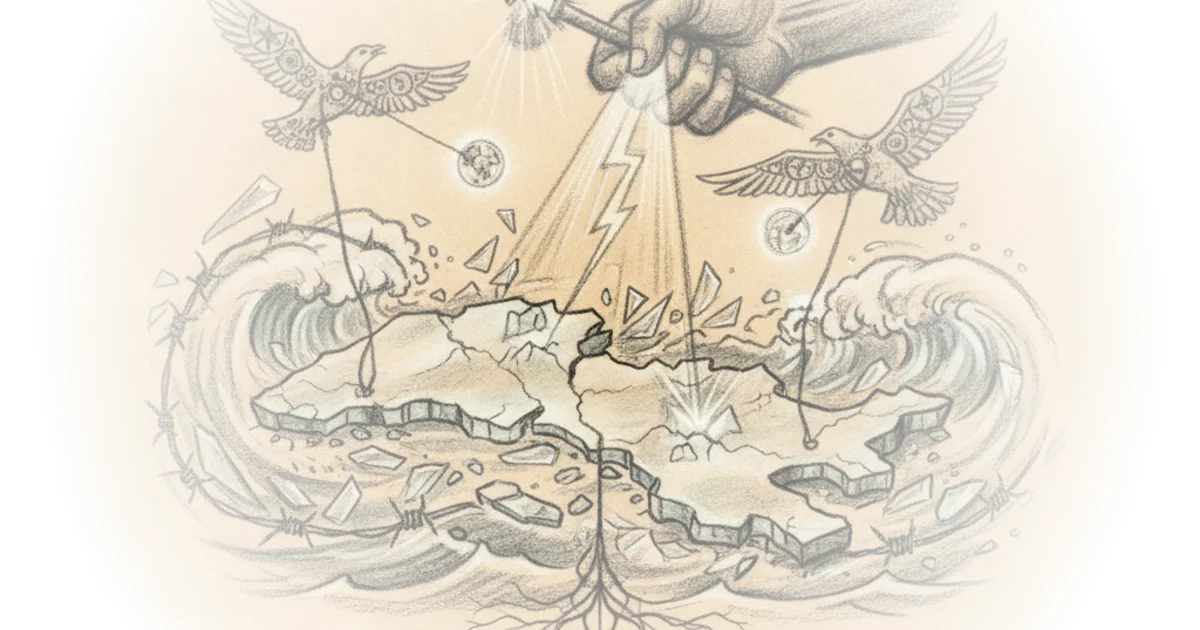
The author details a sequence of attacks starting in early June 2026 that targeted the Chonhar and Henichesk bridges, effectively collapsing the primary supply lines from the north. "Satellite imagery confirmed dark impact craters on the central span, forcing Russian occupation authorities to halt traffic," he notes, describing how Ukrainian forces utilized mid-range drones equipped with heavy warheads to exploit shorter flight distances. This precision allowed Ukraine to carry payloads that would be impossible for longer-range systems, a tactical nuance often overlooked in broader strategic discussions.
"If maintained, that will have major implications for the Russian army in Ukraine and the occupying forces in Crimea."
O'Brien's analysis suggests that this isolation strategy targets not just military logistics but the very viability of the occupation. With fuel and water supplies restricted to the Kerch corridor—which itself has been degraded by previous attacks—the peninsula faces a potential humanitarian crisis alongside its strategic collapse. "That turns the peninsula from a strategic asset to a major strategic and political headache," he observes, pointing out that the inability to access summer holiday destinations could further erode domestic support for the war within Russia.
Critics might note that O'Brien's reliance on satellite imagery and military blogger reports leaves room for uncertainty regarding the actual duration of these disruptions; Russian engineering units are notoriously resourceful in establishing pontoon crossings and repairing damage quickly. However, the sheer volume and coordination of the strikes described suggest a sustained campaign rather than a temporary setback.
A New Doctrine for Modern War
Perhaps the most compelling section of O'Brien's commentary is his examination of Ukraine's new recruitment and compensation policies. He portrays this as a decisive break from the "mass-infantry" model that Western analysts had long pressured Kyiv to adopt. "Limited number of the best soldiers matters more than mass of conscripts," he asserts, framing the move as a necessary adaptation to the lethality of modern warfare where drones and precision artillery make human waves suicidal.
The proposed changes include staggering increases in pay for frontline troops, with combat bonuses reaching up to $10,220 per month for those on the most dangerous "zero line." O'Brien emphasizes that this is not merely about money but about dignity and retention: "Ukraine wants committed, excellent combat soldiers, will pay for it, and will treat such soldiers with the consideration they believe." The policy introduces fixed-term contracts to prevent indefinite exhaustion and allows soldiers to request transfers if their unit leadership fails them, a radical step toward professionalizing a volunteer force.
"There are only two ways to deal with it—you can massacre your own population by sending it in mass into it, or you can rely on small numbers of excellent soldiers who have the best possible equipment, tech and C2 supporting them."
This reframing is powerful because it challenges the narrative that Ukraine must simply out-sacrifice Russia. Instead, O'Brien argues that the future belongs to smaller, better-equipped units supported by advanced technology like the FP-5 Flamingo missile system, which he notes is showing marked improvement in recent engagements. He suggests that the "mass of conscripts" approach is a relic of 20th-century thinking that fails in an era where every soldier is a potential target for autonomous systems.
A counterargument worth considering is whether Ukraine's economy can sustain such high wages indefinitely, especially as the war drags on and inflation pressures mount. O'Brien acknowledges the financial strain but implies that the cost of losing soldiers through attrition is far higher than the cost of paying them well to survive and fight effectively.
The Human Cost of Strategic Shifts
While O'Brien focuses heavily on logistics and doctrine, the underlying reality remains the human toll of these operations. The blockade of Crimea threatens not only Russian military supply lines but also the civilian population dependent on those same routes for food, medicine, and water. "Crimea is rather dry," he mentions in passing regarding water supplies, a detail that underscores the fragility of life under siege regardless of which side controls the bridges.
The shift to high-pay, elite infantry also carries its own risks: it creates a two-tiered military system where those on the front lines are vastly better compensated than support staff or rear-echelon troops, potentially breeding resentment within the ranks. Furthermore, the reliance on foreign volunteers to fill up to 50% of assault units introduces complex legal and political questions about international involvement that O'Brien touches on but does not fully resolve.
"That will also humiliate Putin and bring home exactly how he has lost the initiative in this war."
O'Brien's tone here is uncharacteristically sharp, suggesting that the strategic humiliation of the Russian leadership may be as significant as the physical destruction of their supply lines. Yet, this focus on political impact risks overshadowing the grim reality for soldiers on both sides who are caught in a grinding conflict where technological superiority often translates to higher casualty rates for the less equipped.
Bottom Line
O'Brien's strongest argument lies in his assertion that Ukraine is finally fighting its own war on its own terms, rejecting Western dogma in favor of a high-tech, high-pay model that prioritizes quality over quantity. The piece's greatest vulnerability is its optimism regarding the sustainability of this financial model and the permanence of logistical successes against a resilient enemy. Readers should watch closely to see if Ukraine can maintain the momentum of these strikes while balancing the economic demands of its new military doctrine.