Dan Carlin's narrative about Europe's transformation from pagan heartland to Christian continent is less about theology than power. In this episode, he makes a case that's been strangely absent from popular history: the Viking era wasn't just about raids and exploration—it was about how one minority religion became the civilizing force for an entire continent, and what that cost.
Carlin opens by framing the problem with precision. "Vikings are not a people," he argues, and "how connected the people in this era are to today's modern day Danes, Norwegians, and Swedes is iffy." This is his thesis statement—deconstructing the romanticized Hollywood versions of Norse history that have calcified into cultural fantasy. The real story, he suggests, involves converting pagans through force rather than persuasion.
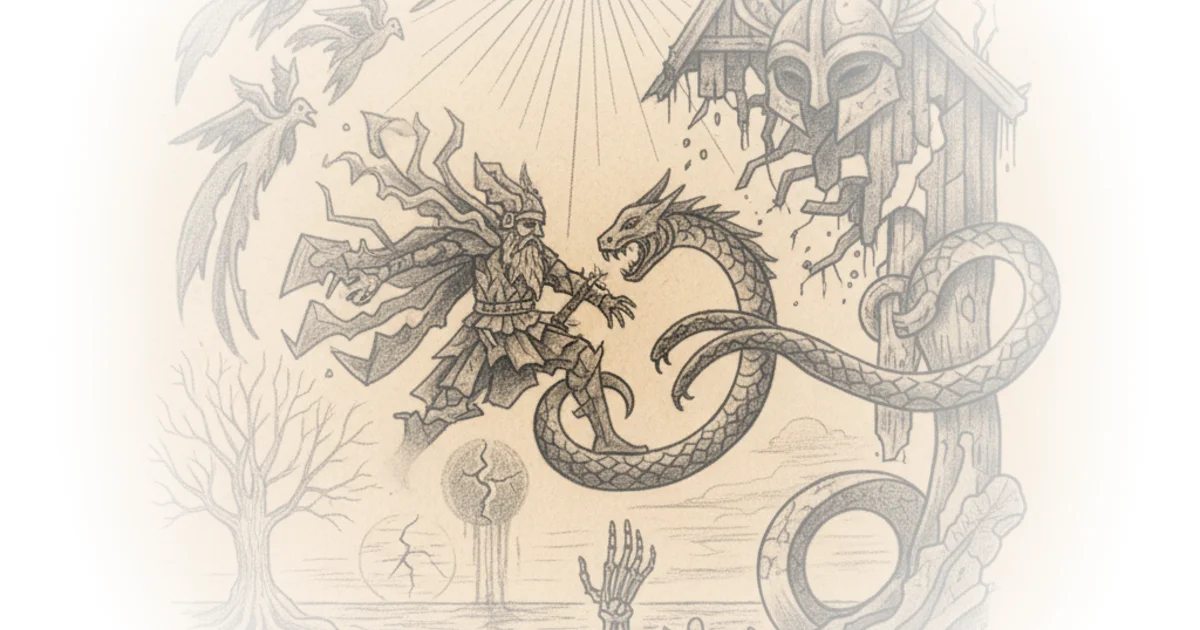
The piece's most provocative claim comes early: "the peoples who will put the Lion's Share of sweat into extinguishing these old gods were people who not that long before this time period believed in themselves." Carlin is pointing at a specific irony—those who would eradicate paganism were recently pagans. This reversal is his strongest analytical move, and it reframes the entire narrative of European Christianization as something far more brutal than the "peaceful conversion" history often portrays.
Carlin then deploys what he calls his favorite quote in all history—the Stalin quip about the Pope having zero divisions. "The pope can't provide any," Carlin writes, "the number of Divisions that the pope has is zero." This sums up why Italy's political situation changed so dramatically after Rome fell—without Roman legions protecting them, popes had to find new partners. The solution was the Franks.
How many divisions does the Pope have? Zero. That sums up a problem that existed for centuries.
The story of how Frankish leadership and Christian authority became symbicially linked is Carlin's real meat. "This relationship changed both entities and changed Christianity also," he notes—meaning both the Church and the Frankish state were transformed by their partnership. This is genuinely insightful: neither institution stayed pure through the deal.
Then comes Charlemagne, and Carlin's language turns visceral. He describes Saxony as having "neither roads nor cities and entirely covered with forests and Marshland"—setting the stage for a military campaign that was anything but civilized. The description of 4,500 Saxons being "beheaded in a single afternoon at the edge of a river" is meant to shock. Carlin frames this as more than conquest: "the way he went about it was so Dracunian and totalitarian that he got many complaints from missionaries." This is key—the Church itself pushed back against forced conversion, but Charlemagne's geopolitical goals merged with religious ones until "it's hard to know where one ended and the other began."
The Saint Lebwin story becomes almost cinematic. Carlin describes him appearing "suddenly lebwin appeared in the middle of the circle clothed in his Priestly garments bearing a cross in his hands and a copy of the gospels in the crook of his arm raising his voice he cried listen to me listen I am the Messenger of almighty God." This is dramatic history at its finest—Carlin is essentially performing oral biography, bringing hagiographic sources to life as if they were action movies. The imagery of an unarmed cleric walking into "a lot of armed Barbarians" and demanding they convert or die is deliberately jarring.
Critics might note that Carlin's framing leans heavily on the violence of forced conversion without fully exploring whether peaceful missionary work was genuinely more effective in the long term—some historians argue Christianization succeeded most where it blended with existing cultural practices rather than replacing them entirely. The piece also could have acknowledged that Charlemagne's "genocidal" campaigns were actually typical for the era, not uniquely brutal—the Franks themselves had been converted by force from paganism.
Carlin's strongest contribution is his refusal to let readers forget what conversion meant on the ground. This isn't a story about saints and heroes—it's about armed men demanding religious compliance in territories with no roads, no cities, and forests everywhere. The reader finishes understanding that Europe's Christian identity wasn't inevitable—it was built through specific decisions by people who had recently been pagans themselves, using methods that made missionaries risk death just to show up.
Bottom Line
Carlin's core argument is solid: the transition from pagan Europe to Christian Europe was violent, transactional, and nowhere near as peaceful as popular history suggests. His biggest vulnerability is overusing "genocidal" as a label when describing typical 8th-century warfare—Charlemagne's campaigns were brutal but not historically unusual in their brutality. The strongest part of this episode is his careful unpacking of why the Pope needed Frankish swords in the first place—because spiritual authority without military divisions was worthless in a dangerous neighborhood.