Albert Camus spent decades wrestling with one of philosophy's most haunting questions: why does the universe appear to offer us nothing? Not through silence or indifference, but by presenting itself as fundamentally meaningless. This isn't a niche concern — it's the central tension that defines modern existential thought, and understanding how Camus arrived at his conclusions reveals something crucial about what it means to live honestly in an indifferent world.
The Unpublished Book That Changed Everything
Before Camus wrote The Stranger, one of the most famous novels in history, he authored a book he deliberately chose never to publish. This work, A Happy Death, was completed in the late 1930s but remained hidden during his lifetime — only published after his death by his estate. The book went largely unnoticed outside academic circles, yet it contains the essential evolution of Camus's thinking during this critical period.
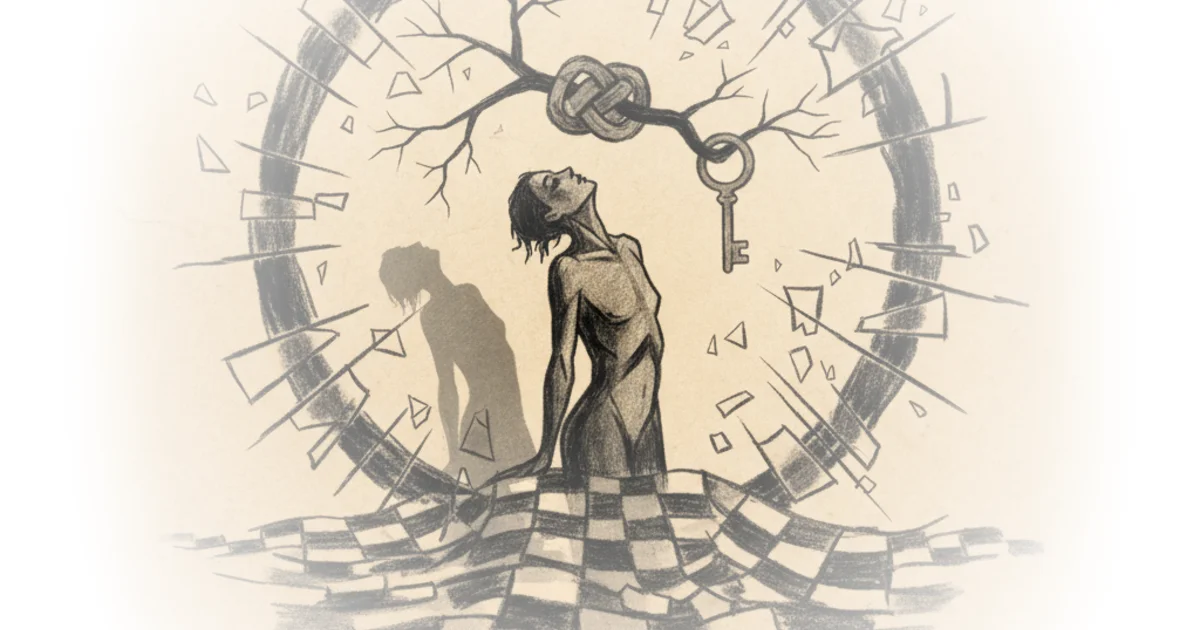
The protagonist is also named Meursault — a detail that reveals how deeply Camus was developing certain themes across his work. In A Happy Death, this character kills a wealthy, disabled man named Zagarius in a mercy killing arranged between them. The murder is deliberate and consensual, driven by Zagarius's unbearable suffering. Before dying, Zagarius shares his theory of happiness: money, time, and solitude are what make life bearable.
Camus uses this framework to test whether the formula holds. He visits religious monks at a monastery and discovers something that shatters the theory entirely. The monks appear happy despite having almost nothing — while wealthy, isolated people remain miserable regardless of their resources. This insight provokes Camus's skepticism toward happiness as an achievable goal through mere will or framing.
What The Stranger Actually Represents
The opening line of The Stranger is among literature's most famous: "Mother died yesterday. Or maybe today. I can't remember." From the very first pages, readers understand that Meursault is fundamentally indifferent to conventional sources of meaning — social approval, religious obligation, emotional attachment.
Jean-Paul Sartre wrote one of the most celebrated reviews of The Stranger, interpreting it as an example of absurd heroism — a character achieving harmony with the Absurd by accepting death without fear. But this reading oversimplifies what Camus was actually doing. Sartre read too much of his own existential framework into Camus's work, and that interpretation has shaped public understanding ever since.
What gets missed is how The Stranger's Meursault represents something more nuanced than heroic acceptance. The character agrees to marry a woman simply because she wants it. He kills a man on an Algerian beach because the sun in his eyes made him blind to consequences. He's completely indifferent to these choices and their impact on others.
The Real Project Behind Camus's Work
Camus once famously said he was an artist, not a philosopher — and this wasn't modesty or self-deprecation. It was a deliberate rejection of what he saw as the dangerous games played by philosophers of his era: abstractions that led to fatalism and ultimately enabled movements like fascism.
Philosophers and religious thinkers create grand systems of meaning to escape the uncomfortable tension between our desire for significance and the universe's silence. Camus refused this escape entirely. He didn't want to solve the Absurd — he wanted to understand how we live within it honestly.
The concept isn't simply the tension between our longing for meaning and a silent universe. For Camus, it's broader: any gap between what we are by nature and what the world provides creates this tension. We desire knowledge, but our tools are limited. We desire connection, but mortality separates us. We desire ethical clarity, but the world offers none.
The Revolt Camus Actually Meant
What emerges from The Stranger isn't a prescription for how to live — it's an acknowledgment that harmony with your particular life is possible even when you're indifferent to conventional moral frameworks. But this isn't celebration of indifference as virtue. It's recognition that happiness as traditionally conceived — willing yourself to be content regardless of circumstances — treats the world as if it doesn't matter.
The real question Camus raises: what kind of person can achieve such harmony without losing something essentially human? The answer is Meursault, and his harmony comes at the cost of revolt against everything society values. This isn't a model for living; it's an acknowledgment of what we've already surrendered to reach that state.
Critics might note that framing this as "harmony" risks normalizing indifference in ways that undermine ethical responsibility — particularly when characters like Meursault cause harm without consequence or remorse.
"What is happiness but a certain kind of harmony between a person and the life they lead?"
This beautiful quote captures something essential, but it also reveals why Camus ultimately rejected happiness as the ultimate goal. If happiness can be achieved by willing yourself to see things differently regardless of what's actually happening in the world, then we're not engaging with reality — we're escaping from it.
Bottom Line
Camus's core argument remains powerful: confronting an indifferent universe requires honesty about what we actually want, not comfortable abstractions that make us feel better. The strongest thread here is his refusal to let go of the real world's suffering in favor of theoretical solutions — whether philosophical or religious — that only serve to ease our discomfort. His vulnerability lies in how easily this position slides toward quietism, accepting injustice as simply another fact to reconcile rather than something demanding resistance.